Blog listing
Stay Updated
Want to hear about our latest news and blogs?
Sign up now to get it straight to your inbox
Why more than one million young people are out of work, education or training
The Milburn Review confirms the UK's NEET crisis is a long-term structural problem – not a result of workers' rights or higher pay.

A record-breaking rise in trade union membership
The most recent trade union stats brought some good news: trade union membership is up. In 2025, trade union membership rose by 192,000 and now sits at 6.57 million. This is the highest it’s been since 2020.
Discovering true democracy
Young GMB activist Rosie McKenna shares her experience of the NEY&H Regional Conference - reflecting on how it has deepened her understanding of the movement and inspired her to stay active.

6 ways to protect jobs and households from the next gas price crisis
We can't keep paying the price for gas price shocks. Here's how to fix it.

We cannot give up on the fight for a better future
It’s not hard to see why things seem so bleak right now. Our politics feels fraught and divided with many people losing faith in our national institutions - and their ability to deliver.

Trade unions challenging antisemitism is not optional
Yesterday I represented the TUC at a summit on antisemitism convened by the Prime Minister. It was a sobering but vital discussion - made urgent by the surge of antisemitic abuse and attacks across the country.

What the APPG on Health and Safety has been doing this year
The Trades Union Congress acts as secretariat to the All-Party Parliamentary Group on Occupational Safety and Health. The Group works across political parties to bring MPs and Lords together to discuss issues affecting workers. It plays a vital role in bringing workers’ experiences into Parliament, amplifying the voices of trade unions, campaigners and victims, and pushing for stronger protections.

The WTO at a crossroads: WTO Ministerial Conference in Cameroon
The World Trade Organisation (WTO) held its latest ministerial conference (MC14) in Yaoundé, Cameroon in March 2026.

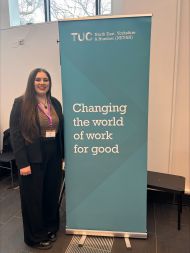
Discovering true democracy: a young member’s perspective on attending TUC NEY&H's Regional Conference
Young GMB activist Rosie McKenna shares her experience of the NEY&H Regional Conference - reflecting on how it has deepened her understanding of the movement and inspired her to stay active.
Reflections on the General Strike, 100 years on
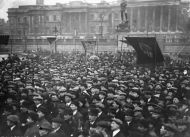
This year’s May Day celebrations have an added historical resonance for trade unionists. Monday 4 May marks the centenary of the start of the General Strike – a momentous event in British industrial and political history. But what is its real legacy? How did it shape trade unions in the decades after? And a century on, what are its lessons for today’s movement?
IWMD 2026 - Remember the dead. Fight for the living.
Today is our day. A day when workers across the world demand the right to be safe at work. A day when we call on governments, regulators and employers to act. And a day when we say, together: Remember the dead. Fight for the living.

Senedd election 2026: why vote?
On 7 May you get to have your say about who runs Wales. Here’s our quick guide on everything you need to know about voting in the Senedd election.

Building the fight against outsourcing
Outsourced workers keep our hospitals, transport networks and public buildings running. Yet they are too often trapped on poverty wages, insecure contracts and inferior employment rights, while multinational firms harvest profits from the public purse. Across our region, outsourced workers are organising and fighting back.

The new Fair Work Agency – latest developments and union priorities
The new Fair Work Agency aims to strengthen enforcement of workers’ rights. This blog explains what it means, what’s changing next, and the key priorities unions will be pushing to ensure it delivers for working people.

Important new energy support for industry must be expanded
The government has today announced important changes to its forthcoming energy cost support scheme, the British Industrial Competitiveness Scheme (BICS). It will now be extended to around 10,000 energy-intensive businesses, backdated to April 2026, and partially funded by the Exchequer.

Employment Rights Act 2025: What’s changing from 6 April
A further wave of employment rights introduced under the Employment Rights Act 2025 comes into force today.

How we build a Wales that works for everyone
As Wales hurtles towards the Senedd election in May, the future political direction of the nation remains as unclear as ever. Read how you can help build a Wales that works for everyone.

How we build a Wales that works for everyone
As Wales hurtles towards the Senedd election in May, the future political direction of the nation remains as unclear as ever. Read how you can help build a Wales that works for everyone.
Unity Works - and we're proving it again
Every day working people keep this country going - in our hospitals, shops, factories, railways and offices. And despite the challenges we face, there is a real appetite for change and a belief that Britain can do better.
1796 days and counting! Defending democracy is not a crime #FreeLeeCheukYan
Lee Cheuk-yan, the General Secretary of Hong Kong’s trade union confederation HKCTU which was forced to disband, is on trial for advocating core trade union values. He and Hong Kong trade unionists need our solidarity.

Working people are ready to defend the hard-won protections in the Employment Rights Act
Since Reform UK announced their attack on the Employment Rights Act a few weeks ago, nearly 25,000 people have joined the campaign to defend their rights at work.

Podcast: Pizza Hut, Pride and People Power
TUC North East, Yorkshire and Humber (NEY&H) Regional Secretary Dave Pike sits down with Local Heroes Podcast hosts Chris and Dan to unpack what modern trade unionism really looks like.

Standing together for unity and hope. 5 ways you can take action today
At its best and strongest trade unionism is expressed in positive terms. We have values that any decent person should share. We have a vision of what the workplace, society and the world should look like. And we have a roadmap about how to win that vision though action.

HeartUnions week matters more than ever
This HeartUnions week help spread the message. Talk about unions. Be proud of what we achieve together. Because the truth is simple: when unions do well, working people do well - and when working people thrive, Britain becomes a fairer, kinder place for us all.

Warm Homes must be all about jobs
TUC NEY&H welcomes the government’s Warm Homes Plan, and we especially welcome its support for 180,000 new jobs. But there’s jobs and there’s jobs.

Flexibility or fiction? Why the rise of talent platforms shows we need action on worker status
What do upmarket hotel Claridge’s, retailer Urban Outfitters and café chain Colicci’s have in common? They have all used so-called talent platforms: agencies that supply ostensibly self-employed workers to do roles such as shop assistants and baristas that most of us would expect to be employees.

How trade unionists built LGBT+ equality in Britain
LGBT+ workers face renewed and coordinated attacks. Far-right movements are using anti-LGBT+ narratives to scapegoat LGBT+ people – particularly trans and non-binary workers – while pressure grows to roll back inclusive policies and long-established LGBT+ charities and Pride organisations are being defunded. These attacks are inseparable from wider attempts to weaken workers’ rights, undermine public services and divide working-class communities.

It's time to build railways that will allow the North to thrive
It’s no secret the railways of the north have been on their knees for decades. But the government’s recent Northern Powerhouse Rail announcement is a glimmer of light at the end of a long tunnel.

Parents and unions agree: Educators need to be at the centre of AI in education
There is growing evidence that AI works worst when imposed from above. Across hospitals, offices, warehouses, and call centres, systems are sold by vendors, bought by executives, and handed down to workers. Problems surface late; adoption is uneven.

It's official: Employment Rights Act will deliver a stronger fairer economy
Government officials have confirmed what unions and experts have been saying for years: better rights at work strengthen the economy as well as protecting workers. An updated impact assessment finds that the Employment Rights Act will improve working conditions and job security for 18 million workers, deliver a significant net gain to society, and provide a boost to growth and employment.