The WTO at a crossroads: WTO Ministerial Conference in Cameroon
The Ministerial Conference serves as the WTO’s highest decision-making forum, bringing member states together to negotiate rules and set the direction for international trade.
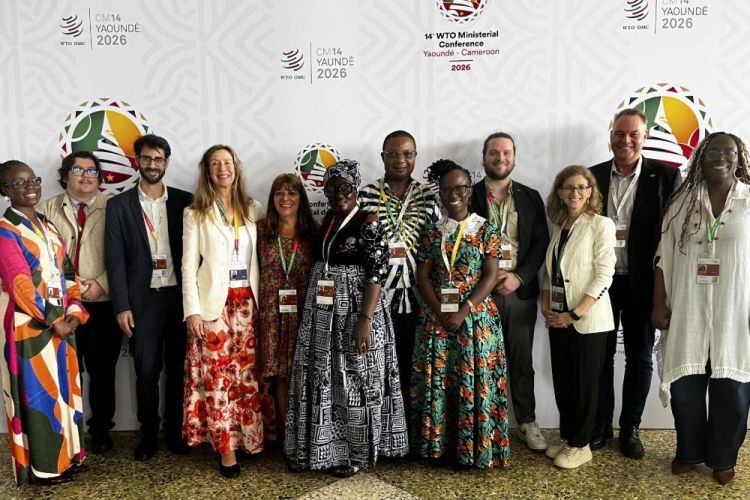
The TUC was part of the International Trade Union Confederation’s delegation along with unions from Africa, Latin America and Europe.
A missed opportunity for reform
Expectations were high in the lead up to this Ministerial Conference.
The pressure for WTO reform had been heightened by countries witnessing Trump’s tariffs breaking WTO rules but resulting in no repercussions from the organisation.
The international union movement has been calling for WTO reform for years due to the fact the WTO does not serve workers’ interests.
There are no requirements for WTO member states to respect workers’ rights.
Its rules have also restricted the actions it is possible for governments to take in Global South countries. This has resulted in limited industrialisation, an overdependence on exporting primary goods, and minimal possibilities for decent job creation in Global South countries.
Trade unions had hoped that the Ministerial Conference would provide an opportunity to increase support for global rules that safeguard the interests of workers and allow countries to support domestic industries.
The US administration however, had other plans for the Conference.
US administrations have for a number of years had concerns that the WTO has ruled against some of its actions, just as it has ruled against other countries around the world.
As a result, the US has refused to appoint a judge to the WTO’s appeal court for several years, which has undermined the WTO’s ability to function.
Under Trump, US officials were given a specific mandate to undermine the multilateral trading system.
This was a major reason the ministerial meeting failed to agree on most of the items under discussion.
Trade union engagement
At the Ministerial Conference trade unions met with a number of governments to call for changes to WTO rules to allow countries to support domestic industries, support decent job creation, and add requirements to respect international labour rights.
The international trade union delegation met with government negotiators from Brazil, Germany, Italy, Nigeria, Norway, South Africa, Sweden, UK and Uruguay.
These discussions were productive and several negotiators recognised the need to include labour rights in the WTO rulebook and promote more meaningful inclusion of unions in WTO consultations.
However, they shared that it would be difficult to advance these conversations at this Conference. The most urgent issues for unions were barely being discussed in the negotiation room.
There was a concerning lack of access granted to trade unions and other non-governmental organisations at MC14. This meant it was difficult for unions to influence the negotiation process.
Concerns were further heightened by reports of suppressed protests and constrained public demonstrations during the Conference.
Lack of progress
For unions it was very concerning that negotiations failed to agree an extension of countries' ability to produce generic medicines – the so-called ‘TRIPs waiver’.
It was also disappointing there was no agreement to countries being able to charge taxes on digital transmissions– instead the so-called ‘ecommerce moratorium’ is likely to be extended at the May meeting of the WTO General Council.
After the conference, the ITUC expressed concern that the WTO ministerial failed to deliver for workers.
What’s next?
The outcomes of the WTO ministerial conference suggest that the future of global trade may be moving toward smaller, plurilateral agreements between countries rather than being able to reach agreements at the WTO by broad multilateral consensus.
While this approach may allow for progress among willing participants, it also risks further fragmenting the global trading system and locking out countries with less power from negotiations.
Trade unions are clear that we need an overhaul of rules for global trade.
To build a global trading system where workers’ rights are protected and decent job creation prioritised, trade unions must be involved in WTO negotiations and discussions on global trade policy.
The TUC will continue to engage with the UK government and with governments globally through the ITUC to call for worker-centred reform at the WTO and for international labour rights to be promoted by global trade rules.
Stay Updated
Want to hear about our latest news and blogs?
Sign up now to get it straight to your inbox
