
General Council Report 2026
5.1 Developing the TUC
We continued to implement our 2024–26 strategy, working under our five agreed aims of:
a growing union movement that reflects the diversity of today’s working class and has the power to intervene effectively for workers
workplaces where every worker has strong rights and is protected from discrimination
a fairer economy that delivers secure jobs and rising wages and supports strong public services
an economy where workers can shape and are prepared for the challenges of the future
a strong TUC that is sustainable, effective and a great place to work.
We have identified priority projects within these aims and introduced a system of monitoring and evaluation of our work. We have also implemented a new planning process as we begin our work on the strategy for 2027–29.
Operationally, we have implemented a new performance management system to improve our annual review and line management processes. Following a review in 2025 of our existing disciplinary and grievance procedures, these have been updated and are now being embedded into working practice. Our new finance system continues to provide efficiencies and greater security, and we have restructured the finance team to provide additional support and enhance the service provided. The IT infrastructure was successfully upgraded to provide improved flexibility in the workplace, and we have successfully achieved cyber essentials accreditation.
Our new finance system continues to provide efficiencies and greater security, and we have restructured the finance team to provide additional support and enhance the service provided.
5.2 Sale of Congress House
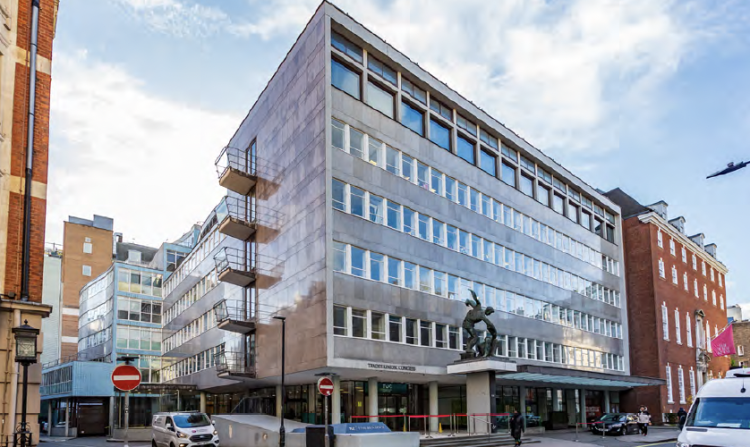
As previously reported, the General Council took the difficult decision to sell Congress House and seek a new-fit-for-purpose home for the trade union movement in 2024.
We appointed Newmark property consultancy to assist with project managing the sale and subsequent purchase. Following a commercial process that saw over 100 viewings, the TUC agreed, with trustee approval, heads of terms with a potential purchaser in June 2025. As a result of substantial delays on the buyer’s side, the trustees agreed to withdraw from this transaction and return to market in March 2026. At the time of writing, we have successfully obtained a pre-app planning document that supports possible development options for interested parties and are engaging with the market with a view to securing a new purchaser for the property.
In preparation for the sale, our internal project group has successfully undertaken extensive financial and legal due diligence, cleared the basement areas of the building, disposing of tonnes of waste, recycling materials and transferring significant quantities of documentation to the TUC archives in Warwick. We’ve also considered plans to preserve the history of Congress House for the movement.
5.3 Congress Awards
At Congress 2025, the Health and Safety Award winner was Abigail Young from GMB and the Organising Award went to Robert Smalley from Unite. The winner of the Youth Award was Adam Birks from Usdaw. The joint winners of the union learning rep (ULR) award were Sofia Anysiadou and Lisa Simpson from UNISON. The Women’s Gold Badge recipient was Sonya Pickford from UNISON.
5.4 Comms Awards
The Trade Union Comms Awards are a highlight of the year – celebrating the creativity, skill and impact of union communications.
From powerful member storytelling and standout campaigns to organising workers and holding employers and politicians to account they showcase how we make working people’s voices heard.
Congratulations to last year’s winners: Best Union Journal, The Journalist (NUJ); Best Recruitment and Organising Communication, Awesome Teacher (NASUWT); Best Campaign Communication, Health and Safety Matters (Usdaw); Best Megaphone Petition, Save Bethnal Green Working Men’s Club (Equity); Best Use of Social Media, New video first social media strategy (NASUWT); and Best Communication from a Smaller Union, Nautilus TV (Nautilus International).
5.5 Women’s Conference
The theme of the TUC Women’s Conference 2026 was ‘Resisters: smashing the status quo’. Over 300 women from across the movement debated key issues, including tackling violence against women and girls, the far and populist right, the impact of AI and women’s workplace rights.
We hosted a panel discussing the rise of misogyny and the far right, and the TUC Women’s Committee issued several statements on peace, AI and rights for self-employed workers. In line with resolution 12, HOPE not hate spoke on the panel.
5.6 LGBT+ Conference
The theme for the LGBT+ Workers Conference was, ‘Looking Back, Moving Forward with Unity.’ More than 250 people attended the conference in Brighton, with delegates debating key issues including hate crime and the far right, access to health care and services, inclusive education, international LGBT+ rights, Pride, and government’s LGBT+ policies, with a focus on trans, non-binary and gender-diverse rights and the Equality and Human Rights Commission (EHRC) updated code of practice on services, public functions and associations.
We hosted a panel discussion entitled ‘Beyond Fear: self-declaration, solidarity and the future of trans rights’ and received a keynote speech from equalities minister Olivia Bailey MP.
5.7 Disabled Workers Conference
The theme of our Disabled Workers Conference was ‘United: breaking barriers, defending rights’. More than 250 people attended the conference, held in the Bournemouth International Centre, debating a range of issues including government influencing access to work, personal independence payments (PIP), changes to the law and government reviews, reasonable adjustments, hate crime and the far right, and access and representation.
We hosted a panel discussion entitled ‘Government, Employers and Barriers to Work: From access to work to PIP’. Our range of keynote speakers included minister of state for employment Diana Johnson DBE MP.
5.8 Black Workers Conference
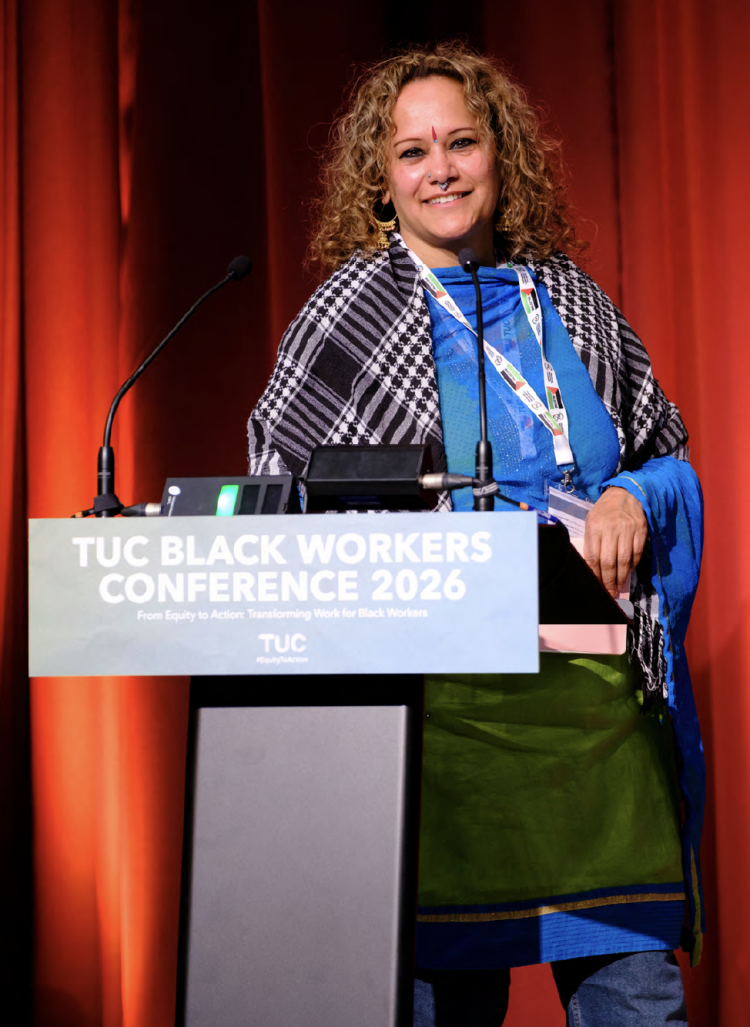
Under the theme ‘Equity to Action: Transforming work for Black workers’, the Black Workers Conference 2026 debated 25 motions covering workplace racism, health inequalities, migration, media narratives, AI, maternity injustice, and strategies to counter far-right organising. Emergency motions also addressed war, international solidarity and the cost-of-living crisis. With 346 attendees, the conference reaffirmed commitment to collective action, solidarity and democratic participation.
5.9 Young Workers Conference
More than 150 delegates debated 29 motions, including organising young workers, affordable housing, ending sexual harassment and protecting migrant workers. Workshops, speakers and fringe meetings covered topics such as having one-to-one conversations, navigating trade unions, defying the narrative on migration, the housing crisis, international solidarity, the Employment Rights Act (ERA) and tackling workplace violence and abuse.
5.10 Trades Councils Conference
Held in Leeds at the end of May, the conference drew more than 70 delegates – the highest attendance for some years – to debate resolutions on a range of issues, including employment rights, the far right, AI, access to health care, the war in the Middle East and housing. It agreed to allow the Trades Union Councils’ Joint Consultative Committee (TUCJCC) to co-opt a TUC Young Workers Committee member to improve links between trades councils and young workers. The conference was addressed by Richard Burgon, MP for Leeds East.
5.11 TUC finances
The full statutory financial statements for the year ended 31 December 2025 are included in Appendix 3. It shows a total deficit and reduction in assets of £29.6m, reducing total funds from £71.8m to £42.2m. This was made up of tangible fixed assets and investments of £38.7m, with net current assets of £4.5m being offset by long-term tax and employee liabilities of £1.0m. The deficit was driven by changes in the value of assets and liabilities, including a reassessment of the recoverability of the pension surplus (-£26m impact) and continuing difficulty in the London commercial property market, which led to a significant fall in property values (-£2.6m impact). The operating deficit on ordinary activities of £1,548,000 also contributed to the deficit. It was made up of a deficit of £1,717,000 on the administration fund being partially offset by surpluses of £40,000 and £129,000 on the development and external grants funds respectively.
5.12 Administration fund
The administration fund (covering day-to-day office running expenses and staff costs) deficit of £1,717,000 was due to ordinary income of £19.3m not covering expenditure of almost £21m. Ordinary income of £19.3m was £778,000 above budgeted income primarily because membership numbers increased above the 2024 figure and exceeded our estimated number for 2025. Additionally, sales and grant income surpassed expectations. Expenditure of £21m included an additional £1.78m due to planned costs of restructuring not included in our ordinary administration fund.
Additional relocation costs were also borne by the administration fund, as were the tax costs associated with the successful disposal of investments.
Without these additional costs, ordinary expenditure against ordinary income would have resulted in an administration fund surplus of £100,000.
5.13 Development and external grants funds
In 2025, 10 per cent of the affiliation fee was allocated to the development fund, plus additional contributions from affiliates and grants for projects, and was used to promote new work and General Council initiatives in the following priority focus areas:
building and diversifying our movement
strengthening workplace rights and protections
getting wages rising and transforming public services
preparing for future economic challenges
the Covid-19 Public Inquiry.
The development fund showed an operating surplus of £40,000, made up of just under £1.767m of income offset by £1.727m of expenditure. £1.5m of affiliation fees were set aside to fund this work, with additional income of just under £267,000 received from external sources such as contributions to the cost of the Covid-19 Public Inquiry legal fees, and sponsorship for other work. The operating surplus of £40,000 was caused by underspends across numerous projects.
The external grants fund is made up of grants and payments from external funders, such as devolved and local governments, for specific programmes of work. The £129,000 surplus was made up of just over £2.623m of income mostly offset by expenditure of £2.494m, with the difference due to the timing of income and expenditure flows.
5.14 Prospects and developments
A budget for the 2026 administration fund has been agreed by General Council. This showed a projected surplus of £9,203, which was based on the sale of Congress House early in 2026. The sale has not progressed, and the projected administration fund deficit stands at £653,000, based on the additional costs associated with the building remaining unsold throughout the year. General Council approved an affiliation fee increase of five per cent for 2026.
The TUC holds the freehold of Congress House, Bainbridge House, Great Russell Street, London WC1B 3LS and a charge of £9m was granted to the society in March 2006 which was released by a deed of agreement dated 11 June 2025. The deed also made provisions for a charge to be agreed, on substantially the same basis as the released charge, on the building that TUC acquires after the sale of Congress House, Bainbridge House.
The TUC has retained its Fair Tax accreditation.
5.15 TUC Finance Committee
The Finance Committee met in October, December, March, May and July of this Congress year. It approved the TUC’s budget for its administration, development, external grants and relocation funds in December, and received regular updates on each of these budgets throughout the year. It also received updates at each meeting on the sale of Congress House, risks, and associated mitigations. It discussed the balance of funding between the TUC and STUC, and discussions on this are expected to conclude this year. In March it approved a car policy for the general secretary, and in May it received a report from the TUC’s auditors on the annual accounts.
5.16 TUC Library collection
This year, the TUC Library marked the 50th anniversary of the Grunwick Strike with its exhibition Grunwick 50: Workers, rights and resistance. Currently on display on the ground floor of the Learning Centre at London Metropolitan University, it will remain open until 1 December.
The library commemorated the centenary of the 1926 General Strike through a series of public events and displays. These included hosting a webinar on the anniversary and contributing a showcase of materials from the collections during our event at Congress House – The General Strike 100 years on: In conversation with John Monks and Jonathan Schneer.
We have made progress in improving digital access to the library. The TUC project website, unionhistory.info, has been integrated into London Metropolitan University’s special collections catalogue, https://collections.londonmet.ac.uk This offers enhanced functionality for digitised materials, making the collections more accessible and easier to explore.
Enquiries and visits can be arranged through the TUC librarian, via email at specialcollections@londonmet.ac.uk
The library commemorated the centenary of the 1926 General Strike through a series of public events and displays. These included hosting a webinar on the anniversary and contributing a showcase of materials from the collections.
Stay Updated
Want to hear about our latest news and blogs?
Sign up now to get it straight to your inbox
