General Council Report 2026
4.1 AI and rights at work
As artificial intelligence (AI) rises up the agenda, we have worked with unions in two ways to develop a strategy. First, we have worked to build union capacity to understand, negotiate and advocate on AI. This year we have worked with hundreds of reps, officers and senior leaders to demystify AI, rooting responses in workplaces. We also hosted a Collective Bargaining on AI forum, with trade unionists, lawyers and policy specialists to accelerate negotiations on AI. Recognising the need for sectoral responses, the TUC and nine unions in education delivered a pilot ‘action learning’ project to develop union strategies, helping to catalyse a cross-sectoral response. We also launched Workers and Machines, a newsletter of authoritative, accessible and actionable insights on AI for the movement.
The second part of our strategy is building a pro-worker policy agenda, based on our 2025 policy platform. We are promoting the essential role of workers and unions in shaping AI at work, confronting abuses by tech companies and employers. This included the TUC and CWU bringing together leading online safety campaigners to hold TikTok accountable for mass redundancies of over 400 workers, in line with emergency resolution 4. Weak AI adoption and growing public concern around its application has given us leverage.
This year progress has been made, with the government naming ‘pro-worker AI’ as a key theme in its plans to make the UK the fastest AI adopter in the G7. Unions have been participating in the new AI and Economics Institute and the AI Early Careers Alliance – including finance unions, as called for in composite 11. We have actively participated in the public sector-focused Responsible AI Adoption Panel, the Women in Tech Taskforce and the Mayor of London’s AI and Jobs Taskforce. We are clear that robust action is now needed.
This year we have worked with hundreds of reps, officers and senior leaders to demystify AI, rooting responses in workplaces.
The government has dropped its intention to weaken copyright protections; however, Labour’s manifesto commitment to bring forward an AI Bill, as noted in composite 10, has not materialised. We are pushing for full delivery of the Make Work Pay commitment on workplace surveillance, tackling exploitative ‘dynamic pricing’ as evidenced in our report, The human price of dynamic pay, and a wider pro-worker AI agenda – including extending collective bargaining to technology, using public procurement to confront the entrenched power of big tech in public services and comprehensive skills and training for workers impacted by AI.
4.2 Skills
Over the past year, we worked with affiliated unions to advance skills policy and workforce development, building on resolution 9, which identified an unprecedented crisis in education. This included recruitment and retention challenges, course closures, and too many young people and adult learners being denied access to high-quality, inclusive education – undermining social mobility, regional growth and economic transition. The crisis reflects excessive marketisation, particularly in higher education, alongside sustained underfunding despite the sector’s vital role in national renewal.

In response, we have been working with affiliates to develop a bold vision for a National Education Service, alongside an ambitious, worker-led approach to skills and lifelong learning.
A key strand of this work is the TUC Skills Project 2050, which is shaping a long term, worker-led vision for an inclusive, high-quality skills system that responds to technological change, decarbonisation and labour market shifts. Launched in June, the project brings together unions, policy makers and experts to ensure reform is rooted in the realities of working people.
We continue to champion unions and union learning representatives (ULRs) as essential partners in widening participation, improving progression and supporting workplace learning.
We have engaged closely with government departments and Skills England to ensure workers’ voices are central to policy development.
We have submitted evidence highlighting:
the essential role of unions in supporting millions of workers
persistent employer underinvestment in skills and training
the long-term impact of government disinvestment
concerns about the quality and accessibility of employer-led training and apprenticeships.
This has informed our wider influencing work, including submissions to the autumn 2025 budget and spring 2026 statement, calling for the reinstatement of the Union Learning Fund (ULF) and sustained public investment in skills.
TUC representatives continue to shape national policy through senior roles in Skills England and the Industrial Strategy Advisory Council, ensuring that skills reform delivers good jobs, fair access and economic growth in every region.
4.3 Climate change and just transition
We have expanded our proactive approach to delivering a rapid and just climate transition that protects jobs and workers’ rights.
We coordinated policy advocacy and engagement with national government, including:
setting up a co-chaired taskforce with government on the Warm Homes Workforce, to deliver good jobs and a skilled workforce for the retrofit of the nation’s homes
coordinating the union side of negotiations for the initial Fair Work Charter for Offshore Wind
winning commitment by government to creating the North Sea Jobs Service
advocating for a plan for the North Sea oil and gas supply chain
coordinating the Trade Union Advisory Council for GB Energy, helping win commitments to invest millions into upgrading the supply chain.
In line with resolution 75, we developed a series of activities and interventions for the Year of Trade Union Climate Action 2025–26.
Our events during the Year of Trade Union Climate action included:
the All to Play For: Building a positive future for energy supply chains conference in Durham, bringing together unions, cabinet members, industry and climate campaigners to plan a future with good energy jobs in the North-East
the On Fire and Under Fire: Climate, backlash and winning with working-class communities event during London Climate Action Week in Congress House
Energy Shockwaves: What Trump’s war on Iran means for UK manufacturing jobs held online.
We worked with our unions and supported organising of events throughout the year, promoting these through our revamped and relaunched TUC Climate webpage, as well as including resources and case studies for green reps.
Case studies of successful transition in the UK and internationally were also collated on our Futureproofing Manufacturing page.
TUC staff produced videos on the urgency of protecting and expanding climate investment, including a video of a teacher supporting solar panels on his school roof.
We pushed for trade union objectives in the government’s ongoing negotiations to build a closer economic and political relationship with the EU.
4.4 Trade and the EU
In line with resolution 13, we pushed for trade union objectives in the government’s ongoing negotiations to build a closer economic and political relationship with the EU.
We met with the foreign secretary Yvette Cooper MP, minister for the constitution and European Union relations Nick Thomas-Symonds MP, Cabinet Office and DBT officials to feed into these negotiations. And we continued to chair the UK-EU Domestic Advisory Group, represented by Mike Clancy (Prospect). This group enabled us to join with business groups to advocate for commitments to protect the highest standards of workers’ rights and good jobs in UK-EU negotiations.
To influence EU decision-makers in negotiations, we released a joint statement with the European Trade Union Confederation (ETUC) in June on the shared objectives workers have on both sides of the Channel. The TUC also held meetings with representatives of the German and French governments with sister trade union centres in these countries.
In January, we met trade minister Sir Chris Bryant MP to call for protections for manufacturing from unfair competition, express concern about the impact of the Trump administration’s tariffs – particularly on steel and automotive sectors – and welcome the government’s commitment that UK trade agreements would ensure respect for labour rights.
However, in May we raised concerns that this commitment was not aligned with the government’s trade negotiations with the Gulf Cooperation Council states, where there are widespread labour rights abuses. The TUC raised this at a roundtable with minister Chris Bryant as well as criticising the Investor-State Dispute Settlement provisions included in the agreement.
We took part in the International Trade Union Confederation (ITUC) delegation to the World Trade Organisation (WTO) ministerial conference in Cameroon in March, where we again met minister Chris Bryant and pushed for reforms to the WTO to protect workers’ rights and governments’ ability to protect domestic industries and promote good jobs.
4.5 International
We have continued to participate in the ITUC General Council, taking a delegation to its meeting in Addis Ababa in December, the first time it has met in an African nation. This meeting passed a resolution demanding actions for peace in Sudan.
The TUC is represented on the ETUC Executive Committee. In May this Committee agreed a joint TUC-ETUC statement on objectives for UK-EU negotiations.
Our General Council issued a statement in January condemning the US’ illegal attack of Venezuela and abduction of President Maduro and his wife as violations of international law and sovereignty, raising these concerns with minister for Latin America Chris Elmore MP.
In March, we also issued a statement through our General Council condemning the US and Israel’s attacks on Iran as violating the UN Charter and international law, raising this with minister for the Middle East Hamish Falconer MP. The TUC continued to work closely with the Arab Trade Union Confederation to raise concerns of workers in Iran and the Middle East region.
We have continued to participate in the ITUC General Council, taking a delegation to its meeting in Addis Ababa in December, the first time it has met in an African nation.
In line with composite 14, resolution 72 and emergency resolution 5, TUC and union advocacy contributed to the UK government’s decision to recognise the State of Palestine in September 2025. At the General Council meeting in January, unions pressed minister Hamish Falconer on policy priorities, including: the UK’s obligations under the Genocide Convention and the impacts of the genocide on workers, including journalists; banning settlement trade and suspending the UK-Israel Trade and Partnership Agreement; IDF raids on the offices of the Palestinian General Federation of Trade Unions; arms sales to Israel; lack of Palestinian representation on President Trump’s Board of Peace; and respect for international law and the right to self-determination.
In June, the TUC organised a delegation to the UK with Shaher Sae’d, General Secretary of the Palestinian General Federation of Trade Unions, and Dr Hind Benammar, Executive Secretary of the Arab Trade Union Confederation. The delegation took part in a joint TUC-Labour Friends of Palestine and the Middle East parliamentary briefing and met with several MPs and ministers. We continued to promote the workplace days of action for Palestine, which took place in February and May, and supported equality conferences where Palestine was raised in motions. We maintain a constructive relationship with the Palestinian ambassador, Dr Husam Zomlot, and met with him in March.
Supporting emergency resolution 1, the TUC signed a joint letter with several affiliates, and in March our president joined the lobby of parliament organised by the Palestinian Solidarity Campaign.
We engaged with the UK government to protect the mandate of the ILO from threats by the Trump administration to undermine the organisation by seeking to appoint its nominee for deputy director-general while withholding $200m in membership fees.
At the 114th International Labour Conference, TUC delegates played leading roles across committees. Our representative on the ILO Governing Body, Amanda Brown, served as vice-chair of the Platform Committee, supported by Peter Wieltschnig (TUC) and Lola Brittain (Equity).
Former TUC General Council member Diana Holland and Abigail Hunt (TUC) took leadership roles on gender and social dialogue committees respectively, while Stephen Russell (TUC) participated in 10 cases in the Committee on the Application of Standards, including challenging Nigeria over the arrest of NLC President Joe Ajaero that prevented his attendance at TUC Congress 2024.
Following TUC and global union advocacy, the Ethical Trading Initiative (ETI) adopted a new four-year strategy placing freedom of association at its core and strengthening alignment with ILO standards. Trade unions remain represented on the ETI Board via the TUC, ITUC and the International Transport Federation (ITF).
The TUC continued to support trade unions and the defence of labour rights in Ukraine, including a statement with affiliated unions on the third anniversary of Putin’s illegal invasion of the country and through ongoing engagement at the ILO.
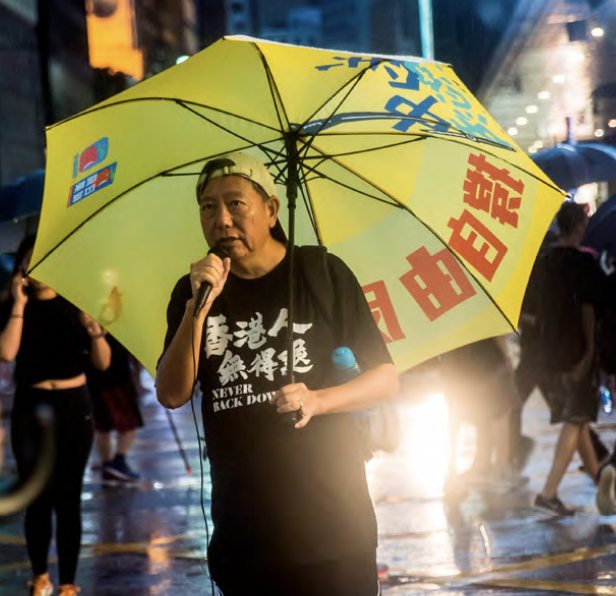
We backed the ITUC campaign to free former Hong Kong CTU president Lee Cheuk-yan, with our president participating in international action and advocacy pressing the UK government to intervene.
In May, our general secretary addressed the L7 in Paris, celebrating the Make Work Pay Agenda but warning of the need for effective enforcement of employment rights and the need for governments to support multilateralism based on human rights and respect for international law.
The TUC continues to work with international partners to build global campaigns against the far right.
The TUC signed the Cuba Solidarity Campaign coordinated statement in January expressing concerns about US threats to Cuba’s sovereignty and increased penalties on the country. We are seeking a meeting with the Foreign, Commonwealth and Development Office (FCDO) minister for Latin America Chris Elmore MP raising these concerns and members of the TUC Executive Committee met the Cuban ambassador in March.
We supported the Justice for Colombia May/June delegation from Britain, Ireland and Spain to coincide with the first round of the Colombian presidential election. TUC president Steve Gillan joined a group of trade unionists and politicians to meet with Colombian trade unions, human rights defenders and leading political and peace process figures, observe the electoral process and continue to support labour rights and the peace process.
4.6 Trade union support for peace
In line with resolution 37, the TUC has continued to call for peace and to respect international humanitarian law, issuing statements on Gaza, Venezuela, Iran and Cuba. We were a key organiser and driver of the ETUC’s Trade Unions for Peace initiative launched in Dublin in June to build trade union capacity in conflict resolution and peacebuilding, drawing on trade union experiences of peace processes and to discuss building the economic conditions for peace, social justice and individual and collective rights – calling on governments to engage in multilateralism and dialogue to end conflict.
The TUC has continued to call for peace and to respect international humanitarian law, issuing statements on Gaza, Venezuela, Iran and Cuba.
4.7 Covid-19 Public Inquiry
Starting in June 2023, the Covid-19 Public Inquiry completed its final public hearings this year. Over the course of the inquiry, we have participated in eight of the ten modules looking at the impact of the pandemic and the government’s response – with witness from the TUC, GMB, UNISON, NEU, NASUWT, RMT and Usdaw as well as colleagues from TUC Cymru, the Scottish Trades Union Congress (STUC) and the Irish Congress of Trade Unions: Northern Ireland Committee (ICTU-NI). In addition, we received over 7,500 responses to our members’ survey, covering a wide range of sectors. The voice of our members was heard loud and clear in the inquiry – reflected in many of the recommendations. The full range of TUC interventions in the inquiry, from our witnesses and legal team, can be found on the TUC’s covid-19 inquiry web page.
Further thematic and sectoral reports will be published over the next 18 months and we will be keeping the pressure on government to act on the recommendations, learning the lessons for when we face similar threats in the future and working to inform the UK government’s resilience action plan, in line with resolution 31. In March, the TUC held a day of reflection as part of a nationwide series of events commemorating those who lost their lives in the pandemic, where we heard moving testimonies from those who worked on the front lines in those terrible days.
Stay Updated
Want to hear about our latest news and blogs?
Sign up now to get it straight to your inbox
