TUC Equality Audit 2024
This section looks at the extent to which unions have achieved successful outcomes to their equality bargaining for example reaching agreements or policies with employers. Again, the results are split into two parts: equality gains made in general bargaining topics, such as pay and benefits; and gains on specific stand-alone equality topics.
Equality elements of general bargaining topics
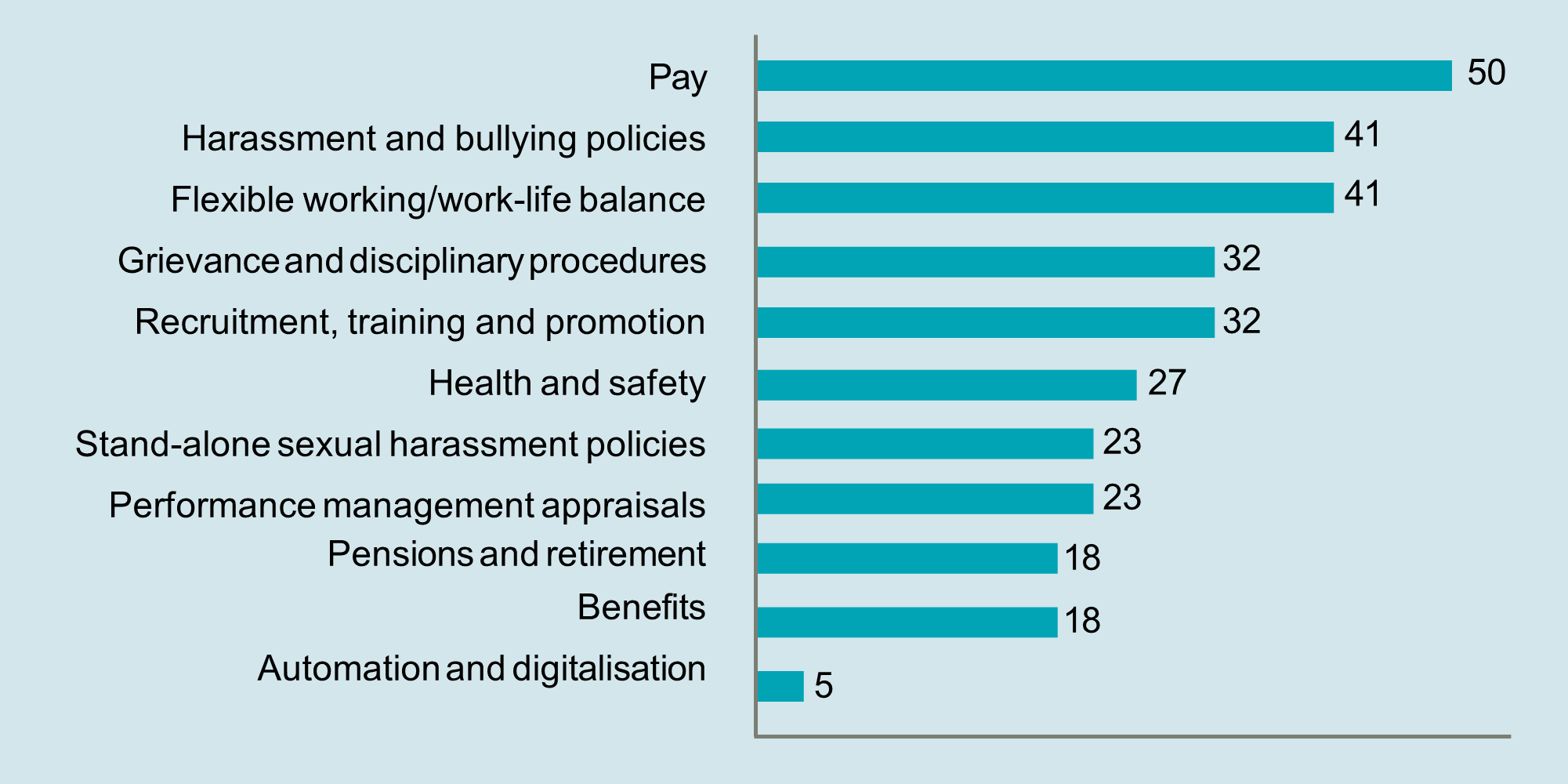
Figure 9 shows the percentage of unions that said they had achieved successful outcomes on equality aspects in general bargaining topics in the previous four years.
The figures indicate which areas have most commonly resulted in success. They suggest that unions are most likely to have made equality gains in the areas of pay, flexible working/work-life balance, health and safety and harassment and bullying policies.
Figure 9: Unions achieving equality gains in general bargaining topics (per cent)
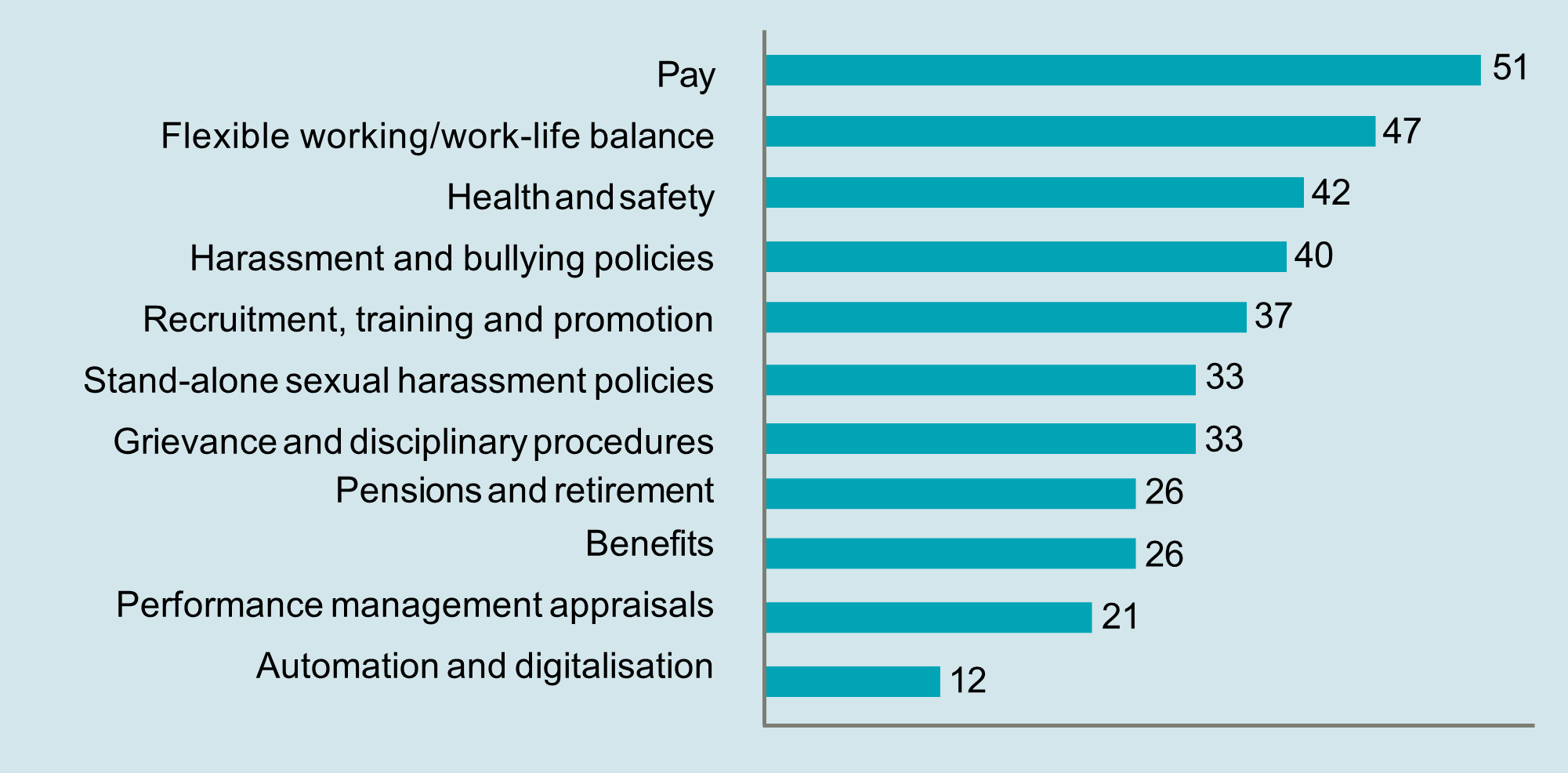
A comparison with the 2020 Equality Audit (Table 7) would appear to indicate that fewer unions have achieved bargaining gains in many of these areas. However, this is not a correct assumption, as more unions took part in the 2024 Audit (43 compared with 36), affecting the percentage figures. For example, the number of unions saying they had made gains on equality in pay this time is 22, whereas in 2020 it was 21.
However, the figures do allow a comparison of the topics where unions are most and least likely to have made gains. In 2024 the two areas with most success – pay and flexible working/work-life balance – are the same as in 2020. On the other hand, gains in recruitment, training and promotion and performance management and appraisals are further down the list than they were four years ago. The area where unions are least likely to have made gains in both years is automation and digitalisation policies.
Table 7: Unions achieving equality gains in general bargaining topics, 2024 and 2020 (per cent)
2024 2020
Pay 51 58
Flexible working/work-life balance 47 58
Health and safety 42 44
Harassment and bullying policies 40 39
Recruitment, training and promotion 37 47
Grievance and disciplinary procedures 33 28
Stand-alone sexual harassment policies 33 39
Benefits 26 22
Pensions and retirement 26 33
Performance management and appraisals 21 36
Automation and digitalisation 12 14
Looking at gains by unions in different size bands (see Figures 10, 11 and 12), large unions were more likely to have reached equality bargaining gains in all these areas than medium-sized and small unions.
For small unions, pay is the standout topic for gains, while in the other size bands the areas of success are more evenly spread.
Figure 10: Large unions achieving equality gains in general bargaining topics (per cent)
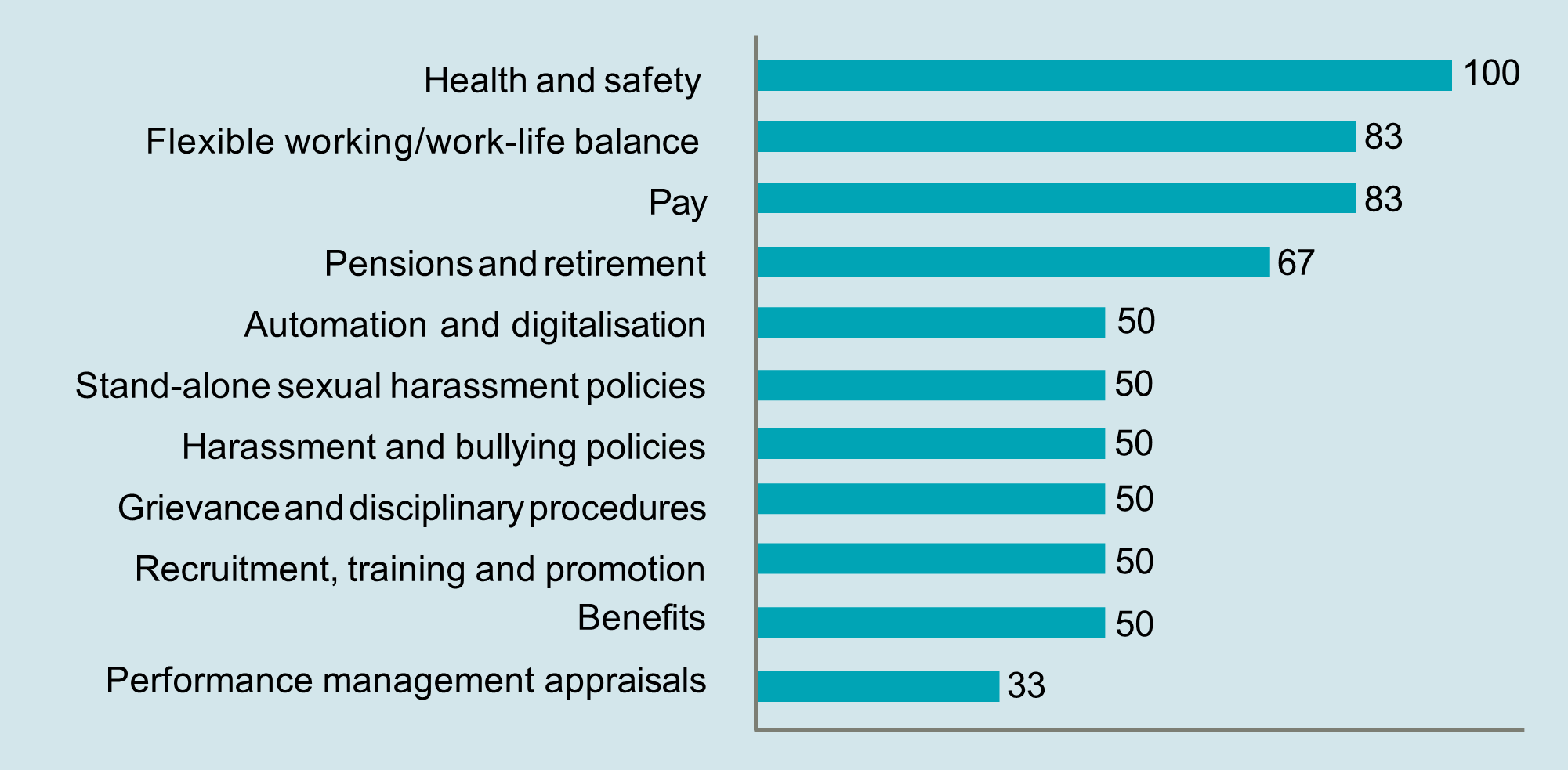
Figure 11: Medium-sized unions achieving equality gains in general bargaining topics (per cent)
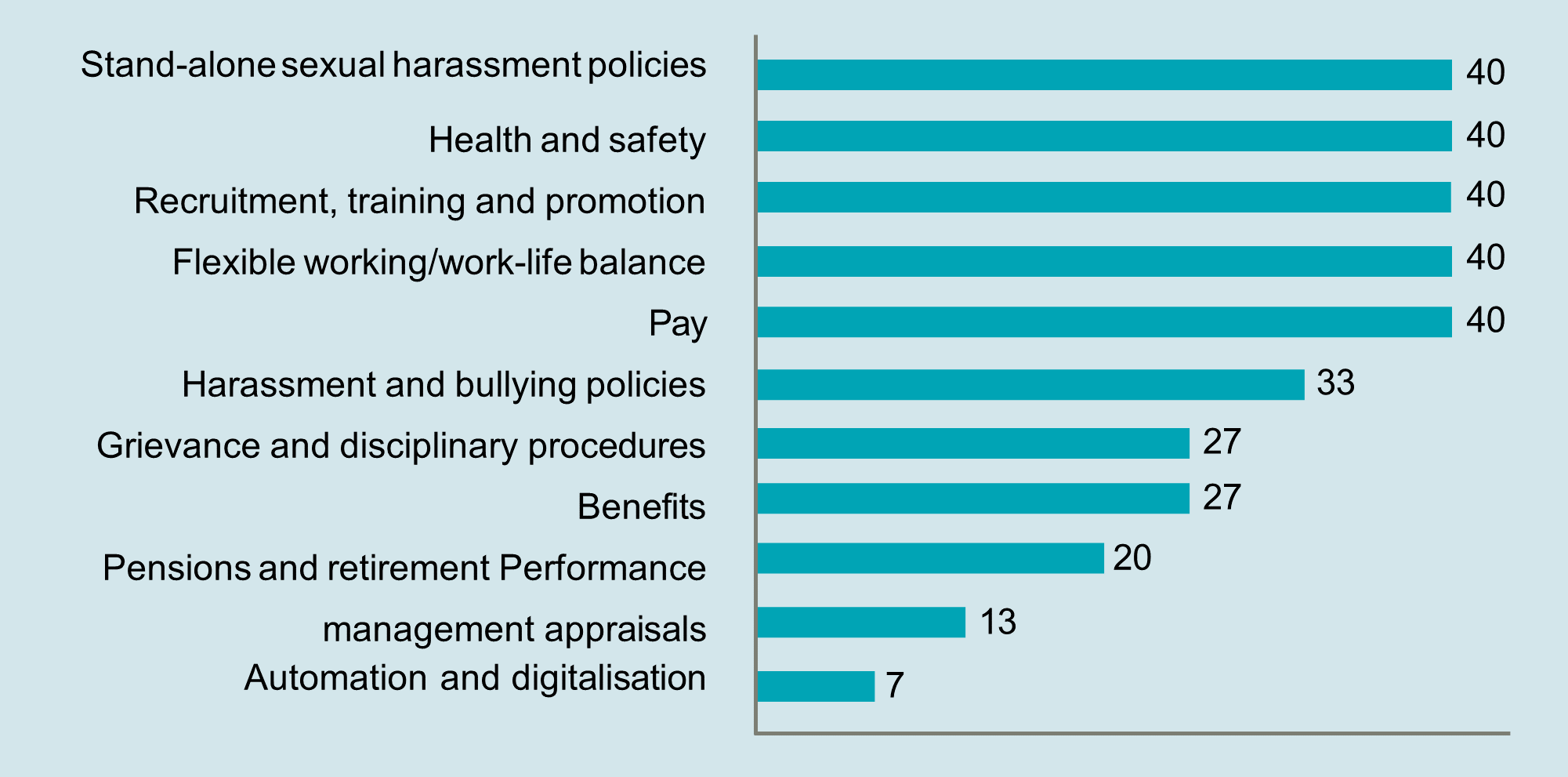
Figure 12: Small unions achieving equality gains in general bargaining topics (per cent)
Examples of negotiated gains on equality aspects of general bargaining topics
Unions were asked to provide some examples of the most important agreements they had reached with employers on equality aspects of general bargaining topics.
Pay, pensions and benefits
There has been further implementation of the CWU’s 2018 Four Pillars national pay agreement including action on part-timers’ holiday pay and the inclusion of low-paid staff in the collective defined contribution pension scheme.
In the 2023 Royal Mail agreement, in which the sick pay agreement was under threat due to rising levels of sickness absence, it was agreed that the causes of sickness absence would be investigated including bullying and harassment, grievance, mental health and neurodiversity. It would look at the role of the Equality Act 2010 and occupational health.
The NASUWT has been negotiating the implementation of the government’s remedy for unlawful age discrimination in the England and Wales Teachers Pension Scheme. It continues to negotiate with all three UK Teachers’ Pension Schemes and the relevant government departments over the implementation of the remedy and has trained its staff and lay activists in key aspects of the remedy.
Bullying and harassment
The policy on bullying and harassment at the National House Building Council, negotiated by the NHBCSA, notes that where such behaviour is exhibited towards people because of a protected characteristic it could be a breach of the Equality Act. The policy spells out a wide range of examples, including refusing to accept or use someone’s preferred pronouns, refusing to use someone’s correct name, denying non-binary identities and obstructing someone’s use of facilities aligned with their gender.
Performance management
The CWU’s Business Recovery, Growth and Transformation agreement with Royal Mail includes agreement to jointly design and implement a new performance procedure based on, among other things, “fairness and consistency”.
And the NASUWT notes that, over the last two years, it has reached agreement with an increasing number of academy trusts to replace Performance Related Pay Progression, which is a significant driver of discriminatory pay outcomes, with automatic time-served progression.
Health and safety
There has been headway for some unions in the area of support for staff facing domestic abuse. Unite reached an agreement with the University of Bath, which offers a range of support including allowing affected staff to seek support from external organisations, including legal support, in work time. Usdaw has reached agreements with several large employers including Sainsbury’s, Argos, Poundland and food manufacturer pladis. The pladis agreement includes five days’ paid support to enable affected staff to address issues such as attending court, medical or legal appointments or to seek safer accommodation.
Flexible working/work-life balance
In the Oasis Community Learning flexible working policy agreed with the NEU, the company actively encourages flexible working applications and “is committed to supporting requests for flexible working, where these are reasonable and operationally practical.” It also states that it wants its practice “to secure equity and fairness of both treatment and outcome for all.
The policy allows applications from day one and allows one formal request every six months 4 and offers a very wide range of flexible working options. CWU and Santander’s major 2021 agreement on new ways of working, in which large numbers of staff were shifted to home working, ensured protection for those with mental health conditions which might be worsened by home working.
Equalities bargaining topics
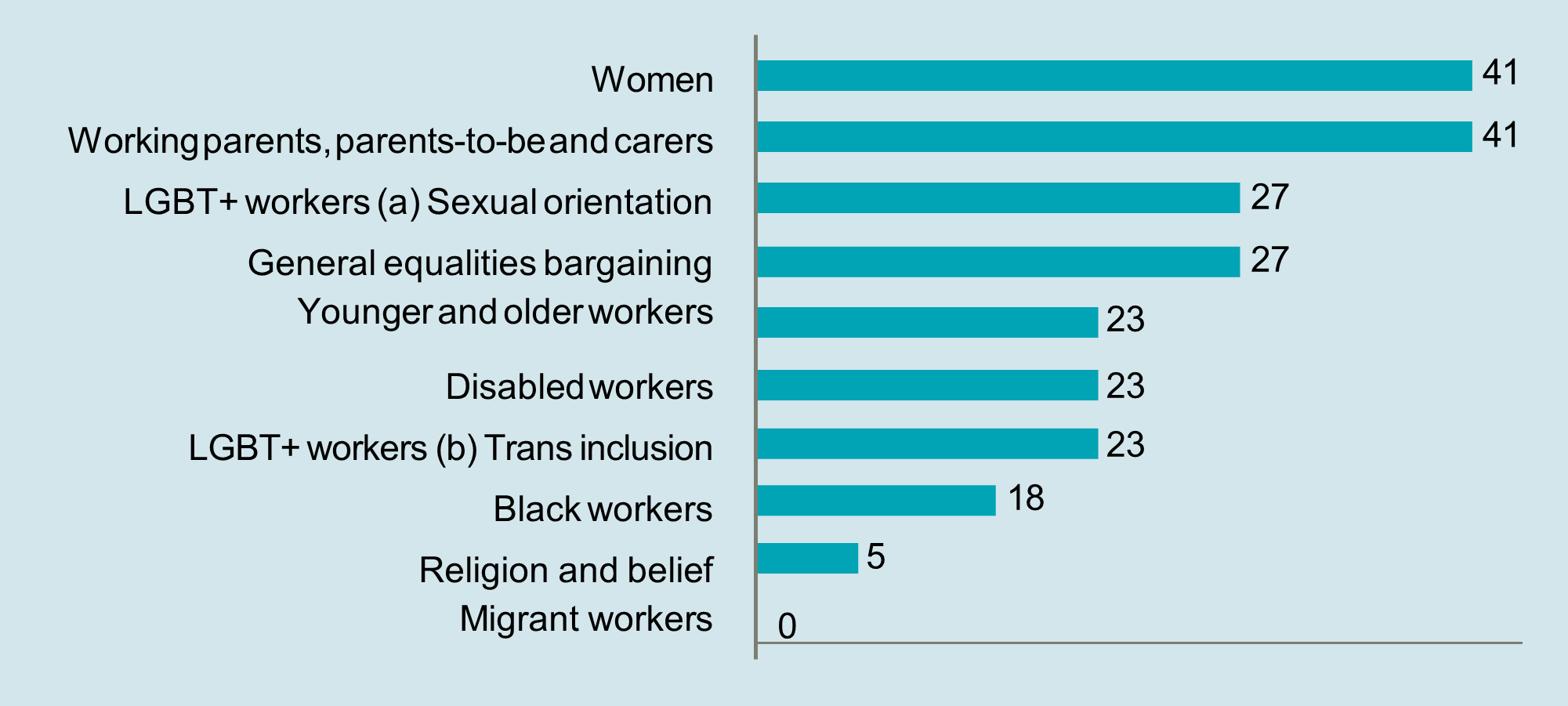
Figure 13 shows the percentage of unions who said they had achieved successful outcomes in equality bargaining topics in the last four years.
It suggests that unions are most likely to have made gains in connection to women workers followed by working parents, parents-to-be and disabled workers.
Figure 13: Unions making gains in equality bargaining areas in the previous four years (per cent)
- 4This was introduced ahead of new legislation in April 2024 that gave all employees a day one right to request and right to make two requests every 12 months.
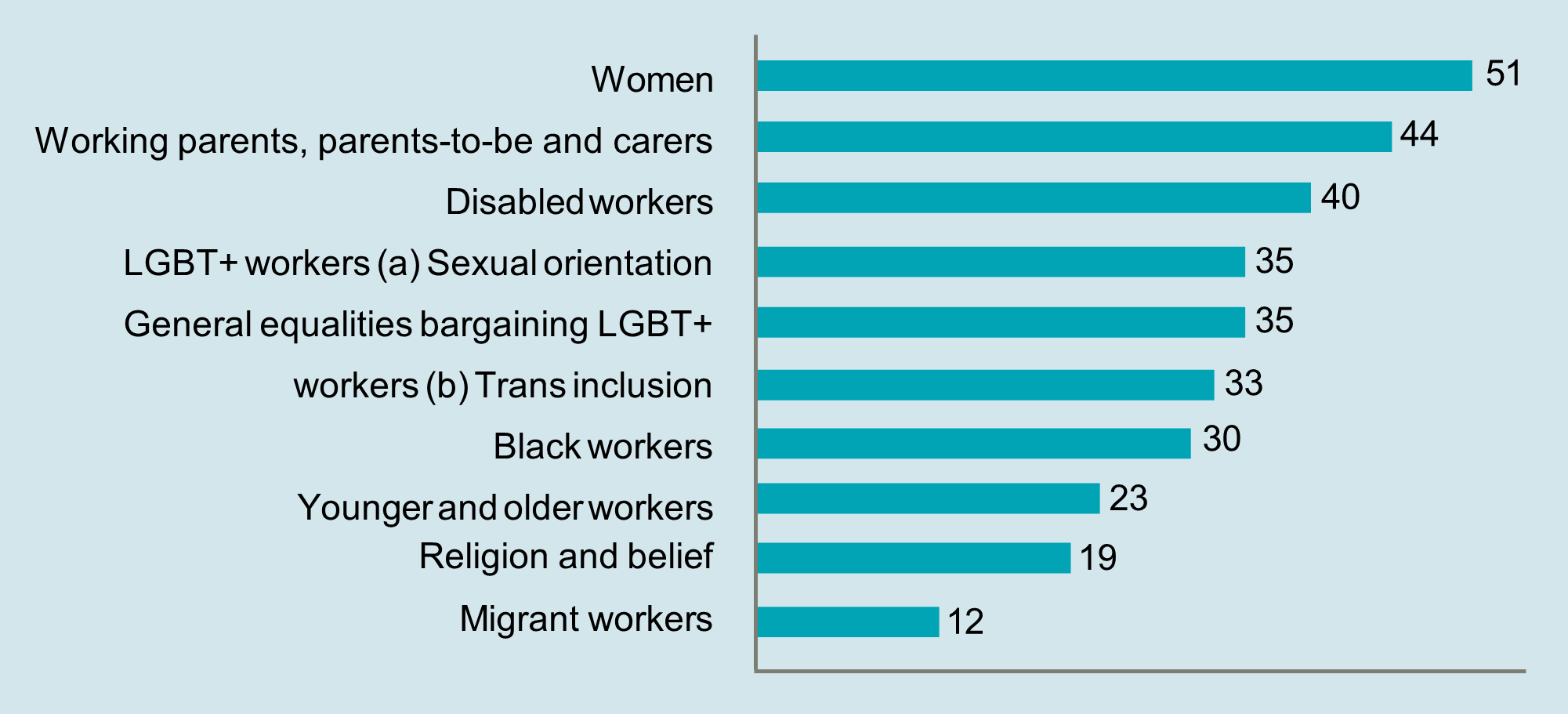
Comparing the picture with the 2020 TUC Equality Audit shows there have been some changes in the areas in which unions are most likely to have had bargaining success in the last four years (Table 8).
Most notably, agreements reached on women’s equality issues has soared to the top of the list, whereas it was only the sixth most successful area out of nine equality topics in 2020.
The change is more dramatic than the percentage figures suggest as the number of unions who have made gains for women has doubled between 2020 and 2024 – from 11 to 22.
Table 8: Unions achieving equality bargaining gains in the previous four years, 2024 and 2020 (per cent)
2024 2020
Women 51 31
Working parents, parents-to-be and carers 44 47
Disabled workers 40 47
General equalities bargaining 35 50
LGBT+ workers (a) Sexual orientation 35 36
LGBT+ workers (b) Trans inclusion 33 39
Black workers 30 31
Younger and older workers 23 25
Religion and belief 19 19
Migrant workers 12 -*
*New equality category in 2024
Looking at gains by unions in different size bands (see Figures 14, 15 and 16), large unions were, unsurprisingly, more likely to have reached equality bargaining agreements in these areas than smaller unions.
Gains for women have seen the most success in all size bands, but there are some differences between the groups for other equality topics. Medium-sized unions are more likely to have negotiated agreements on disabled workers than on working parents, parents-to-be and carers, while the reverse is true for the other bands.
Figure 14: Large unions achieving equality bargaining gains in the last four years (per cent)
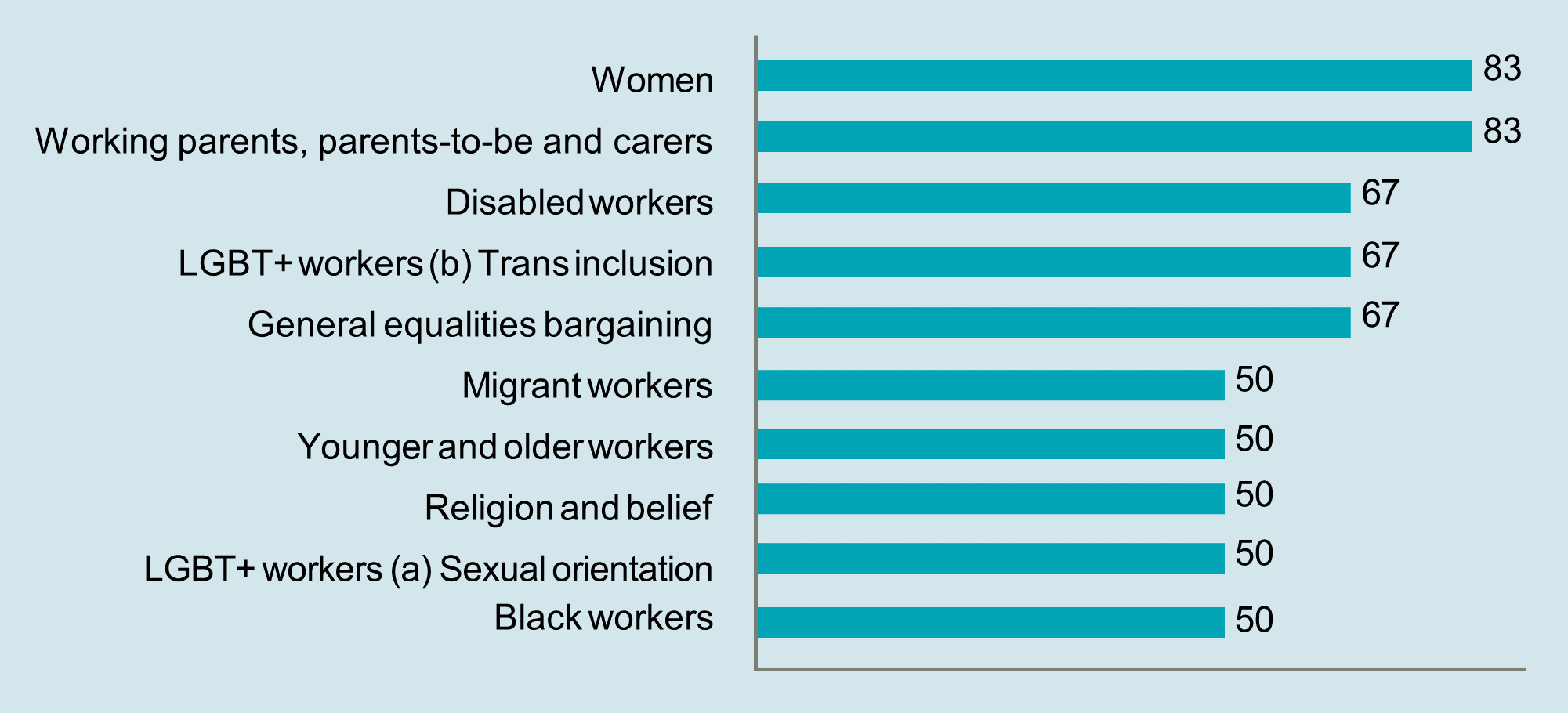
Figure 15: Medium-sized unions achieving equality bargaining gains in the last four years (per cent)
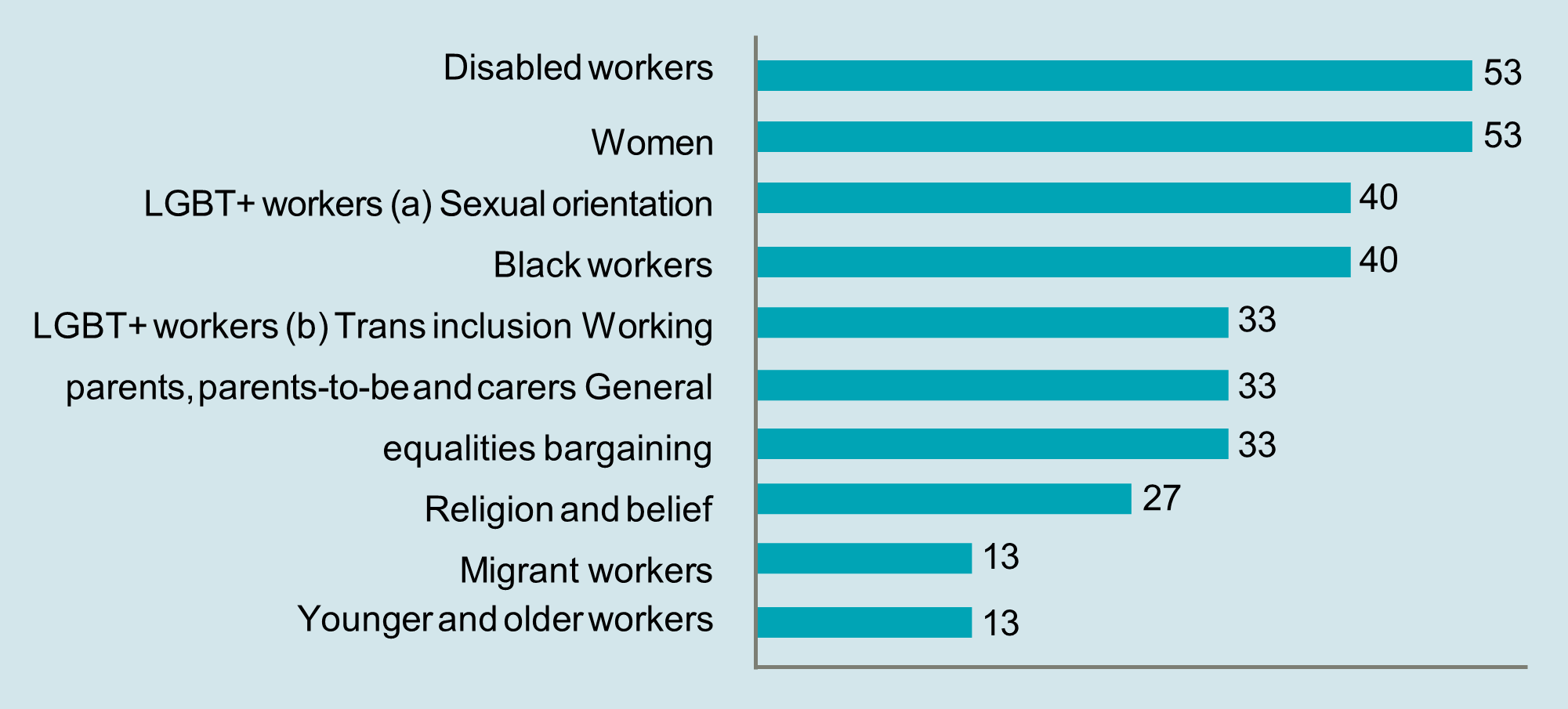
Figure 16: Small unions achieving equality bargaining gains in the last four years (per cent)
Examples of negotiated gains on equality topics
Unions were asked to provide some examples of the most important agreements they had reached with employers on equality bargaining topics.
General equalities
The NHBCSA has negotiated a far-reaching equality policy with its sole employer, the National House Building Council. It goes beyond the requirements of the Equality Act 2010 by stating that its processes will not discriminate on the basis of socio-economic background and fixed-term or part-time status, and pledges to produce and monitor diversity data to ensure fair access to opportunities. It also has networks for people sharing particular characteristics or interests and encourages those not from minority groups to become ‘allies’ and to join learning and training activities to help them understand different people’s experiences.
In an important win for equality reps’ status, Unite reps at National Express succeeded in including union equality reps with the same rights as other reps in their recognition agreement.
Women
As with the results on guidance produced, a big win here is in menopause agreements, where several unions have reached agreements. RMT says it is now a ‘standard ask’ and the union has achieved agreements with Greater Anglia and C2C.
Most policies, such as that agreed by Unite at Turbine Surface Technologies, aim to open up the topic by educating staff and in particular line managers, who are expected to understand the symptoms and respond sympathetically to requests for adjustments to the workplace or to working patterns. At Babcock International Group, a Unite reps’ campaign won the provision of free sanitary products in all toilets.
Usdaw has also successfully negotiated menopause policies with a number of companies, including Ocado, whose agreement includes up to five days’ menopause leave every 12 months. Ocado also encourages affected staff to speak to their line manager or people partner/advisor about options such as reasonable adjustments to their working environment or work pattern. It also points to a range of support services it provides, including a menopause hub.
The NEU’s agreement with Oasis Community Learning also instructs line managers to consider adjustments and to “make allowances for potential additional need for sickness absence.” The policy notably takes account of trans and non-binary staff, who may go through actual or ‘pseudo’ menopause depending on whether they have been through any hormone treatment. It acknowledges that such workers may feel particularly uncomfortable about discussing their symptoms.
Black workers
The Nottingham Community Housing Association, which was the first organisation to sign up to Unite’s Unity Over Division Charter, monitoring their pay gap and has committed to work with unions to reduce the ethnicity pay gap in its workforce.
UNISON has similarly got several employers to sign up to its Anti-Racism Charter, which it sees as a crucial starting point for improving race equality. It has achieved success in four London boroughs and six public service employers in the Northern region.
Usdaw has secured 20 days’ paid release for Black members (18 so far) participating in the union’s education and skills programme for Black members with a range of national employers in retail, warehousing and distribution.
The PFA has reported progress in relation to the third year of its five-year strategy for helping more South Asian football players into the professional game. Based on data up to 31 March 2023 and covering clubs in the Premier League and English Football Leagues for the 2022/23 season, the union reported for example a 12.6 per cent increase in players at all levels of elite football identifying themselves of South Asian heritage, with 134 players in 2022/23 compared to 119 players in 2021/22.
Further gains in this area, set out by unions in response to questions from the TUC’s Anti- Racism Task Force, are set out in Section E.
Disabled workers
Unite reports that North Bristol NHS Trust has developed a toolkit aimed at raising awareness and providing relevant information to promote what it says are positive policies at NBT for neurodiverse staff. In particular it provides guidance for team managers in managing staff with ADHD, autism, dyslexia, dyspraxia, and other forms of neurodiversity.
UNISON notes that more than 150 employers have signed up to its Disability Employment Charter.
LGBT+ workers
Unite shared Unilever’s Transition/Change of gender expression policy, developed in conjunction with the staff Proud network. It proposes that those undergoing transition have regular review meetings with relevant managers to manage the process, agree actions and maintain respect. It says the company will agree flexibility where possible for ad-hoc medical appointments. It agrees to change employee records at a point the employee wishes and will support the employee’s right to use the facilities of their acquired gender and, where appropriate, may develop gender neutral facilities.
RMT has negotiated a confidential means of reporting medication with Eurostar so that LGBT+ workers taking PrEP (medication to prevent HIV) do not have to ‘out’ themselves at work.
Working parents, parents-to-be and carers
A ground-breaking kinship carers’ agreement between Usdaw and Tesco launched in 2023 provides 26 weeks’ leave on full pay for employees who have a Special Guardianship Order to care for relatives’ children. This equalises their rights with employees who adopt. If two eligible partners both work for Tesco, they are entitled to 52 weeks’ leave, which can be shared between them. Primary kinship carers are also entitled to up to five days’ paid leave to attend pre-adoption kinship assessment meetings and court hearings.
In the last four years there have also been a number of agreements reached that go beyond the statutory rights for staff who suffer the death of a child or pregnancy loss. Similar to the menopause, we have seen an increase in campaigning on the issue of pregnancy loss in the media5.
By law those experiencing the loss of a child or a pregnancy from 24 weeks are entitled to two weeks’ statutory bereavement pay and, if they are on maternity leave, to the remainder of that leave. The NEU has reached agreement with Oasis Community Learning that goes beyond this by providing anyone who loses a child under the age of 18 with 10 days’ leave on full pay and a further 15 days’ unpaid.
Employees suffering miscarriage before 24 weeks have little in the way of rights. However, Usdaw has reached agreement with Tesco that staff suffering miscarriage before 24 weeks are entitled to two weeks’ leave at full pay.
And, thanks to campaigning by the FDA and others, there is now civil service-wide agreement that staff suffering miscarriage are formally entitled to support from Employee Assistance Programmes, civil service special leave provisions, flexible working hours and arrangements for supporting partners.
Separately, the CWU and Santander have agreed additional entitlements for parents of babies born prematurely (before 37 weeks). Women employees in that situation will be entitled to an additional amount of leave equal to the difference between the number of weeks’ gestation and 40 weeks. The aim is to ‘give back’ maternity leave that would otherwise have effectively been lost so it can be taken after the birth.
The agreement also provides for a period of compassionate leave (normally up to two weeks’ paid leave) for employees whose partner has had a premature birth and whose baby requires a period of hospitalisation.
More information on how collective bargaining has improved the rights of working parents, parents-to-be and carers are set out in Appendix B to this report.
Stay Updated
Want to hear about our latest news and blogs?
Sign up now to get it straight to your inbox