General Council Report 2024
3.1 Introduction
The TUC continues to prioritise equality as we seek to build a more diverse, more inclusive and more representative movement. In line with resolution 31, the campaign for equal pay and equal treatment for all workers, regardless of background, remains at the heart of our work. And through our four core equality strands, we continue to challenge the structural inequalities facing Black workers, women, LGBT+ workers and disabled workers.
Building a stronger movement also demands we step up our work in the regions and Wales, and invest in our digital capabilities. Meanwhile, TUC Education continues to deliver innovative programmes to train and develop our movement’s greatest asset – our reps.
3.2 Anti-racism
The TUC’s Anti-Racism Task Force (ARTF) has launched the Anti-Racism Tracker, a resource designed to help affiliates implement the commitments from the anti-racism manifesto. Our Implementation and Oversight Group (IOG), which will operate for the next five years, is crucial for advancing anti-racism efforts within the trade union movement. The IOG met regularly throughout the year and launched an independent evaluation to assess the relevance, effectiveness, impact and sustainability of the task force’s work.
Through our four equality strands, we continue to challenge the structural inequalities facing Black workers, women, LGBT+ workers and disabled workers.
The TUC has established Black activist programmes nationwide to address barriers faced by Black activists in trade union structures. Completed by nearly a hundred Black members, these programmes aim to network Black activists with key figures in the movement.
Inequalities have been a central focus of the Covid-19 Inquiry. The TUC and other core participants successfully argued for a report on institutional racism for module one, which has since been used in all modules to understand decision-making during the pandemic.
The anti-racism activist network held its third event on the theme of survival and solidarity. This event addressed attacks on civil liberties, the impact of the cost-of-living crisis on BME communities, and the importance of international solidarity. Workshops were facilitated by migrant organisations, social justice groups, trade unionists and TUC staff.
In response to the persistent threat from the far right, the TUC has developed and begun delivering training to help reps and activists challenge divisive narratives in the workplace. This includes courses such as winning workplace unity, handling difficult conversations in the workplace, and building a trade union response to the international rise of the far right.
We also made a submission to the Independent Chief Inspector of Borders and Immigration’s (ICIBI) inquiry into the immigration system, particularly regarding the social care sector. The submission highlighted issues such as low pay, unlawful recruitment fees, debt bondage and lack of access to trade union support.
3.3 Tackling and preventing sexual harassment
Our work to tackle and prevent sexual harassment in workplaces and in our movement continues, in line with composite 12.
Following many months of uncertainty, the Worker Protection Bill finally received royal assent in October 2023, and the preventative duty will come into effect from October 2024. The new legislation will require employers to take reasonable steps to prevent sexual harassment of their employees. By taking a more proactive approach, the intention of the duty is to help shift the onus from victim- survivors on to employers to challenge the workplace cultures that enable sexual harassment and make their workplaces safer through a risk- based approach, supported by good policy and practice and safe reporting routes.
But there is still much more to be done and we will continue to campaign to win third-party protections, end the misuse of non-disclosure agreements (NDAs) and ensure Black women’s voices and experiences shape the discussion. These voices are critical to developing solutions to tackling workplace sexual harassment. Much-needed research in this area is being led by the Black Women’s Advisory Group, which has commissioned research working with Queen Mary University of London.
The TUC was also invited by the Bakers, Food and Allied Workers Union (BFAWU) to give evidence alongside them to the Business and Trade Select Committee in November 2023. This concentrated on investigations into McDonald’s, and its negative culture that has seen many workers – but particularly young women – experience bullying, harassment and sexual harassment.
Our work to ensure that the trade union movement is also a safe place for staff and members continues.
Following a report published in October 2022 by the TUC Executive Working Group, established in 2021 to help support the movement to tackle and prevent sexual harassment in our own ranks, the TUC focused on developing new training to support leaders of the movement to tackle sexual harassment and build preventative cultures. That training has now been successfully piloted and independently evaluated by the Child and Woman Abuse Studies Unit at London Metropolitan University. More information about the training and other resources can be found on our bespoke resource page Tackling and Preventing Sexual Harassment, which we also launched this year.
Following the completion of the pilot and in line with resolution 36, the Executive Working Group has been reconvened and has taken forward several actions this year to support culture change across our movement. Many of these actions are being launched at Congress, including surveying unions to understand the work they are doing to tackle and prevent sexual harassment within their own organisations. We are also developing a statement of commitment/ General Council statement on the actions needed to drive culture change, providing training on the misuse of non- disclosure agreements (NDAs) and settlement agreements for trade union professionals, and taking forwards work to develop our own safe and confidential reporting line. We hope that this will enable us to support affiliates in procuring their own safe and confidential reporting lines.
3.4 Protecting equalities
Women
At TUC Women’s Conference 2023, it was announced that former TUC general secretary Frances O’Grady would lead a review for the Labour Party of how to close the gender pay gap. The TUC has facilitated this work through participation in roundtables and submitting evidence, research and good practice into the review.
In line with resolution 37, the TUC has made a series of interventions on our Equal Pay Day, held on 21 February, marking the point at which women start getting paid in comparison to men. The gender pay gap currently stands at 14.3 per cent, and at current rates will take over two decades to close. But we know that the pay gap is wider in some sectors, with big variations by age. For disabled women, the pay gap is 30 per cent.
We know that the crisis facing the childcare and early years’ sector is having a disproportionate impact on women. When families do not have access to affordable childcare and early years’ education, it is typically women who are forced to leave the labour market or reduce their hours. And we know the childcare and early years’ workforce, which is underpaid and undervalued, is made up of predominantly young women workers.
In line with resolution 63, we have continued to highlight these issues and helped establish the Early Years and Childcare Coalition, working with affiliates and stakeholders to campaign for commitments to rescue and reform the childcare and early years’ sector, with the TUC sitting on the coalition’s steering group. We also submitted evidence to the Review of Childcare and Early Years carried out by the Labour Party, led by Sir David Bell.
Recognising the parallels between the crisis facing social care and the childcare early years' sector and the disproportionate impact this has on women, the TUC launched our Strategy for the Care Workforce in 2023. This sets out the building blocks for a fair deal for workers in those sectors that will lay the foundations for high-quality care and education.
The TUC was invited to submit evidence to the Women and Equalities Select Committee on the impact of the cost-of- living crisis on women. Our submission highlighted a range of areas from low pay, insecure work and universal credit to caring responsibilities that must be tackled to ensure that the structural inequalities faced by women are addressed. The TUC also gave oral evidence to the committee in January 2024.
Black workers
The TUC Race Relations Committee (RRC) has worked on a range of issues to advance racial equality in workplaces and the union movement.
The RRC held a fringe event at Congress 2023 discussing the current immigration system and its adverse effects on Black communities. This discussion highlighted the urgent need to investigate the full extent of the damage caused by creating a hostile environment on the lives of people who have a legitimate right to live in the UK and access public services.
In line with resolution 38, the TUC continues to highlight the immense damage caused by the Conservative government’s hostile environment narratives.
We held another fringe event at the TUC Black Workers Conference, focusing on the Windrush Compensation Scheme’s inadequacies, noting that only one per cent of appeals are successful. The TUC will continue to call for an official independent inquiry into the harmful immigration policies and practices that have gravely impacted the Windrush Generation.
This year’s International Day for the Elimination of Racial Discrimination took place on Saturday 21 March. The TUC supported the UK demonstration, which focused on challenging the Conservative government’s unlawful migration policy. In preparation for the march and rally, we collaborated with organisations such as Stand Up To Racism to organise a trade union conference. This conference focused on how reps and activists can fight structural racism in the workplace through organising, ethnic monitoring and addressing pay gap disparities, as well as combating far-right thinking in our workplaces and communities.

Addressing the ethnicity pay gap is a crucial step in tackling the structural racism faced by BME workers. Given the magnitude of this challenge, mandatory pay reporting would be a significant step towards addressing the £3.2bn pay penalty experienced by BME workers.
The Labour government’s commitment to introducing mandatory ethnicity pay gap reporting as part of a new Race Equality Act is a step in the right direction. This would extend the right to equal pay, currently enjoyed by women, to BME workers, and the TUC is working with Labour to shape these proposals.
The RRC will continue to campaign for additional measures such as ethnic monitoring and regular reporting, which are essential for employers to identify and address patterns of inequality in the workplace.
Pay gap reporting needs to be supported by a comprehensive approach to ethnic monitoring systems. It is crucial that recognised unions in workplaces work with employers to establish objectives and action plans. Unions must leverage workers’ power and voice, as well as collective bargaining, to advocate for race equality in the workplace.
LGBT+ workers
The TUC engaged with Labour ahead of the general election to highlight the priority areas we want the new government to address for LGBT+ people. Our key asks included:
introducing a full, no- loopholes, trans-inclusive ban on conversion therapy
strengthening and equalising the law on hate crime
requiring employers to create and maintain workplaces and working conditions free from
harassment, including by third parties
tackling health inequalities, taking account of the specific and intersectional disparities LGBT+ people face so that they can access treatment.
In line with resolution 40, the TUC has taken active steps to protect trans and non- binary rights, including the continuation of our Trade Unions for Trans and Non-Binary Rights Network. The second meeting of the network took place on 24 February at the Mechanics Institute in Manchester, with 70 delegates taking part.
The TUC marked Trans Awareness Week by promoting our guidance and materials on supporting trans and non- binary workers. For Trans Day of Remembrance, we remembered trans people killed around the world, specifically highlighting 16-year-old Brianna Ghey from Warrington, murdered in February 2023.
As well as calling for a fully inclusive ban on conversion therapy, we continue to call for action to tackle trans hate crime and for measures to promote trans-inclusive healthcare.
The TUC has also responded to government consultations on LGBT+ issues including the DfE consultation Guidance for Schools and Colleges: Gender Questioning Children. Working with affiliated unions with members in schools, the TUC submitted a response echoing their key concerns.
To better understand LGBT people’s experiences of bullying, harassment and discrimination at work, the TUC has conducted new quantitative research on these issues. This research will inform guidance on supporting young LGBT+ workers to flourish, in line with resolution 39.
Disabled workers
The Disabled Workers Conference motion to Congress 2013 highlighted the impact of the planned closure of railway ticket offices on disabled people and other disadvantaged groups.
In line with resolution 14, the TUC used its social media presence, petitions, parliamentary lobbying and other engagement strategies to campaign for ticket offices to stay open. Our petition on Megaphone received almost 70,000 signatures, while we promoted our video for social media to 126,000 followers on X (formerly Twitter).
Working with the RMT and other affiliated unions, we successfully stopped the ticket offices closing, with the Conservative government’s U-turn a major victory for our movement.
Over the year, the TUC has continued to campaign for disability pay gap reporting, marking Disability Pay Gap Day on 14 November 2023. Our new analysis found the pay gap is 14.6 per cent, with disabled women facing an even bigger pay penalty of 30 per cent, equivalent to £3.73 an hour.
Our analysis revealed the disability pay gap is now higher than it was a decade ago, when the first comparable pay data was recorded. It generated strong media coverage across a wide range of publications.
The TUC also produced a suite of social media graphics for trade unions to use to mark Disability Pay Gap Day on their channels.
The TUC continued to highlight the shocking treatment of disabled people in the UK under the Conservative government, in line with composite 8. We drew attention to changes to disability related benefits, highlighting the negative impact that conditionality and back-to-work narratives have had on disabled people. We also produced blogs and contributed to several consultations and inquires, including the Department for Work and Pensions consultation looking at work capability assessment (WCA) activities and descriptors, and the Work and Pensions Committee Disability Employment Inquiry.
The TUC continued to engage with the Labour Party ahead of the general election, highlighting priority areas for disabled workers including pay gap reporting, reasonable adjustments, the social model of disability and the integration of the UN Convention on the Rights of Persons with Disabilities (CRPD) into UK law.
3.5 Regional update
Midlands
The TUC Midlands region, as well as the wider TUC, continued to provide support to the GMB in its fight for recognition at Amazon in Coventry.
The region has received assurances that the newly established East Midlands Combined Authority (CA) will grant a board level seat for trade unions. The West and East Midlands CAs have now committed to introducing bus franchising, delivering a long- term TUC campaign goal. In addition, the West Midlands CA is adopting a memorandum of understanding to ensure union rates are respected in the cultural sector and has also committed to working with the TUC and unions to develop a wide-ranging industrial strategy for the region.
Our Dying to Work campaign continues to attract support, and TUC Midlands joined Usdaw to meet with Morrisons. We are hopeful that 100,000 Morrisons employees will soon be covered by the Dying to Work Charter.
In June, a successful Silk Mill Festival was held in Derby.
Northern, Yorkshire & the Humber
The TUC’s Northern, Yorkshire & the Humber region has been campaigning hard throughout the year protecting the right to strike, arguing for a just transition, and advancing worker’s rights in sectors such as healthcare, education, culture and retail. We continue to support workers involved in industrial action.
We participated in the Norwegian LO Youth Exchange, hosted an IG Metal trade unionist from Germany, and held an international discussion on protecting the right to strike with a delegation from IndustriAll Europe ahead of the Durham Miners’ Gala.
To capture devolution opportunities, we are holding Trade Union Liaison Group meetings with the mayors and leaders of three of the five devolved authorities in the region. We are calling for increased support for trade union education and lifelong learning, real fair work opportunities, and improved transport, health and social care provision.
London, East & South East
The region launched a regional Black activists’ programme in April, with a first intake of 20 reps from nine unions. We also established a regional planning group with representation from CWU, GMB, PCS, RMT, UNISON and Unite to support the national Our Work Matters campaign organising outsourced workers. Colleagues are now sharing information and materials about their organising work and helping to focus our support work.
In London we have supported the launch of the London Union Learning Project, funded by the devolved Greater London Authority adult education budget. We are hosting the three project staff members, with the expanding project already working directly with five unions. Our AGM in April saw the election of Kathy Mazur from RMT as our regional president. She is the first woman to fill this post, a step towards ensuring our structures reflect the diversity of the region.
South West
Alongside industrial disputes support, TUC South West has maintained pressure against the Strikes (Minimum Service Levels) Act, raising concerns with local and regional decision- making bodies and politicians. In January, the region also proudly hosted the national demonstration and rally to Defend the Right to Strike, while celebrating the long campaign to secure union rights at GCHQ.
TUC South West continue to develop regional solidarity networks for young, Black and women activists, providing bespoke training opportunities. These included sending a young workers’ delegation to participate in the Norwegian LO Youth Exchange.
The region is ramping up its anti-racism campaigning to coordinate workplace action days and produce campaigning materials with affiliates.
We continue to represent and coordinate unions affected by the Plymouth and South Devon Freeport, ensuring investment benefits local workers and boosts skills. We maintain a strong trade union voice in the West of England Combined Authority structures, and represent workers in the Bristol and Cornwall living wage committees and the One City Approach Board. A Gravity Site union working group is also being established.
We held a vibrant Tolpuddle Martyrs’ Festival just after the election, attracting thousands of trade unionists to discuss the key issues affecting workers, take part in lively workshops and celebrate the successes of the movement.
North West
Across the North West, the TUC has continued to support unions taking industrial action, helping them win for members. PCS took months of action at National Museums Liverpool to win a cost-of- living payment, UNISON won its long running rebanding dispute at Arrowe Park, and the RMT won a double-digit pay rise for members working for outsourcing firm Rail Gourmet. The general secretary made numerous picket line visits, backed with support from the TUC’s Solidarity Hub.
Our work supporting union learning reps (ULRs) has grown, with training delivered for new and existing reps to boost the network of ULRs across the North West.
We have supported the ongoing campaign for a Hillsborough Law Now, and brought together our unions to develop a regional response to the far-right and fascist threat.
TUC Cymru/Wales TUC
We have established a series of initiatives to ensure workers from all backgrounds have the skills and confidence to contribute to the work of unions. Our Black Activist Development Programme and Newid! – our scheme for young trade unionists – are producing a strong and visible cohort of keen and effective trade union campaigners. We are also set to launch a new Women’s Development Programme. Our work on tackling sexual harassment continues, as does our work on supporting the delivery of the Anti-Racist Wales, Disability and LGBTQI Welsh Government action plans, through the structures of the Workforce and Social Partnership Councils.
We have continued to support and coordinate unions taking industrial action in sectors including education, health, transport, the civil service and more. This industrial action has led to improved pay and conditions, demonstrating the value of collective power. Our Congress reaffirmed its commitment to save our steel industry by working with affiliated unions and the Welsh Government to support the workforce at Tata and surrounding communities, mapping the impact on the supply chain.
Since May 2022, we have placed an increased emphasis on preparing workers for the workplace of the future. The Wales Union Learning Fund is the bedrock of our offer to workers and unions across the country. Working with affiliates, we have trained thousands of workers – with a particular focus on those who may not have had previous opportunities for self- advancement.
We have produced reports on artificial intelligence (AI) and a just transition to a green future, while Professor Jean Jenkins produced a final report as part of the Commission on Devolution and the Future of Work. This work will continue through a TUC Cymru General Council subgroup focusing on the constitutional future of Wales, including the devolution of justice.
Our future work will take place in the context of a new Social Partnership Duty that falls on all public bodies in Wales and calls on them to ensure the voice of unions is heard clearly in their decision-making. The duty is part of the new Social Partnership and Public Procurement (Wales) Act. A huge amount of work has been prompted by the legislation and the work required to enact it, as well as the Welsh Government’s increased commitment to social partnership and trade unionism more broadly. For example, collective bargaining coverage is now a national indicator in Wales – one of the measures by which the nation’s progress to achieving its wellbeing goals is monitored.
3.6 Solidarity Hub
The TUC Solidarity Hub project continues to grow and develop, along with our range of support services for unions undertaking industrial action. We have now supported 25 unions in dispute, including balloting advice, media support, using new technologies to engage and organise, training, picket line support, sharing best practice, research, digital support and so much more.
The national dispute intelligence database has now captured over 1,000 industrial disputes across 34 different unions since its inception in early 2023. Over 400 union wins have been recorded as part of that process, with 40 wins now captured in detail through first-hand testimony from reps on the ground and published as part of our Solidarity Stories collection.
The Solidarity Stories section of our website features a wide range of unions winning across all sectors of the economy and demonstrates how unions are winning on pay, recognition, terms and conditions, fire and rehire and health and safety.
The data populates our weekly campaigners and communicators email, which includes a detailed industrial action list for the week ahead encouraging solidarity and support for unions taking action.
We hosted two roundtables through networks built through the Solidarity Hub project. In November, we brought together senior union officials with responsibility for ballots and industrial action strategies in their respective unions. Our second roundtable in March 2024 focused on winning union recognition and the barriers faced in growing the movement, which included a presentation from the Central Arbitration Committee (CAC).
Using our extensive and comprehensive data on industrial action, we are also in the process of producing research for the movement on industrial action. This will focus on dispute trends, organising lessons and factors that contribute to unions winning.
3.7 Helping the movement grow
The TUC continues to support the development of organising skills and strategies through our Organising Academy training and sharing of good practice in organising strategies.
On a sectoral level, the TUC has brought together unions, including UNISON, GMB, PCS, RMT, Unite and CWU, and activists to collaborate in campaigns to organise outsourced workers. The Our Work Matters campaign has held national events in Congress House and in parliament, making the case for insourcing and progressing union campaigns for improved pay, proper contracts and better sick pay arrangements.
This campaign is now being modelled at a local level, with regional TUCs taking forward actions to convene unions and workers in this sector.
Noting resolution 75, plans to hold a high-level roundtable on organising in the private sector were postponed due to the general election. We reconvened this discussion to ensure the TUC and trade unions are well equipped to make the most of the opportunities in Labour’s New Deal for working people.
3.8 TUC Education
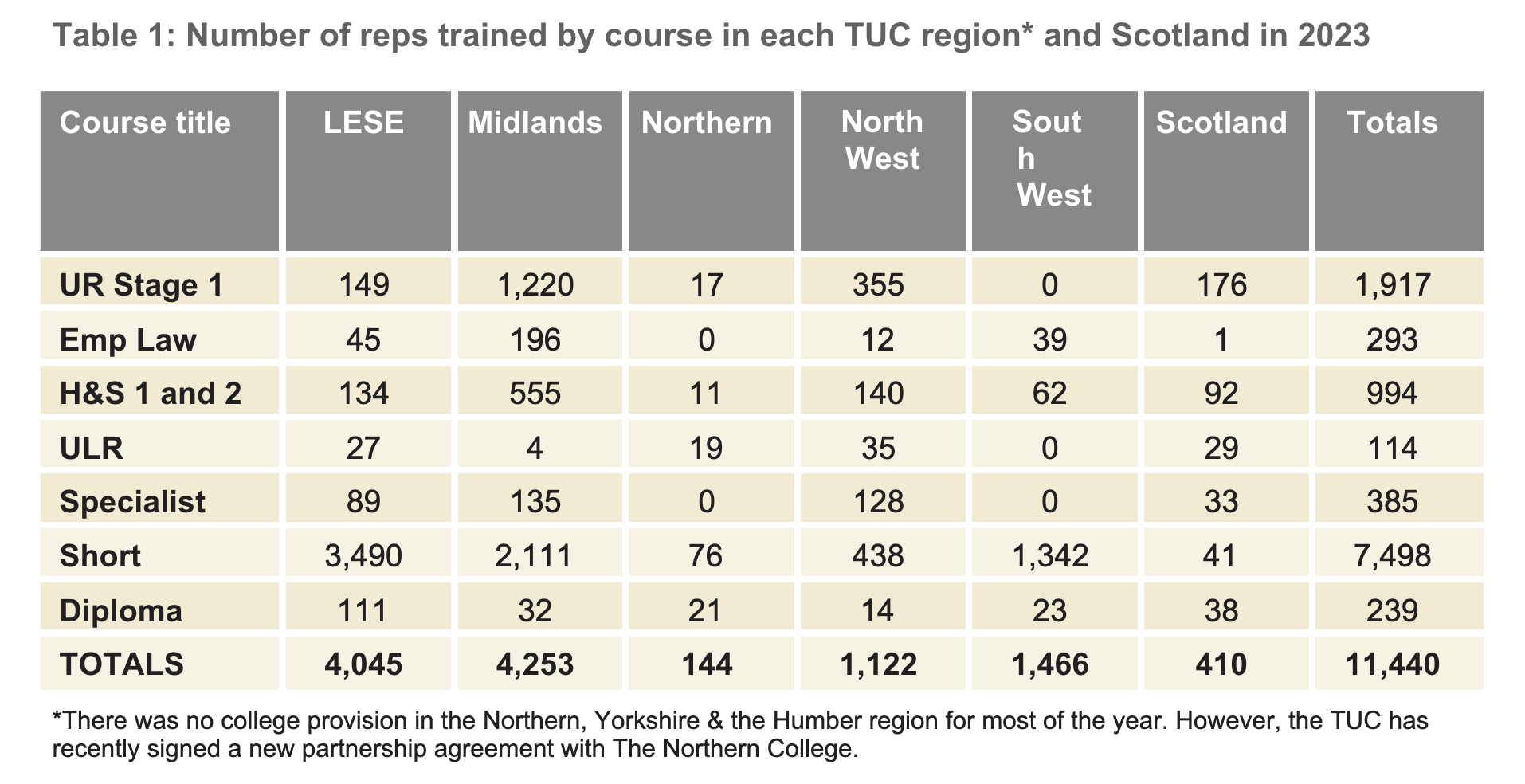
TUC Education provides unions and union reps with high-quality training that enables them to organise, campaign and represent members collectively and individually. Our training is delivered in classrooms via our partnerships with further education (FE) colleges in England and Scotland and also online via digital platforms and webinars. We want to deliver our training to reps in whatever way they find most accessible and useful, whether that is in a classroom, online or a combination of both.
In 2023/24, TUC Education had partnership agreements with 15 FE colleges in England and Scotland that ensure delivery of National Open College Network (NOCN) accredited training via the TUC’s core course programme, and union courses that are mapped to the TUC Passport to Progress accreditation framework.
TUC Education via FE colleges ensures that training for union reps is accredited through NOCN, but this form of provision has faced challenges over the year due to the fragmentation of the adult education budget and cuts to funding for Level 2 courses. The TUC continues to engage with both our partner colleges and combined authorities to ensure that all union reps can attend training as close as possible to where they work and live.
In 2024, the TUC commissioned Exeter University to conduct a review of trade union education provision in England and Wales. The report’s findings and recommendations were scheduled to be reported to the TUC executive committee after the general election.
Details of the full TUC Education offer to unions and reps can be found at tuc.org.uk/training
3.9 Online training and support for union reps
During 2023–24, the TUC Education digital learning team provided training support to CWU, NASUWT, RMT, SoR, Unite, UCU, UNISON, Nautilus International and BALPA. The team also worked with BALPA, SoR and Nautilus International on the development of bespoke courses for their workplace reps.
NASUWT and the CWU worked with the team to develop their own bespoke versions of the TUC’s digital credential programme.
During the year, a new flexible version of Union Reps was piloted. The training used innovative online tools and methods combined with tutor facilitated sessions to deliver the course, with extremely positive feedback. A full roll out of this version of reps’ core training covering Union Reps 1, Health & Safety 1 and ULR training will be rolled out later in 2024 and early 2025.
During 2023, TUC Education trained over 2,500 reps via its online learning platform. This figure does not include courses delivered by trade union studies centres in Wales and Scotland and by colleges that used non-TUC hosted learning platforms.
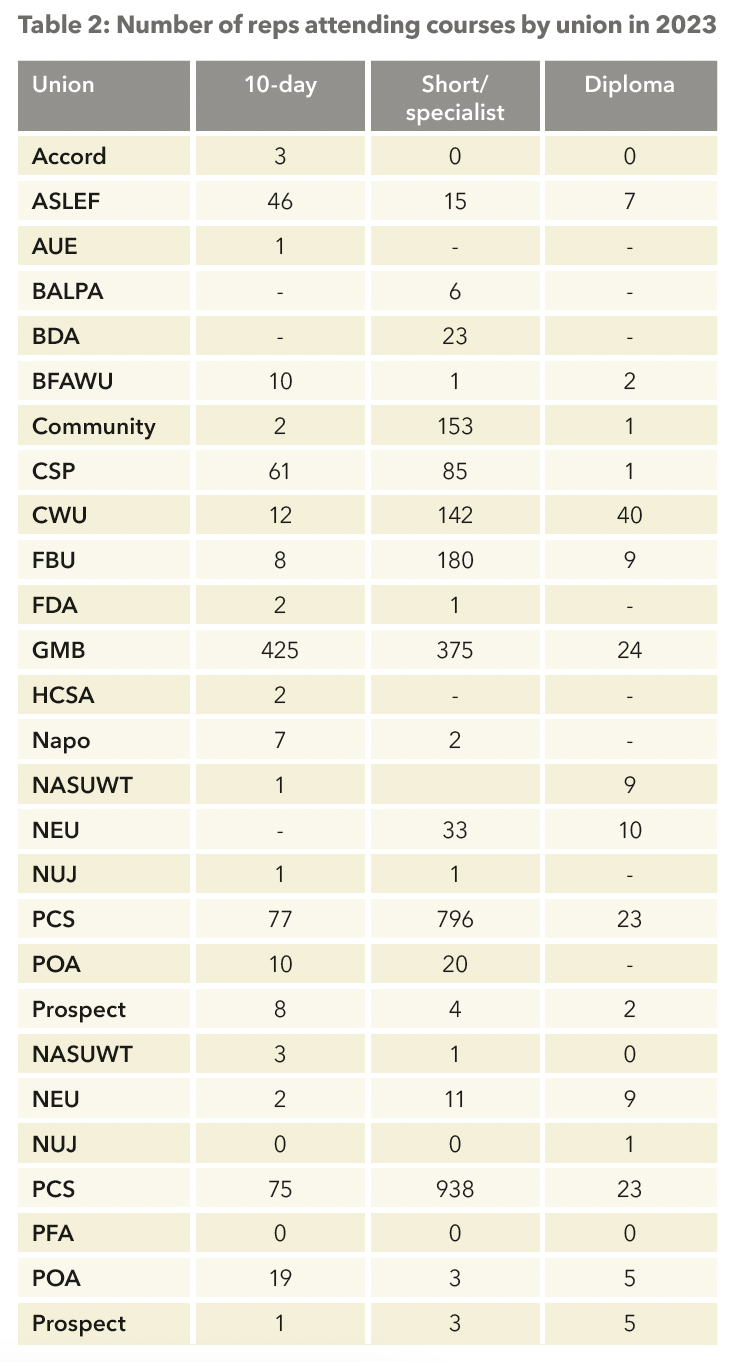
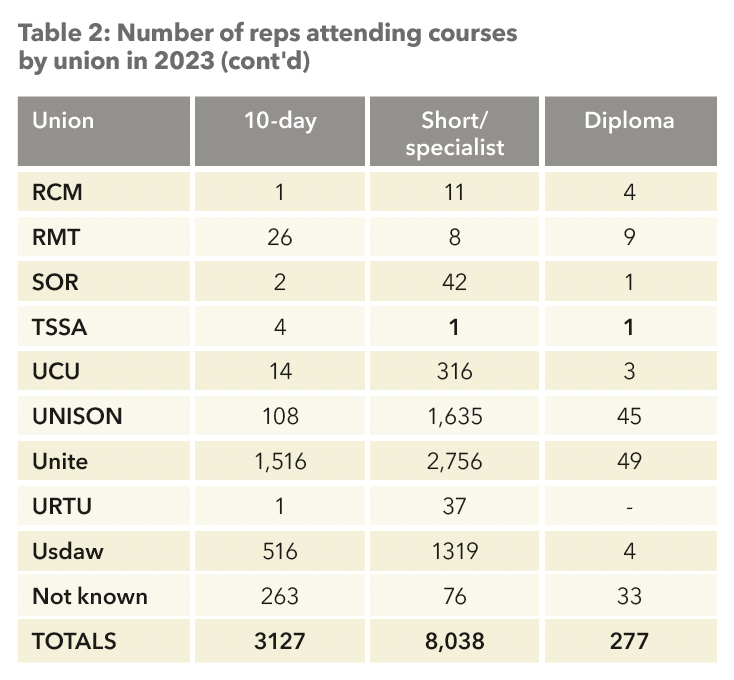

Our most popular courses were Union Reps and Health & Safety Reps Stage 1. In total 1,138 new reps were trained online, which represents a significant increase on the previous years' figures.
Plans are underway to create a fresh and comprehensive programme of Union Reps advanced courses. These courses aim to offer reps an enchanced and specialised training experience, focusing on key workplace issues. The intention is to provide reps with more extensive and in-depth knowledge and skills.
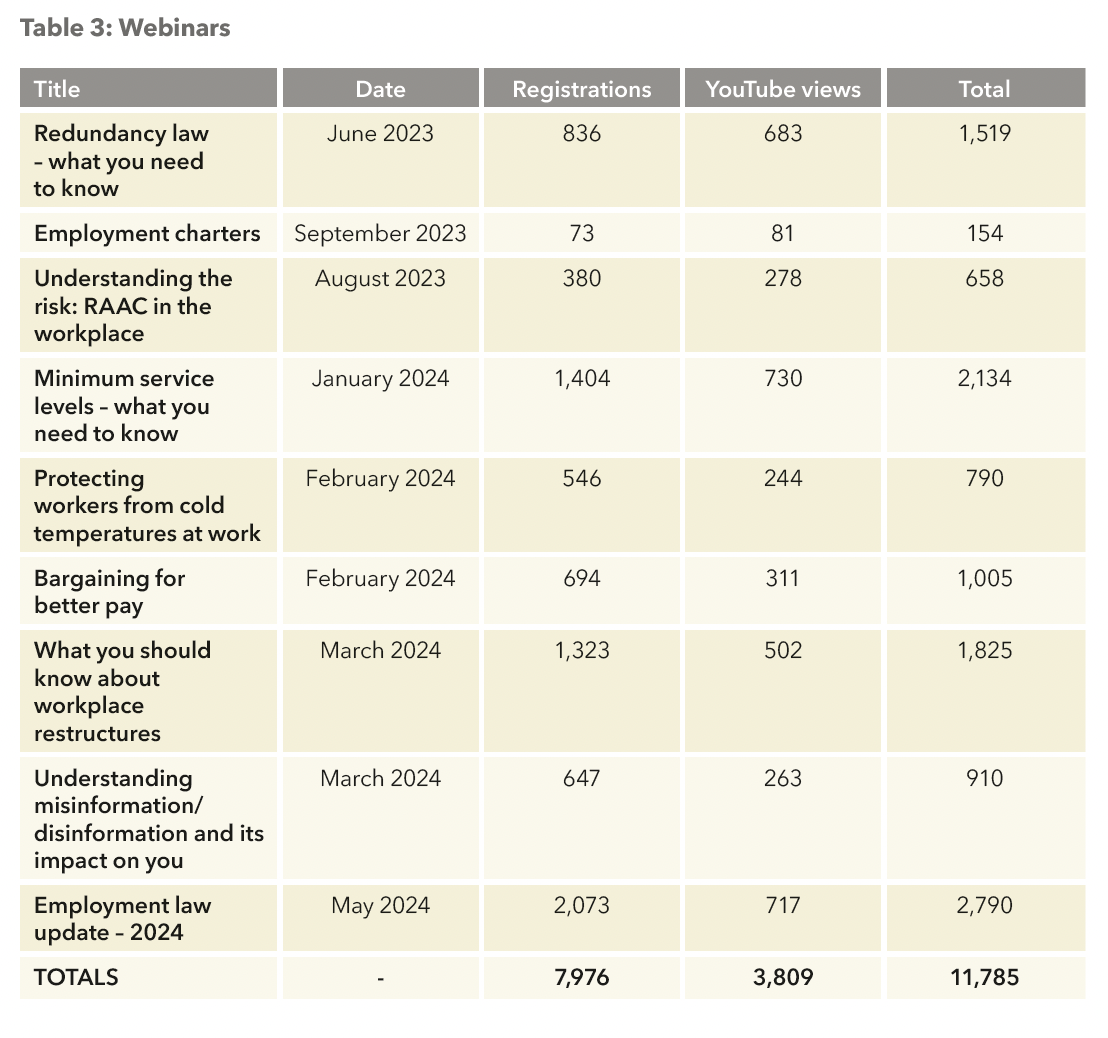
3.10 Webinars
During the last year the TUC Education webinar series was attended or seen by over 11,500 union reps. Over 2,000 reps engaged with the webinar on minimum service levels and over 2,500 engaged with the employment law update.
3.11 Training 500 new Black reps
At Congress 2023, the general secretary committed the movement to training 500 new Black reps. Since then, the number of Black reps trained at TUC Education centres on either core course or bespoke union programmes was as follows:
- attending introductory courses for union reps of health and safety reps - 534
- attending TUC Education webinars - 1,334
3.12 TUC Union Reps Connect 2023
We held Union Reps Connect 2023 at Congress House in November, with 375 union reps from across the UK attending. Feedback showed that:
- those who attended gave the event 9/10 satisfaction rating
- 93 per cent said that they would recommend the event to other reps
- the most popular workshops covered disability and adjustments, bully proofing and building a health and safety culture
- the most popular plenary sessions were the employment law update and hearing from workplace reps
- 97 per cent of attendees agreed that the event increase their knowledge and skills
3.13 TUC Leading Change
Leading Change is a training and development programme for senior officers in trade unions. The 2023/24 Leading Change course had 24 participants representing 11 TUC affiliates.
The programme ran over five modules, covering the organising challenges facing unions, unions and digital, governance and equality, and winning political change. The final module saw Leading Change return to Harvard University and the Harvard Law School Center for Labor and a Just Economy.
3.14 TUC Organising Academy
The TUC Organising Academy provides organising training for union officers, organisers and support staff, covering the key skills and knowledge required to run and support successful organising campaigns. The Academy is run in partnership with The Manchester College.
In the academic year 2023/24, the Organising Academy trained 56 union officers on the Diploma Course and Supporting Award courses from unions including BDA, CSP, CWU, FBU, GMB, NASUWT, NEU, RCM, TSSA, UCU, UNISON, Unite and Usdaw.
The TUC has recently commissioned a review and rewrite of the TUC’s Organising Academy syllabus and training materials, to be introduced in 2025.
The Digital Lab has developed shared developed shared resources to help affiliates plan to keep their members' data safe and protect their operations from disruption
3.15 Digital Lab
The TUC’s Digital Lab programme is now in its fifth year. It networks leaders and digital practitioners across the TUC’s affiliate unions, to explore areas of best practice in digital change for unions.
The challenges unions face around digital have grown in the last year. Organised cyber attacks against trade unions internationally have become more common and more severe. In response, the Digital Lab has developed shared resources to help affiliates plan to keep their members’ data safe and protect their operations from disruption.
Other major themes over the year have included supporting unions in transitioning to a newer generation of membership technologies, and understanding the challenges and potential around artificial intelligence (AI).
The Digital Lab has produced events, training and reports, and coordinated with unions to share experiences across the movement. The aim is to help TUC affiliates’ digital projects to succeed – more quickly and with reduced risk or cost.
Particular work in this area has focused on methods for increasing member retention rates to help underpin unions’ efforts to grow membership, and improving the accuracy of member data, to enable more effective mobilisation in ballots.
3.16 Digital organising and Megaphone
Building a stronger union movement means using the best tech, tools and techniques at our disposal to recruit members, get them active and help win disputes and campaigns.
The TUC’s Megaphone platform enables unions to run online petitions and digital actions to build pressure on employers, recruit new members, engage existing members and build public support.
The platform has now been used by 25 different unions. More than 70 petitions were started by unions in 2023–24. Almost 1.1 million people have now taken action in support of a union campaign, and the Megaphone solidarity email list has become a vital resource for the movement.
Megaphone supporters are regularly asked to join a union, to recruit others to the union, to promote campaigns in their workplaces and communities, to donate to strike funds and to take other actions that strengthen the movement.
In 2024, the TUC has continued growing our offer to unions with expert advice on integrating digital tactics into campaigning and organising. This has included supporting the use of peer-to-peer text messaging during strike ballots, identifying new ways to find and engage workers online, running online calls to encourage member activism, and using WhatsApp effectively to reach members.
3.17 Promoting trade unionism, union finder and social media
Our social media promotes the TUC’s key campaigns, our affiliated unions’ disputes and trade unionism in general. We look to grow audiences of union members and the wider public, as well as key stakeholders including politicians, journalists and other decision-makers.
The general secretary's speech to Congress achieved 2.5 million views, and our support for the CWU's Royal Mail campaign secured 2 million views.
This year, our social media followers grew to a total of 570,000, up from 473,000. We had a large number of viral posts, including content breaking the news of attacks on the right to strike, policy calls to tax wealth, and criticism of the Conservatives’ record in government.
We achieved 140 million video views from a number of viral videos on a range of issues. The general secretary’s speech to Congress achieved 2.5 million views, and our support for the CWU’s Royal Mail campaign secured two million views.
The TUC’s union finder tool continues to be an invaluable online service designed to help users find and join a trade union. Over the past year, we have seen a consistent rise in users engaging with the tool, particularly during HeartUnions week, which saw a 39 per cent increase in usage.
3.18 Supporting union operations
Following the TUC review, we built our support to affiliates through a new programme of work supporting their backroom operations. We held the first Union Ops Connect event in November 2023, welcoming 71 staff from 31 TUC affiliates who work in internal services such as finance, HR and IT. This included sessions supporting professional development and learning, alongside sharing best practice and networking. We received good feedback and will be running the event again in 2024.
We launched a new collaborative procurement service to support affiliates to get the best deals from the purchases they make. And we are procuring a safe reporting harassment helpline to be available for all affiliates to take up.
3.19 TUC Comms Awards
Due to the general election, this year’s TUC Comms Awards will be held in October. Some 23 unions have entered across six categories, with a total of 63 entries. Categories to be judged are best union journal; best recruitment and organising communication; best campaign communication(s); best media story; best use of social media; and best communication from a smaller union.
Stay Updated
Want to hear about our latest news and blogs?
Sign up now to get it straight to your inbox