
Stress is out of control - and it's time to force employers to act
Work-related stress is now the biggest health and safety problem facing working people.
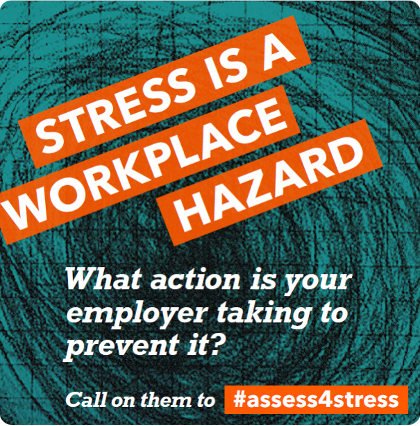
That’s not an opinion – it’s what nearly eight in ten union safety reps (79%) told the TUC in our latest national survey.
But the real scandal isn’t just how bad stress has become. It’s that employers are breaking the law by failing to assess and control it – and they’re getting away with it.
That’s where union organising comes in.
Jump to our new work-related stress resources for reps to download below.
Stress must be risk assessed – it’s the law
Work-related stress is a hazard like any other. The law is clear: employers must identify risks to workers’ health, assess them, and take action to prevent harm. That includes stress.
Yet our survey of more than 2,700 safety reps shows just how far employers are from meeting that duty:
- Two thirds of reps say they are not aware of a stress risk assessment in their workplace.
- Nearly half (43%) say they were not consulted at all on risk assessments – despite this being a legal requirement.
- Stress is now the top hazard in every region and almost every sector, driven by excessive workload, understaffing, abuse and long hours.
This is systematic failure, and workers are paying with their mental and physical health.
The cost of inaction is huge
The Health and Safety Executive’s latest figures also show just how serious this has become:
- 964,000 workers reported work-related stress, depression or anxiety in 2024/25 – up from 776,000 the year before.
- 22 million working days were lost to stress.
That’s hundreds of thousands of people pushed to breaking point because risks weren’t identified and tackled early.
Stress isn’t inevitable. It’s what happens when work is badly designed and badly managed.
Risk assessments are where power starts
Stress risk assessments aren’t paperwork exercises. Done properly, they force employers to confront all the issues that contribute to the working environment causing us to become stressed.
They also create a legal record. Once risks are identified, employers have a duty to reduce them. That gives safety reps and unions something concrete to organise around, or to report to the regulator where they fail... That’s why so many employers avoid them, or try to deny that stress is being caused by work!
Union organising makes the difference
When safety reps and activists are organised, we can mobilise, gather evidence, and force employers to take action. Here’s what you can consider doing:
- Demand stress is included in the risk assessment – in writing.
- Insist on consultation with safety reps, as the law requires.
- Use surveys, inspections and conversations to gather evidence of workload, pressure and burnout.
- Challenge inadequate assessments that ignore the real causes of stress.
- Escalate – through grievances, regulators, collective action and public pressure – when employers refuse to act.
Use our resources
The TUC has produced material for safety reps to support you in organising on this agenda. Follow the links below to download:
- A guide to getting your employer to carry out a stress risk assessment
- A guide to carrying out an inspection on work-related stress - includes a checklist!
- A template letter to send to your employer Model letter to employer
- An example stress survey to use with members
Register now for our upcoming webinar!
We’ll be hearing direct from reps who have campaigned on work-related stress, and had their employer presented with a Notice of Non-compliance by the Health and Safety Executive. You won’t want to miss this!
Wednesday 14 Jan 2026 - 14:00 to 15:00
Stress is now the biggest health and safety crisis in Britain’s workplaces. But it’s also a powerful organising issue, because almost everyone feels it.
If you want to improve conditions in your workplace, start with this demand:
“Where is our stress risk assessment – and what are you doing about it?”
That question, asked collectively and persistently, can change how we work and protect workers’ health.
Stay Updated
Want to hear about our latest news and blogs?
Sign up now to get it straight to your inbox