
Jeepney drivers leading the charge for a fair transport system future
TUC Worker-Led Transition Project
The TUC worker-led transition project partners with manufacturing workers to futureproof industrial jobs. This case study is part of a worker-led transitions series, highlighting international examples where workers across sectors are playing an important role in the transition of their workplaces, helping to secure good quality work and shape their industries into the future.
Site details
Location: Nationwide
Country: Philippines
Date: 2017 - 2025
Context
In the Philippines, ‘jeepneys’ are a vital part of everyday life. Originating from U.S. military jeeps left behind after WW2 and now often imported second-hand, these converted vehicles now operate as mini-buses. There are an estimated 240,000 jeepneys in operation, providing affordable public transport to millions of passengers each day.
Jeepneys are either owned and operated by an individual driver, or individuals may own several vehicles and rent these out to drivers to operate. An estimated 500,000 drivers are directly reliant on the industry for their livelihoods. Jeepney drivers are mainly organised under the National Confederation of Transport Workers’ Union (NCTU) who work together with other unions representing the jeepney workforce. Most members are public transport workers and many work in the informal economy. 1
The challenge
In the Philippines, transport accounts for nearly a quarter of the country’s greenhouse gas emissions, with most coming from road transport. 2 The widespread use of outdated and poorly maintained vehicles and an inefficient public transport system contributes high levels of emissions and air pollution.
As one of the world’s most disaster-prone countries, climate impacts pose immediate risks to workers and communities across the Philippines. Since signing the Paris Agreement in 2017, the government has committed to reducing emissions 70% below ‘business-as-usual’ levels by 2030. 3
In 2016, the government launched the Public Utility Vehicle Modernisation Programme (PUVMP), aiming to overhaul the public transport system to cut emissions, reduce air pollution and ease traffic congestion. A key objective was to replace older jeepneys with electric or Euro-4 compliant vehicles (vehicles compliant with pollution limits set by the European Union), ‘e-jeepneys’. 4 It also included plans to reduce jeepney vehicle numbers by 22% 5 and consolidate the fragmented sector by cutting the number of operators and routes and forming cooperatives or companies.
Whilst cutting transport emissions is crucial if the Philippines is to deliver on its climate commitments, the approach to consolidating and formalising jeepney transport risks endangering thousands of jobs with no credible alternative for workers.
The NCTU recognises the importance of modernising the transport system, as Organiser Angie Mata shared: “There are many reasons why we support the modernization programme. NCTU envision a reliable, safe and sustainable transport system, with social security benefits for all transport workers, for commuters’ safety and convenience, and to address climate change issues. For drivers, this work can be a hand to mouth daily struggle.” However, NCTU was opposed the rushed nature in which it was implemented, failing to consider drivers’ realities or undertake an impact assessment of drivers’ needs and so set out to push for a Public Transport Modernization Programme with a just and fair transition.
- 1Workers in the informal economy lack a written employment contract, face poor or non-existent coverage by social security systems, have no job security, and their fundamental labour rights tend to be denied.
- 2https://www.un.org/sites/un2.un.org/files/media_gstc/FACT_SHEET_Climate_Change.pdf
- 3https://www.equaltimes.org/IMG/pdf/et_special_report_on_just_transition_2021_-_en.pdf
- 4https://climateactiontracker.org/countries/philippines/2017-11-06/
- 5https://rosaluxmanila.org/jeepney-modernization-and-the-long-road-to-ju…
Constraints and Potentials for Just Transition in the Jeepney Modernization
Program, Velsaco
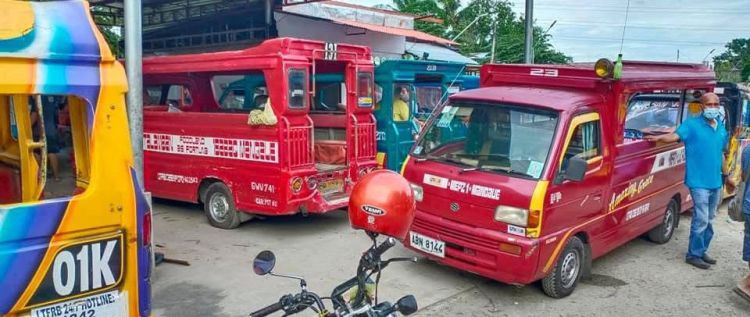
The modern jeepneys to be introduced as part of the programme were expensive, far beyond the reach of most drivers who face low earnings, limited social protection benefits, and barriers to accessing loans. Expected increases to maintenance costs would create additional financial burdens. Increased costs would likely be passed on to passengers through higher fare. 6 Experienced jeepney driver Danilo Santos expressed frustration: “you can earn ₱2,000 (£26) a day and be done. Now they want us to get something that expensive. At my age, how could I even pay that off? That’s what the government doesn’t understand”. 7
The consolidation of the industry also risked displacing livelihoods of those drivers owning and operating one vehicle. 8 The programme mandated ‘operators’ to consolidate their business with a minimum of 15 jeepneys per route. Smaller operators would be forced to pay costly consolidation fees to form cooperatives or risk being excluded and lose their livelihoods. 9
What workers did
With a mandated reduction in jeepneys, fast-approaching consolidation deadlines, and high costs to purchase eco-friendly Euro 4, 5 and 6 Jeepneys, workers were at huge risk of losing their livelihoods. NCTU realized it needed to act fast to ensure that the transition fair and inclusive.
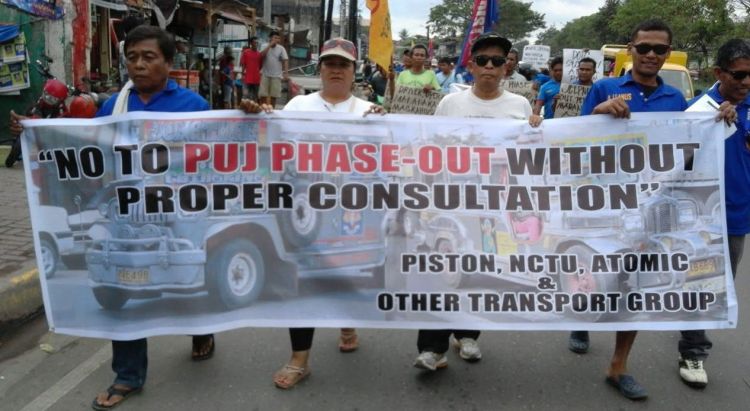
Between 2017-19, drivers organised a series of national strikes in opposition to the programme 10 - the first brought public transport to a near standstill, halting 95% of services. 11 This helped to raise awareness for the need to prioritise drivers’ livelihoods in transport reform.
The union also developed counter-demands for a fair transition. This included demands for a 5-year delay in phasing out old jeepneys, to give drivers sufficient time to transition. The union also fought for a ban on second-hand vehicle imports, to encourage investment in local manufacturing, and increased government subsidies for the sector. 12
NCTU also demanded that service contracting (scheme where the government pays drivers a fixed rate per kilometre as per a service plan set out by the transport agency) be implemented as part of the programme. Drivers who were members of cooperatives or companies could enrol in the programme. NCTU has long advocated for service contracting as a way to secure predictable incomes for drivers. Without subsidies for operating contracts, cooperatives burdened by debt for new vehicles would likely find it hard to stay afloat.
One of the major challenges posed was the requirement for individual operators to form cooperatives - one cooperative per route. NCTU recognised that the formation of cooperatives would make drivers eligible to operate routes and open up opportunities to be eligible for service contracting, access finance to purchase new vehicles, and formally hire drivers and provide access to social security. Although many drivers were already organised in associations – which primarily provided support or advocacy – cooperatives structures were unfamiliar to workers. There were also a major lack of trust in government. This meant that support was needed to work with drivers to centralise operations and transition existing associations into cooperatives.
NCTU also worked locally developing public information and worker education initiatives to broaden support and understanding. This included collaboration with international partners to provide capacity-building and skills development to educate workers about driver-led cooperatives and the associated legal requirements. Materials were also distributed in local languages and workshops were held to provide leadership training, information about access financing for vehicles, and the value of the union, as Mata explains: “[the cooperative model] was - and still is - a cultural shift in public transport work in the Philippines...We had to do a lot of work to explain that this was our only chance to transition, that the cooperatives would provide stability to workers and collective ownership. It was the only way we were going to keep our livelihoods.” 13
During 2020, at the height of the pandemic, the union also convinced the government to allocate funds for service contracting to help to subsidise and secure drivers’ earnings. NCTU provided support and advice to encourage drivers to enrol in the progress to access the subsidies.
Between 2023-2024, further strikes were organised to demand increased financial support and a longer transition period for drivers — already delayed three times due to the pandemic. 14
- 6https://www.vpm.org/npr-news/2018-03-07/a-push-to-modernize-philippine-transport-threatens-the-beloved-jeepney https://www.rappler.com/philippines/visayas/cebu-jeepney-drivers-operators-groups-see-no-future-puv-consolidation/
- 7https://www.rappler.com/business/marcos-jr-broken-promise-why-jeepney-drivers-protest-modernization-program/
- 8 https://pia.gov.ph/how-jeepney-operators-can-smoothly-ease-into-puv-modernization/ https://www.ibon.org/dotr-doesnt-want-to-admit-that-jeepney-fare-hikes-are-cominghttps://www.rappler.com/business/numbers-why-government-phaseout-jeepneys-anti-poor-do-little-environment/
- 9https://interaksyon.philstar.com/politics-issues/2023/03/06/244915/modernization-not-phase-out-battlecry-jeepney-drivers-operator/
- 10https://www.rappler.com/newsbreak/iq/185435-explainer-philippines-transport-strike-october-2017/https://www.philstar.com/nation/2018/03/19/1798293/piston-holds-another-transport-strike-against-jeepney-phaseouthttps://www.philstar.com/nation/2019/09/13/1951314/nationwide-transport-strike-set-sept-30
- 11https://www.youtube.com/watch?v=rplWtldhvmw
- 12 https://www.itfglobal.org/en/resources/just-transition-urban-transport-workers-0
- 13https://thefutureispublictransport.org/union-leader-angie-mata/
- 14https://www.context.news/money-power-people/as-philippines-scraps-jeepney-buses-operators-struggle-with-costs
How were obstacles overcome?
- COVID-19 pandemic: In 2020, a public transport ban was introduced due to the pandemic. With no income or social protection, drivers were left in desperate situations. Even as lockdowns eased, traditional jeepneys remained sidelined – leading to claims that the government was using the crisis to advance its transition agenda without worker protections. The ‘Move as One Coalition’ (a broad alliance of 140+ organisations) was formed to push for a more inclusive transport system. Unions worked with the coalition to successfully demand the return of jeepney operations, 15 and fought for the introduction of service contracting.
- Investment in local manufacturing: The government had a preference for use of imported vehicles for the reform, sidelining Filipino manufacturers and increasing costs. 16 From the beginning, NCTU pushed for greater investment in local vehicle manufacturing and engine retrofitting in the Philippines, recognising that this would also ensure lower vehicle costs. 17 In 2025, the country’s first e-jeepney factory opened, producing vehicles at lower costs, marking a step forward for local manufacturing and a more affordable modernisation.
- Financial burden: Without subsidies and investment, drivers would be unable to transition. Steep expenses and challenges with power outages for charging vehicles posed barriers. 18 NCTU members demanded the government enact a Just Transition Bill to address challenges. To address the lack of income guarantee and ensure cooperative financial stability, NCTU also advocated for continued service contracting. Government funds were allocated in 2021, but there were many challenges with implementation, including funding delays. Funding has since been provided by national and local authorities, although no budget was allocated in 2025.
- Police intimidation and state blame game: Drivers and union members faced harassment, arrests and vilification by authorities, particularly during strike action. The unions documented abuses and worked with human rights groups to launch media campaigns to resist driver arrests. This resulted in a high profile case where charges were dismissed, marking a symbolic win against the criminalisation of transport workers’ resistance. 19
- 15Constraints and Potentials for Just Transition in the Jeepney Modernization
Program, Velassco - 16https://thedefiant.net/forcing-jeepney-operators-into-cooperatives-could-lead-to-the-corporatization-of-public-transport-in-the-philippines/ https://businessweekmindanao.com/local-jeepney-manufacturers-demand-greater-role-in-puv-modernization-program/https://marketmonitor.com.ph/imported-modern-jeepneys-will-bury-phl-deeper-in-debt/ https://www.equaltimes.org/IMG/pdf/et_special_report_on_just_transition_2021_-_en.pdf
- 17https://www.rappler.com/moveph/185691-piston-puv-modernization-program-jeepney/
- 18https://www.equaltimes.org/IMG/pdf/et_special_report_on_just_transition_2021_-_en.pdf
- 19https://pistonph.com/hands-off-jeepney-drivers-stop-the-intimidation-and-harassment-by-the-police-and-ntf-elcac/ https://www.gmanetwork.com/news/topstories/nation/601192/2-piston-leaders-arrested-over-harassment-during-transport-strike/story/ https://phkule.org/article/787/nationwide-jeepney-strikes-begin-today-amid-threats-red-tagging/ https://hiyaw.org/jeepney-driver-mody-floranda-bids-for-senate-seat-with-a-call-for-better-transport-system/
What was the result?
Throughout the struggle, workers secured major wins including:
- Three-year extension of the phase-out of old vehicles
- Reduced capital requirements for the formation of cooperatives
- 63% increase in government subsidies to help cover the cost of modern jeepneys 20
- Extension of the deadline for drivers to form cooperatives 21
In January 2024, PISTON union launched a petition – backed by the International Transportworkers Federation (ITF) – calling for a review of the programme and advocating for a progressive public mass transport system. 22 In July 2024, the Philippine Senate suspended the modernisation programme until the concerns of drivers, unions, and transport groups were properly addressed. 23 “It wasn’t easy” explained Mata, “but through consistent mobilisation and negotiation, we…won concessions from the government.” 24
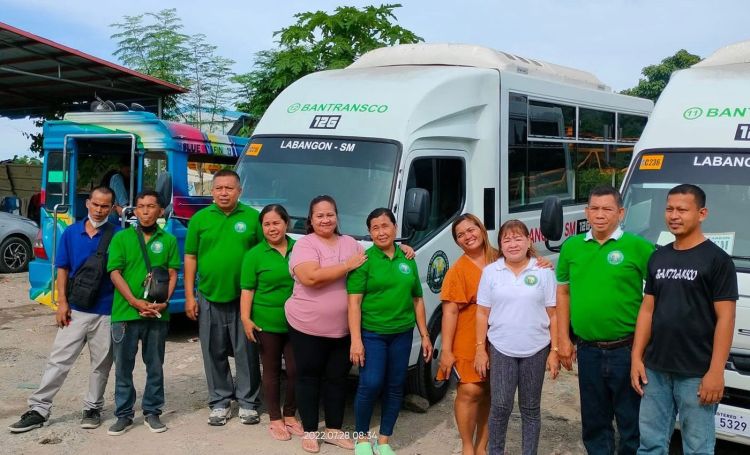
Since the start of the struggle, NCTU has also helped many drivers to form cooperatives, including 15 in Cebu City, providing drivers with stable incomes, access to social protection and improved working conditions as a result of reduced exposure to fumes from vehicles. 25
NCTU and other close allies are now developing a Just Transition Bill to put to the government and demanding institutionalised service contracting - recognising the importance of a multi-year investment in the modernisation programme: “We are pro modernisation but with a just transition to a modernised transportation industry…Cooperatives are doing their best to provide social benefits, but it needs to work hand in hand with government policy. There is a need for investment and subsidies from the government.” – Jaime Aguilar, NCTU General Secretary
Success factors & lessons
- Worker participation from the start: Jeepney drivers’ experiences were central through the campaign. Unions ensured drivers were actively involved in decision-making, which built trust and shaped worker-led solutions and cooperative structures that reflected workers’ needs.
- Government investment: Without government investment and subsidies the modernisation programme would not be viable and would likely destroy many workers’ livelihoods. NCTU pushed the government to provide subsidies, and continues to do to the present day: “Transitioning from the old system to the new is not possible without government investment to modernise transport.” – Aguilar
- Strong, consistent union leadership: Proactive and persistent advocacy maintained pressure on the government to secure subsidies and deadline extensions.
- Building broad alliances: Unions worked closely with community groups and social movements to expand public support for the campaign, building a collective public voice to amplify calls for a fair, just transition.
- Capacity building: Education and training enabled drivers to gain essential skills in finance, leadership, and organisation - enabling them to adapt to new models of transport provision and successfully run cooperatives.
The workforce was able to resist policies that threatened livelihoods, while advocating for cooperative-led solutions that protected rights and incomes. The campaign slogan, “No modernisation without a just transition” continues to shape the public debate on transport justice.
- 20https://philnews.ph/2023/03/07/subsidy-for-modern-jeepneys-to-be-raised-to-p260k-dotr-confirms/
- 21https://www.abs-cbn.com/spotlight/12/19/23/consolidation-deadline-what-it-means-for-jeepney-drivers-operators
- 22https://www.itfglobal.org/en/campaigns/urgent-call-solidarity-informal-transport-workers-in-philippines
- 23https://www.bulatlat.org/2024/08/01/jeepney-drivers-welcome-senate-move-to-suspend-transport-modernization/
- 24https://thefutureispublictransport.org/union-leader-angie-mata/
- 25https://www.philstar.com/headlines/2021/08/16/2120389/ltfrb-aid-and-subsidies-not-reaching-transport-workers-jeepney-drivers-say