Take the worker's pledge to help stamp out harassment!
What’s in this pack?
- Campaign overview - here you’ll find out why this campaign is important and what the strategy is.
- The plan and how you can be part of it - here you’ll find all the key dates and step by step guidance for taking action.
- Why now? - with new protections we have an opportunity to challenge the culture around harassment - let's take it.
- Conversation starters - here you’ll find tips for talking about sexual harassment at work.
- Recruitment tips - here you’ll find guidance for recruiting colleagues to sign the letter to your employer.
- Resources - here you’ll find a draft letter to send to your employer and links to other useful resources to support your action.
- Disclosure support - here you’ll find advice if someone discloses a case of harassment, including sexual harassment, to you.
If you haven't already, sign the pledge below to let us know you are joining the day of action.
1. Campaign overview
Unions have just won a new legal requirement for employers to take ‘all reasonable steps’ to prevent sexual harassment in all forms, and harassment by third parties, such as clients, customers, patients and services users.
This widens the scope of existing rights, which already obliged employers to protect staff from harassment by their colleagues, and strengthens sexual harassment protections by specifying that ‘all’ reasonable steps must be taken to prevent sexual harassment, not just reasonable steps.
But to see the benefit, we need employers to know the law has changed and to make sure they're doing something about it.
This is bigger than your workplace. We have an opportunity to challenge the culture around harassment and stamp it out wherever it occurs. It's desperately needed. More than half of all women have experienced some form of sexual harassment at work, and four out of five did not report this to their employer.
The Equality and Human Rights Commission guidance is clear; employers should carry out risk assessments to evaluate the potential for harassment to occur in various scenarios and put in place mitigations. Reasonable steps could look like a zero-tolerance policy, new training, extra staff, appropriate safety equipment and much more.
What's 'reasonable' to prevent harassment will look different depending on the size of the workplace and the nature of the work. Therefore, your employer should tell you how they're responding to the new laws and listen to your views as part of this. That's what your letter reminds them to do.
2. The plan and how you can be part of it
In the coming weeks, hundreds of workers just like you will hand a letter to their employers asking them to take all reasonable steps to prevent sexual harassment and third-party harassment at work.
To get started, follow these five simple steps:
If you are a trade union member, get in touch with your union or union rep in your workplace for support. If you aren't a member of a union, find out which union you could join for better protection at work.
Step 1: Read the draft ‘letter to employer’ and make any changes you think are needed to suit your workplace.
Step 2: Recruit colleagues to co-sign your letter (see the guidance below in section 4). The more signatures you collect, the more powerful your letter is likely to be. But even if it’s just you, you can still send it to your employer.
Step 3: Send the letter to your employer on Thursday 10 December 2026, our day of action (or another date nearby). You can either print a copy of your letter and hand it to your employer in person or send them an email. Depending on your workplace, there might be a specific HR person or department to send it to, but you should pick the person who you think has the most power to make the change.
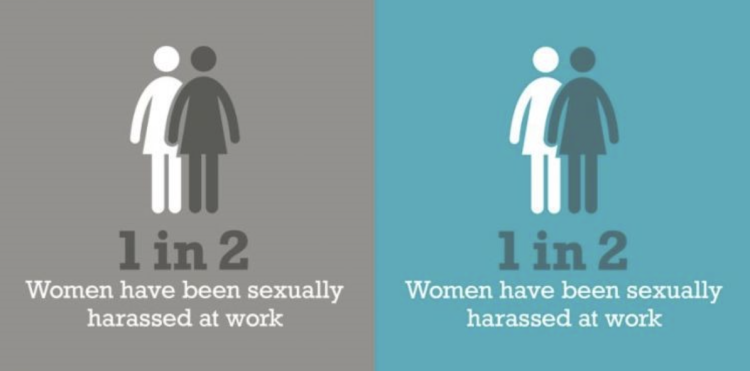
Step 4: Let us know! We are always stronger when we act together - so let us know that you have taken the action by sending an email to dgoodall@tuc.org.uk so that we can keep in touch and provide any on-going support you might need. You can also share the below graphic on social media to raise awareness about the campaign.
3. Why now?
We have an opportunity to challenge the culture around harassment and stamp it out wherever it occurs. It's desperately needed. More than half of all women have experienced some form of sexual harassment at work, and four out of five did not report this to their employer.
This is a vital action to take now during Young Workers Month. We know that young workers are concentrated in public-facing jobs where they can suffer regular abuse and harassment. While students comprise only around four per cent of the overall workforce, they account for as much as a fifth of workers in frontline retail and hospitality.
It’s also the UN’s 16 Days of Activism Against Gender-Based Violence from 25 November to 10 December. Every year the campaign calls for an end to gender-based violence against women, which affects one in three women worldwide. In 2026, the campaign calls for safety and justice that works for all women and girls – whether at home, at work, in public life, or across digital spaces. Taking this pledge means you’re part of delivering that justice.
These new rights will make us all safer and they have been widely welcomed by the public. 8 in 10 people we spoke to are in favour of the changes. It's more than likely that your co-workers agree.
We have an opportunity to challenge the culture around harassment - let's take it. Step up and take the pledge today!
4. Conversation starters
Starting a conversation about harassment can feel difficult or daunting at first. A lot of this is down to widespread misunderstanding of what constitutes sexual harassment and harassment.
Clearly explain that you are engaging with your employer to find out how they plan to respond to the new laws. Do this in a way that helps your colleagues to understand what sexual harassment/harassment is (see definitions below), how it impacts people and that this action serves to keep our workplaces safe. You should also reiterate that you need as many people on board as possible to make your voices heard.
A big part of this campaign is about coming together with your colleagues to remind your employer about the new rights coming in to help prevent workplace harassment. So, try to stay measured and keep the focus on this opportunity to make a difference and change the culture around harassment.
Here are some common questions and remarks to help equip you in your workplace conversations.
“What is harassment?”
Harassment is any unwanted conduct that has the purpose or effect of either violating a person’s dignity, or creating an intimidating, hostile, degrading, humiliating or offensive environment for them. The behaviour may involve conduct of a sexual nature (sexual harassment), or it could relate to one or more protected characteristics under the Equality Act 2010.
Harassment that is based on a protected characteristic, such as a person’s sex, race, religion or belief, sexual orientation, disability, gender reassignment, pregnancy, marriage and civil partnership status and/or age is in breach of the Equality Act 2010. In the workplace, it is against the law to harass someone under the Equality Act 2010.
Harassment can in some circumstances also be a criminal offence under the Protection from Harassment Act 1997.
“What is sexual harassment?”
The Equality Act 2010 defines sexual harassment as unwanted conduct of a sexual nature which has the purpose or effect of violating someone’s dignity, or creating an intimidating, hostile, degrading, humiliating or offensive environment for them.
Some examples include:
- Indecent or suggestive remarks.
- Questions, jokes, or suggestions about your sex life.
- The display of pornography in the workplace.
- The circulation of pornography (by email, for example).
- Unwelcome and inappropriate touching, hugging or kissing.
- Requests or demands for sexual favours.
- Any unwelcome behaviour of a sexual nature that creates an intimidating, hostile or humiliating working environment.
Employers have a duty to anticipate and take all reasonable steps to prevent sexual harassment. If it occurs, they should act to prevent recurrence.
“What is a third-party?”
A third-party refers to someone who a worker interacts with as part of their job, but who is not employed by the same employer as them. It can occur online or in person.
Some examples are:
- Customers – such as in a shop, a restaurant, a train passenger or a hotel guest.
- Clients – such as in a meeting, or when visiting someone’s home to care for them.
- Patients – such as in a hospital.
- Business contacts – such as in a meeting or at a conference.
- Any non-directly employed staff, such as contractors or agency workers.
This list is not exhaustive, and includes other groups, such as parents who abuse teaching staff over email, for example.
5. Tips for recruiting your colleagues to support your action
Recruiting people to co-sign your letter is probably easier than you think! Given how widespread harassment at work is, there are likely to be many people who have personal experience, and many others who want to stand in solidarity. You only need a handful of people to sign your letter to make a powerful statement, but more is always better.
Effective recruitment is all about personalised contact. Imagine for a moment that an acquaintance includes you on a mass email inviting you to attend a party at their house. You know they aren’t expecting you to reply to the email, so you make a note of the party in your calendar and move on with your day.
Now imagine that the same person calls you and tells you they’re throwing a party and that they’d really love it if you came. You say yes. 24 hours before the party, your acquaintance texts you to confirm that you’re coming, and says a mutual friend who is also attending is really excited to see you there.
Which party are you more likely to show up to?
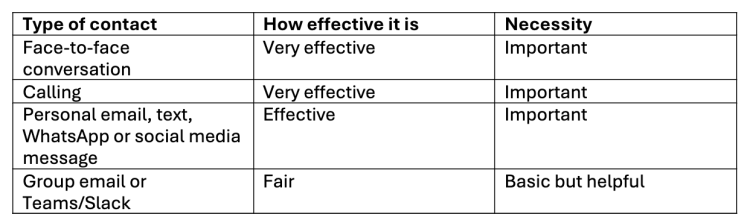
We’ve ranked recruitment methods in terms of their effectiveness – in general, the more personal or face-to-face a method is, the more effective it will be.
If you have a trade union rep in your workplace, check in with them as they are likely to be very helpful and supportive of your initiative.
6. Resources and support
TUC guides on tackling sexual harassment in your workplace, including a toolkit for reps.
EHRC’s ‘Sexual Harassment and Harassment At Work: technical guidance.’
TUC Education also provide a negotiating with management resource on how to talk to management.
For support from the TUC, contact Daisy, Young Workers Lead (dgoodall@tuc.org.uk).
If you’re a member, you can also contact your union for support.
7. Advice for disclosures
The purpose of this action is not to ask people to share their own experiences but as you are speaking to people about harassment, there is a chance that someone might disclose an experience of harassment to you. Here are some tips on having these conversations:
- Listen to them and behave in a sympathetic and non-judgemental way.
- Treat disclosures with strict confidentiality and take them seriously.
- Reassure them that they are protected from sexual harassment, and harassment linked to a protected characteristic, in the workplace by the Equality Act 2010. It does not matter how long you have worked for your employer or whether you are a permanent employee, an apprentice or trainee, on a fixed-term contract or supplied by an agency, you are still protected by this legislation.
- Suggest that they keep a diary of incidences.
- If you aren’t a union rep, we would suggest that you do not give people advice on what to do next but support them to contact their union. They could speak to their union rep or contact their union directly.
- If you are a rep, find out what your employer’s policy on harassment is and how members of staff can report incidences to your employer. You may also want to get advice from your union on how to support the member. Clearly communicate these options back to the member but always be led by them.
You should always be led by the person. They should make decisions about what they want to do next at their own pace, without pressure.
Contact one of the following organisations:
Women’s specialist support:
Women’s Aid Federation – Home - Women's Aid / info@womensaid.org.uk
24/7 Rape & Sexual Abuse Support Line: 0808 500 2222
London Black Women’s Project – London Black Womens Project | Domestic Violence | LBWP / +44 208 472 0528
Rights of Women – Home | Rights of Women / https://www.rightsofwomen.org.uk/get-advice/call-our-advice-lines/
Latin American Women’s Rights Service – LAWRS - Latin American Women's Rights Service / 0808 145 4909
LGBT+ specialist support:
Galop – https://www.galop.org.uk/ / 0800 999 5428
Men’s specialist support:
Survivors UK – SurvivorsUK | We challenge the silence to support sexually abused men / 02035983898
We’re stepping up to embed these new rights into our workplace.