How informal brickmakers are working to improve conditions and build collective power
TUC Worker-Led Transition Project
The TUC worker-led transition project partners with manufacturing workers to futureproof industrial jobs. This case study is part of a worker-led transitions series, highlighting international examples where workers across sectors are playing an important role in the transition of their workplaces, helping to secure good quality work and shape their industries into the future.
Country: Argentina
Date: 2015 - Present
Context
Argentina’s brick-making industry provides livelihoods for an estimated 75,000 families. Although formal factories exist, around 90% of workers in the industry operate in the informal (‘popular’) economy. 1 The sector is dominated by marginalised groups, particularly women and migrants, and characterised by precarious, family-based self-employment with no contracts, long hours, and poor health and safety standards, with limited protections.
Founded in 1950, the Unión Obrera Ladrillera de la República Argentina (UOLRA) represents workers in the sector. Although union density in the sector has historically been low, it has grown significantly in the past ten years, particularly since a union leadership change in 2015.
The challenge
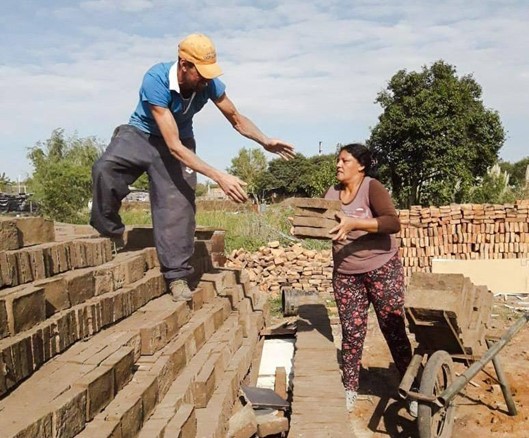
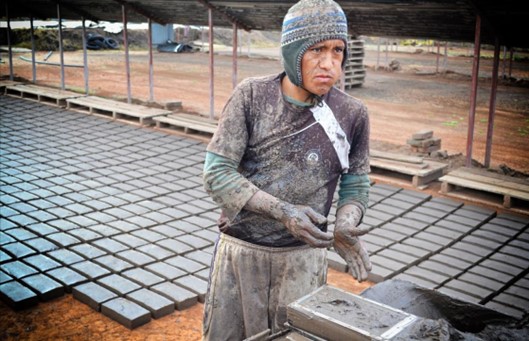
Traditional brick production in Argentina is largely concentrated in communities in rural areas and in the outskirts of cities, where land is cheap and regulatory enforcement is weak. The process of production involves extracting clay, moulding by hand to form bricks which are left to dry in the sun, and then heated in a traditional kiln - usually fuelled by firewood or waste wood. UOLRA estimates that there are over 8,000 active kilns in Argentina. 2 Traditional brick production is highly energy inefficient. A large amount of firewood is used to produce small numbers of bricks. The firing process produces high levels of emissions – particularly black carbon emissions, which can be more potent than CO₂ in climate impacts. The process also emits other harmful pollutants (sulphur dioxide, nitrogen dioxide) causing respiratory issues for workers and communities. 3The informal nature of the sector has hindered technological development to address environmental impacts, as UOLRA member Soledad Casals reflects: “I'm a brickmaker, from a family that's been working in this business since 1905…The truth is that we still work with the same tools we used a hundred years ago, and there was no technical development in brick-making.” 4
Workers also face poor working conditions and occupational hazards from the sector. Many work without personal protective equipment, and kilns are often close to homes, affecting the environmental health of nearby communities and families. Women and children undertake high levels of unpaid work in the sector. Migrant workers – mainly Bolivian – make up 50% of the workforce and face heightened vulnerabilities due to their precarious immigration status.
What workers did
Before 2015, the union was facing major internal challenges and had less than 100 members. Under revitalised leadership, UOLRA set out to rebuild union organising by addressing the poor working conditions and environmental hazards faced by workers in the brick-making sector. In the first months of the new leadership a social, labour and productive assessment of the sector was undertaken which identified major environmental and community health concerns for brick making communities. It also highlighted the need for new forms of representation to engage informal economy workers into the union. In response, constitutional reforms were introduced in 2016 which expanded membership rights to informal and migrant workers and made visible the work of women brick makers through the creation of a equality and gender secretariat, as Alberto Vicenzi, UOLRA Secretary for Vocational Training and Job Skills shared: “These new realities of our priorities are reflected in the union structure. It was previously seen as only for those who are employed and already had protections, but we are now also including workers in the informal economy and those who are invisible in the industry.”
UOLRA developed plans for the creation of cooperatives of brick-makers and ‘brick parks’ in which several brick maker families and production facilities (kilns) would be grouped together as a way to improve working conditions and reduce environmental impacts. The cooperative parks would promote collaboration amongst individual producers across brick production (mixing, drying, firing, marketing), give them more bargaining power in buying raw materials and setting minimum sales prices, and also provide support with legal registration needed to access government programmes and funds. The creation of the brick parks would also open new opportunities to introduce more sustainable production methods to address harmful emissions from the sector. Better practices could be introduced for mixing clay, kilns could be redesigned to be more efficient, and firewood could be replaced with gas as the fuel source. The union collaborated with the Arturo Jauretche National University (UNAJ) to trial energy-efficient (gas-fired) kilns and centralised infrastructure systems for brick parks. 5 In recognition of the community-based nature of traditional brick production, brick parks were also intended to create opportunities to provide better housing conditions for brickmaker families, and to provide spaces for education and vocational training, healthcare and other community initiatives.
Many workers across the industry face training gaps which pose barriers to transforming the sector. The union has built partnerships and alliances with universities, the Ministry of Science and Technology, the Ministry of Labour, Employment and Social Security of the Nation (MTEySS), the Secretariat of Industry and Productive Development, and the Secretariat of Mining with whom, until the end of 2023, projects, plans and programmes were implemented. This included the launch of vocational training programmes to empower workers with skills in brick making, workplace safety, digital literacy, health and safety and sustainable production methods. UOLRA also worked with the Workers’ Innovation Centre (CITRA) to undertake participatory action research to capture and address the realities facing women and migrants in the sector. The union also worked closely with the Building and Woodworkers International (BWI) and the Climate and Clean Air Coalition to build its strategic and political agenda for the transition to green production methods.
The fragmented nature of brick production meant that local producers needed the opportunity to develop locally-focused plans. The union promoted the formation of ‘Provincial Brickworks Tables’ to bring together key stakeholders for social dialogue to promote decent work, cooperative formation and reduce environmental impacts in the sector. 6 So far brick roundtables have been created in 5 provinces, and in 2023 a National Brick Industry Sectoral Roundtable was established within the framework of the Secretariat of Industry and Productive Development - creating a platform for tripartite dialogue and collective bargaining across the whole sector. The forum was composed of the union, the chamber of employers, the state, and for the first time in the history of sectoral roundtables – by the federation of brick cooperatives.
How obstacles were overcome
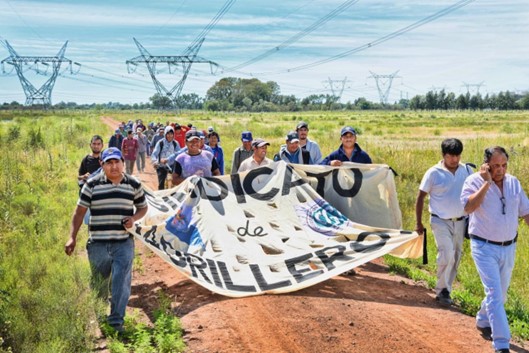
Fragmented and informal workforce: The informal nature of the workforce, often hidden in home set-ups and spread across neighbourhoods created challenges for developing unified demands. Union reforms enabled the organisation of all workers - including informal economy and migrant workers. Today, 50% of UOLRA delegates are migrants. The union also created a national network of neighbourhood delegates and local assemblies, allowing brickmaker communities to elect their own representatives to represent their interests.
The needs of women: Many women working within family set-ups did not self-identify as workers. Priority was given to ensure women workers participated in training programmes, and campaigns were developed to target specific issues faced by women in the industry, including violence and harassment. 7
Lack of a national bargaining structure: A persistent challenge in addressing workers’ issues across the industry was the absence of a National Brick Chamber which would enable bargaining for the whole sector. The union fought for the creation of such a structure to carry out collective bargaining to ensure labour wins were applied throughout the country, and also enabled the union to have a national counterpart with whom to negotiate key issues within the industry.
Government hostility: Since taking government in 2023, President Milei has been implementing major budget cuts. Cuts have included dismantling the ‘Potenciar Trabajo’ programme which provided cooperative workers with a partial wage subsidy.8 Measures also included the suspension of public works, the halting of housing projects and a drop in income which has made it impossible for workers to save to build their homes – having major impacts on the brick industry. In response, the union is diversifying its partners to support cooperative development, including developing a brick-making curriculum with the Buenos Aires Provincial Government and partnering with the National Institute for Associative and Social Economy to map the sector and expand cooperative training with state support. 9
What was the result?
Since 2015, membership of the union has surged as a result of grassroots organising, inclusive leadership and the integration of worker voices into decision-making structures. Around 30 brick-making cooperatives are now affiliated to the union, marking a first step to improving workers’ condition and collectivising production to reduce emissions. In 2023 the Federation of Brick Workers Cooperatives Limited was established.
The first fully operational park launched in Rio Negro in 2019, home to 40 families. It is equipped with a brick moulding machine which is capable of producing 1,200 units per hour, a major step to reduce waste, improve efficiency and safety, and reduce fuel with more bricks able to be fired in each kiln. 10It also has a community space for training and social events. 11 In San Juan, land has been secured for a second park, with space for 30 kilns for up to 250 families in cooperatives. 12 Innovations are being planned to limit emissions, including using byproducts from other manufacturing processes as raw materials (organic and inert waste, clay from alluvial quarries) and introducing industrial kilns. 13 UOLRA now aims to scale up to 50 brickmaker parks, however the sector faces ongoing challenges due to the lack of political will and investment for the project.
“The connection between the workers and the union is the most important achievement, as it allows the brickmaking community to take the lead in a collective project, with the union acting as a unifying force, an intermediary, and a channel for communication with government through the active participation of the brickmaking workers themselves, who, from their place of residence and work, become the architects of their own destiny.” – Luis Caceres, General Secretary, UOLRA
- 5 https://www.notaalpie.com.ar/2024/12/03/hacia-la-formalizacion-del-oficio-ladrillero-la-uolra-avanza-en-el-diseno-curricular/
- 6https://www-gba-gob-ar.translate.goog/trabajo/noticias/se_realiz%C3%B3_la_primera_reuni%C3%B3n_de_la_mesa_ladrillera_provincial?_x_tr_sl=auto&_x_tr_tl=en&_x_tr_hl=en-US&_x_tr_pto=wapp
- 7https://www.ituc-csi.org/IMG/pdf/global_unions_organising_for_justice_5-22.pdfhttps://costa.parana.gob.ar/el-primer-desafio-fue-reconocernos-como-trabajadoras-dijo-la-obrera-ladrillera-soledad-casals/
- 8https://otrocontenido-com-ar.translate.goog/nota/3044/la-uolra-participo-de-la-marcha-de-la-cgt-que-cuestiono-las-politicas-del-gobierno-nacional/?_x_tr_sl=auto&_x_tr_tl=en&_x_tr_hl=en-US&_x_tr_pto=wapphttps://www.lv12.com.ar/procrear/ladrilleros-vemos-muy-expectantes-lo-del-procrear-tucuman-n182170
- 9https://www.argentina.gob.ar/noticias/avanza-el-acuerdo-de-cooperacion-con-la-uolrahttps://www.argentina.gob.ar/noticias/estado-sindicatos-y-cooperativas-un-modelo-alternativo-de-crecimiento
- 10https://www.elmensajerodiario.com.ar/contenidos/el-sector-ladrillero-de-rio-negro-avanza-hacia-la-industrializacion/
- 11https://elargentinodiario.com.ar/politica/gremiales/10/06/2024/se-inauguro-el-salon-de-usos-multiples-en-el-parque-ladrillero-de-general-roca/
- 12https://www.lineasindical.com.ar/sergio-unac-luis-caceres-encabezaron-juan-encuentro-nacional-ladrillero-n-1687403.htmlhttps://www.ahorasanjuan.com/juan-pablo-cornejo-de-la-uolra-estamos-en-la-lucha-de-que-los-derechos-laborales-sean-respetados/
- 13https://www-telesoldiario-com.translate.goog/424270-ladrilleros-expectantes-por-la-inauguracion-del-parque-se-innovara-con-materiales-y-se-mejoraran-condiciones-laborales?_x_tr_sl=auto&_x_tr_tl=en&_x_tr_hl=en-US&_x_tr_pto=wapp
Success factors and lessons
Grassroots organising & cross sector partnership: Training opportunities, changes to union structures and support for local initiatives – including the mobilisation of local assemblies and provincial roundtables – enabled workers to engage with government at the local level and identify targeted support for initiatives. Strong alliances built with local government, universities and civil society enabled the union to explore opportunities for green production and vocational training for workers in the industry.
The connection between livelihoods, health and community: The cooperative brick park plan linked demands for economic, environmental and social sustainability together, recognising that the value of the environment was deeply connected with communities and working conditions. Vocational training was central to address skills and training gaps and enabled improvements to working conditions whilst opening up new opportunities for technological and environmental improvements in the sector: “We are trying to take a political and worker focus, including electing delegates in territories where there are workers to represent and in areas where the brick making families are located to combine the goal of union representation with other social support measures that are needed.” – Luis Caceres, General Secretary, UOLRA
Supportive policies and investment: One of the biggest ongoing challenges the union continues to face in expanding the work is the lack of national comprehensive policies and sustained investment for the sector.
