Workers’ cooperative fights to futureproof glass manufacturing
TUC Worker-Led Transition Project
The TUC worker-led transition project partners with manufacturing workers to futureproof industrial jobs. This case study is part of a worker-led transitions series, highlighting international examples where workers across sectors are playing an important role in the transition of their workplaces, helping to secure good quality work and shape their industries into the future.
Site details
Site name: Duralex
Operator: Duralex
Location: La Chapelle-Saint-Mesmin, near Orleans
Country: France
Date: 2024 - Present
How glass workers established a workers’ cooperative to save livelihoods and secure local manufacturing
Context
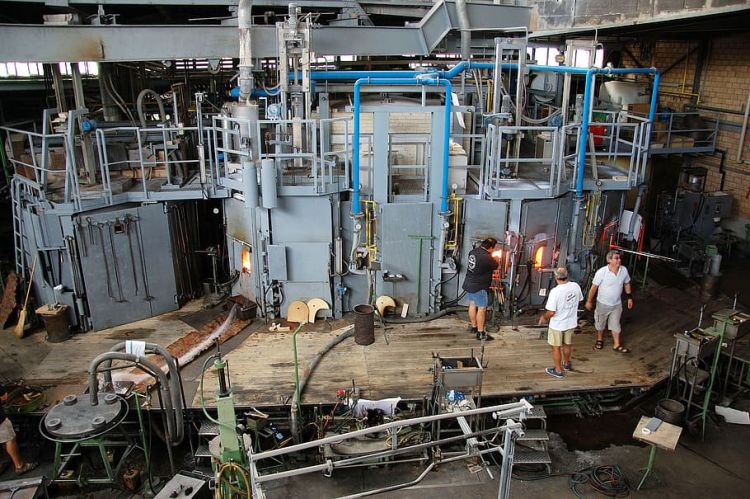
Originally established in 1945, Duralex glassware is a historic French glassware brand, known around the world. With a manufacturing site in La Chappelle-Saint-Mesmi, near Orleans, it is the only French glassware manufacturer that produces all of its glassware in France. 228 workers are employed at the site, mostly represented by Confédération Française Démocratique du Travail (CFDT), as well as the Confédération Générale du Travail (CGT). On top of union representation, in France all private-sector companies with 11 or more employees are required to have a “Social and Economic Committee” (CSE). The CSE – with delegates elected by employees and often involving union representatives – is a liaison point between workers and management, helping to enforce workplace rights and monitor health and safety, and is consulted on any business changes.
The challenge
For the past twenty years, the company has faced financial instability and undergone several ownership changes, including a recent acquisition in 2021. 1 Since then, declining consumer demand, increasing foreign competition and a hit from the pandemic left the company facing an uncertain future. Challenges have been exacerbated by soaring energy prices amidst pressure to reduce greenhouse gas emissions. The high temperatures required to melt raw materials into glass mean that glass manufacturing is one of the most energy intensive industrial processes. In France, it is responsible for 3% of greenhouse gas emissions from the industrial sector. 2
In November 2022, a sharp rise in energy prices triggered by Russia’s invasion of Ukraine earlier that year led to the company temporarily ceasing operations, putting its furnaces on standby and moving the workforce to reduced hours. Although the company received government emergency funding of €15 million in April 2023, in April 2024 the site was placed under ‘judicial administration’ by the parent company. In an effort to maintain operations and preserve jobs, court-appointed administrators set out to restructure the business or find a buyer. This marked the fourth time in two decades that workers’ livelihoods had been put at risk, as Vasco Da Silva, CFDT member recalls: “unfortunately, it is quite usual to see factories or companies closed or sold to other shareholders because they are no longer sufficiently profitable for the shareholder, or cease to be so due to bad management decisions.” 3
What workers did
After the announcement that the site would go into administration, workers – including local plant management – came together and decided to come up with an alternative plan for the site, recognising that with the right strategy and knowledge there was the potential for the site and their jobs to be saved.
In 1978, a law was introduced that laid the legal foundations for the formation of worker cooperatives in France (‘société coopérative de production’ or SCOP) – giving them a clear legal identity as a legitimate enterprise model that is worker-owned and managed. In 2014, the Law on the Social and Solidarity Economy (Loi ESS) 4 was introduced, providing simplified fiscal and legal mechanisms to facilitate worker-takeovers of companies in cases of financial difficulty – including introducing employee share ownership 5 - and creating a legal obligation for business owners to inform workers in advance of a possible sale, to give them the chance to make an offer. There are an estimated 2420 SCOPs in France, many of which are in industrial sectors. 6
Upon finding out about the sale of the business, workers quickly developed a plan to establish a worker-led cooperative and take over the running of the site, coordinated through the CSE and supported by the CFDT, as Da Silva shares: “[CSE] along with the three directors who belonged to Duralex, discussed the idea of creating a worker cooperative…it seemed to us like the best way to allow Duralex and its employees to finally decide their own future.” 7
In developing a worker-led plan, CFDT provided essential support – including providing education and information sessions, assemblies and workshops to explain cooperative principles and governance responsibilities, and to secure worker’s own financial investment in the cooperative. The CSE also organised internal votes and consultations to measure worker support for the proposal. By the time the proposal was developed, over 60% of the workforce supported the initiative and committed to investing. CFDT also coordinated with local, regional and national bodies, including government, investment banks and long-standing cooperative federations, to gather financial and advisory support for developing a strong business proposal and secure funding for the project.
Three takeover bids were put forward – two by external investors, which set out plans for job cuts, and the worker-led proposal which retained all of the existing roles. The bids were taken to court in Orleans where workers had to set out their arguments for securing jobs and maintaining French ownership of the site through the cooperative. The battle was hard fought and CFDT representatives provided essential support in defending the workers’ proposal against other bids.
After months of tough negotiations that were filled with uncertainty for the workforce, in July 2024 the court selected the worker-led proposal as the winning offer, praising it as a serious proposal with strong guarantees for maintaining jobs. 8 A statement from the cooperative after the win stated: “We are taking our destiny into our own hands and are determined to advance our company, an icon of French industry, in an ambitious transformation project.” 9 Suliman El Moussaoui, a mechanic at the site, explained the success: “There are no more shareholders or investors. We workers are now the owners. For us, it’s a great pleasure to have saved our company ourselves.” 10
How were obstacles overcome?
Financial backing: The cooperative needed to secure significant capital to present a viable business proposal to the court. In SCOPs, employees must hold at least 51% of voting rights and 65% of the capital. The hard work of the union and the CSE meant that over 130 employees agreed to invest their personal funds (around €500 each). Supplementary external funding was also secured including:
- €750,000 loan through the French Economic and Social Development Fund and a bank guarantee worth €3 million from the state
- acquisition of the company land and buildings (costing €5-8 million) by the local municipal authority
- repayable advance of €1 million and a pledge to double employee equity contributions from the regional council
- loan of €4million provided by a banking consortium. 11
The union built up considerable support from national and local governments, making the political case to highlight the urgency of saving local jobs. Fiscal support and guarantees from authorities helped to provide credibility to the bid, giving banks the confidence to extend loans to the SCOP, as former plant manager Francois Marciano explained: “We’re still here because we received backing from the City and the region and a little from the government in Paris too. Otherwise, our financial model wouldn’t have worked...” 12
Complex legal proceedings: Navigating the complex legal procedures to develop and present the plan was a challenge. CFDT provided the technical support necessary to navigate the court system and put together a robust bid, whilst also providing the necessary training for workers to enable them to take ownership and lead in the process.
Union opposition: Although CFDT was supportive of the proposal, CGT instead favoured a traditional industrial takeover with external ownership. 13 With majority representation at the site, the CFDT reassured staff who were uncertain about the cooperative structure – highlighting the opportunities for self-management and skills development - and secured public endorsement from local authorities which strengthened the credibility of the proposal.
- 1https://worldcrunch.com/business-finance/duralex-workers-cooperative/
- 2https://finance-climact.eu/news/decarbonizing-the-glass-industry/
- 3https://worldcrunch.com/business-finance/duralex-workers-cooperative
- 4http://www.legifrance.gouv.fr/affichTexte.do?cidTexte=JORFTEXT000029313296&dateTexte=&categorieLien=id
- 5 https://www.cecop.coop/works/france-announces-the-creation-of-the-first-scop-grouping-calicehttps://cecop.coop/works/heading-towards-a-cooperative-shockwave-the-adoption-of-the-law-on-the-social-and-solidarity-economy-in-francehttps://www.entreprises.coop/system/files/inline-files/CoopFR-Synthese2022-ENG-new.pdf
- 6https://www.les-scop.coop/l-annuaire-des-scop-en-france?title_1=&search_api_fulltext_1=&field_secteur_activite_structure=All&field_code_naf=&field_depart=All&locality=&field_type_de_cooperative=1385
- 7 https://worldcrunch.com/business-finance/duralex-workers-cooperative/
- 8https://www.glass-international.com/news/duralex-employees-to-takeover-emblematic-glass-manufacturer
- 9https://thebetter.news/duralex-cooperative/
- 10 https://www.youtube.com/watch?v=K8T04rm5aRo
- 11https://france3-regions.franceinfo.fr/centre-val-de-loire/loiret/orleans/duralex-se-voit-accorder-un-pret-de-750-000-euros-par-l-etat-3076540.htmlhttps://time.news/duralex-receives-a-loan-of-750-thousand-euros-from-the-state/https://france3-regions.franceinfo.fr/centre-val-de-loire/loiret/orleans/duralex-se-voit-accorder-un-pret-de-750-000-euros-par-l-etat-3076540.htmlhttps://www.lemonde.fr/economie/article/2024/07/26/la-verrerie-duralex-reprise-par-les-salaries_6258793_3234.htmlhttps://inoindustry.com/duralex-une-renaissance-cooperative-portee-par-ses-employes/
- 12 https://www.youtube.com/watch?v=K8T04rm5aRo
- 13https://www.lunion.fr/id624803/article/2024-07-26/la-mythique-verrerie-francaise-duralex-reprise-par-les-salaries-sous-forme-de
What was the result?
All 228 jobs at the site have been secured. Each employee shareholder has one vote in decision-making - regardless of seniority or amount of capital invested – and strategic decisions are taken on the principle of majority principle. 14 The employee shareholders have also elected former plant manager Francois Marciano as the General Director. Workers now have a stake in the future decision-making of the company. Any company profit is to be partly reinvested and partly distributed amongst employee shareholders. 15
Since the takeover, CFDT has continued to train worker-shareholders in cooperative governance. The takeover represents a major change in culture, with company strategy now focused on long-term sustainability and reinvestment of profits, rather than short-term profit extraction, as Paquerette Saugrin, from the Packing Department and one of the workers who invested shares: “Now we work for ourselves, and that’s something quite different. Of course we worked hard before, but now that the plant belongs to us, we give that little bit extra.” 16
Renewed attention on the company has already boosted demands for orders. 17 The cooperative now has plans to lower production costs, develop new products and build a sales and marketing team to be based at the site. 18 It has also recognised the need to reduce high production costs and address climate impacts from the industry by investing in new manufacturing methods and machinery - renewable energies, circular economy practices, and eco-design of new products. Although high upfront costs of new technologies remain a challenge, being a worker-owned cooperative means that the site is well positioned to access green public investment and is eligible for targeted grants.
Success factors & lessons
Supportive legal frameworks: France has distinct legal mechanisms that helped to facilitate worker takeover of the site, including allowing a fair and transparent sale of the company, a legal basis for worker takeover and ownership, and ensuring true worker control - workers must own the majority of capital and voting rights. SCOPs have been recognised in law since 1978 and relatively common in industrial sectors, which means that there tends to be strong political and institutional backing for worker buyouts.
Worker engagement and ownership: The CSE structure enabled workers to be at the forefront of the struggle and built an immediate, collective worker response. Workers’ sense of ownership and collective responsibility for the site and the belief in the value of democratic governance meant that workers embraced the new cooperative model.
Union support: CFDT played a critical role in educating workers about the new structures, provided technical advice in developing the proposal, and harnessed advisory and financial support from external players. Experienced long-standing cooperative federations also provided advice and support.
Financial backing: The combined capital of workers and external support helped to build a credible takeover bid, and backing from local government provided political legitimacy. In France it is common place for local governments to invest in worker buyouts, and specialised funding schemes are also in place to support cooperatives. A strong network of cooperative federations also help to facilitate financial support for worker buyouts, which means that public banks often provide loans to SCOPs.