Workers champion carbon capture in the cement industry
TUC Worker-Led Transition Project
The TUC worker-led transition project partners with manufacturing workers to futureproof industrial jobs. This case study is part of a worker-led transitions series, highlighting international examples where workers across sectors are playing an important role in the transition of their workplaces, helping to secure good quality work and shape their industries into the future.
Site details
Site name: Brevik
Operator: Heidelburg Materials (formerly Norcem)
Location: Porsgrunn
Country: Norway
Date: 2005 - 2025
How Brevik workers helped secure the first industrial-scale CCS facility in cement and future livelihoods.
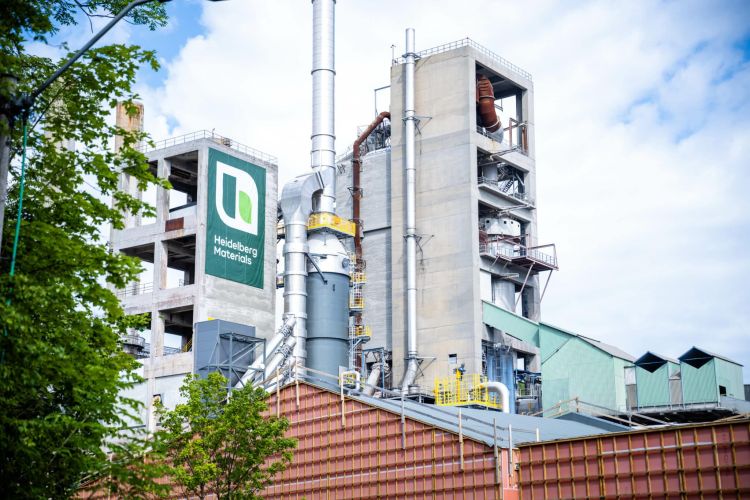
In Porsgrunn, Norway, the Brevik production facility has been producing cement since 1919 and is operated by Heidelberg Materials, the sole cement producer in Norway. The Brevik site employs 180 workers who work to supply construction projects in Norway and across the rest of Europe. The workforce is predominantly organised under Styrke union (Industri Energi) – a union of 80,000 members including many working in the oil and gas industries, and with a long history of cooperative labour relations with plant management.
The challenge
Traditional cement production is responsible for around 8% of global carbon dioxide (CO₂) emissions – if the cement industry were a country, it would be the third largest emitter after China and the USA. 1 The Brevik plant emits around 700,000 tonnes of CO₂ annually, equivalent to 1.8% of Norway’s total CO₂ emissions. 2
Norway also has ambitious climate targets – aiming to cut emissions 55% by 2030 (from 1990 levels) and achieve climate neutrality by 2050 to meet the goals of the Paris Agreement. 3 In 1991, Norway was also one of the first countries to implement a carbon tax, a price paid per tonne of carbon emitted that rises over time. It was against this backdrop that both workers and management recognised the urgent need to shift to greener cement production whilst maintain production levels for construction needs. 4
However, cutting emissions in cement making is difficult, because as well as emissions arising from the energy needed to heat materials to high temperatures, carbon dioxide is released from the chemical process required to convert limestone to cement.
In 2005, the company undertook a feasibility study on introducing a Carbon Capture and Storage (CCS) system to reduce emissions. 5 The system would enable carbon to be captured, liquefied, transported and stored permanently 2.7km below the seabed. Although CCS is usually a costly and technically challenging method of decarbonisation, it can be a good fit for the cement industry due to emissions being released as a by-product of production.
- 1 https://www.weforum.org/stories/2024/09/cement-production-sustainable-concrete-co2-emissions/ https://www.bbc.co.uk/news/articles/cxee01m5yero
- 2 https://www.worldometers.info/co2-emissions/norway-co2-emissions/#:~:text=Fossil%20CO2%20emissions%20in%20Norway,in%20CO2%20emissions%20per%20capita.
- 3 https://unfccc.int/sites/default/files/resource/LTS1_Norway_Oct2020.pdf
- 4 https://www.brevikccs.com/en/about-the-project
- 5 https://www.brevikccs.com/en
What workers did
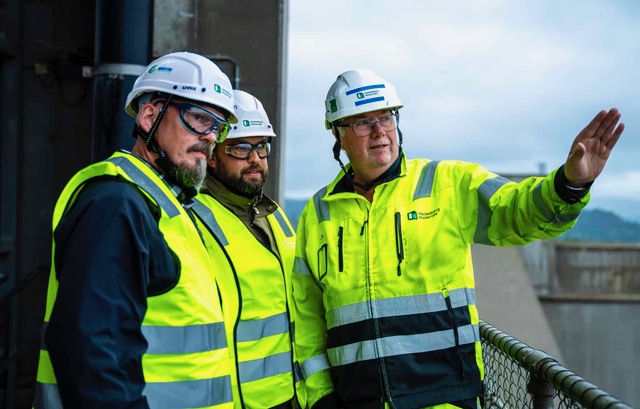
As company plans were developed, union members did their own research and became involved, recognising the opportunity to provide customers with more carbon neutral building materials. 6 From 2011 to 2017, the union worked with the company to develop ideas and access government funding to explore the potential for CCS. This included a test project between 2013-17, during which four CCS technologies were trialled at the Brevik site. By 2019, the government had shortlisted Brevik for a CO₂ capture trial. 7
From the project inception, the union played a central role in shaping the transition and advocating for government investment for the project, as chief shop steward Tom Jacobsen shared at the time: “We employees have high expectations for the pilot project and have a strong desire for the state to take responsibility and follow up with the necessary grants.” 8 For Jacobsen, who has worked at the plant since 1980, transition of the plant to maintain competitive edge and sustain jobs for future generations was at the top of his agenda. When he learned that the government planned to invest, he delayed his retirement to ensure the project became a reality, working with local government to secure long-term investment in the project, as he shared: “With my long experience and my political commitment, I had good contact with the government politicians…[the unions] were also an important channel I used to influence to ensure a good result…we had close contact with members of parliament who fronted government investment.”
- 6 https://styrke-no.translate.goog/nyhet/en-stor-dag-for-vare-medlemmer-i-norcem-men-regjeringen-burde-gatt-for-to-ccs-anlegg/?_x_tr_sl=en&_x_tr_tl=es&_x_tr_hl=en&_x_tr_pto=wapp
- 7 https://www.oxfordenergy.org/wpcms/wp-content/uploads/2024/07/Insight-154-Norwegian-CCS-what-have-we-learned_.pdf https://www.heidelbergmaterials.com/sites/default/files/2024-07/Vetle_Houg_Pioneering_carbon_capture_in_the_cement_industry.pdf
- 8 https://www-pd-no.translate.goog/?_x_tr_sl=en&_x_tr_tl=es&_x_tr_hl=en&_x_tr_pto=wapp
In 2020, final approval and government funding (covering over 80% of the project cost) 9 were agreed as part of the Longship project – the Norwegian Government’s full-scale project aiming to build the world’s first cross border carbon and capture infrastructure - enabling transport and storage of emissions captured from industrial sources in other countries. 10 Brevik was designated as the lead project, and construction work began in January 2021.
But the scale and the complexity of the CCS transformation raised serious questions about what this would mean for health and safety and long-term job security for workers, as Jacobsen explained: “…it was uncertain how these changes would affect our jobs. The new technology and demands put pressure on everyone…”
However, the process was strengthened as a result of Norway’s labour relations model – characterised by strong social dialogue, collective bargaining, worker involvement in decision-making and collaboration between trade unions, companies and government. Open and cooperative worker engagement with the plant management in guiding the transition process enabled the union to keep jobs secure and effectively adapt to new ways of working: “We have union representatives at the forefront, who contribute to developing the industry. This is proof that the partnership model works” 11 , said union leader Cay Nordhaug. “We made sure that they (workers) were well taken care of throughout this process and have also been able to influence how we want it to be and had good collaboration with the management”, shared Jacobsen.
Throughout, permanent plant workers remained deeply engaged in daily operations and system integration, running and monitoring plant operations and working closely with external experts to ensure the new technology was safely and smoothly integrated into the plant. 12 The project also generated additional employment opportunities - at the peak of construction in 2023, 400 additional workers were employed. In 2023, 15 CCS operators were employed, and with union support, underwent over a year of intensive technical training to become permanent CCS operators. 13
How were obstacles overcome?
Throughout the transition process, major challenges had to be overcome:
Funding cuts and political uncertainty: In 2017, the government cut its CCS budget by 94%, nearly halting early-stage work on the project. 14 The union powerfully campaigned for restored and stable funding, warning that without it workers’ livelihoods and the future of Norway’s green industry were at risk. This campaigning helped to secure the NOK 22 billion (£1.6 billion GBP) Longship CCS package in 2020.
Building in a live cement plant: Integrating CCS technology without shutting down the rest of the plant required unique knowledge and expertise to ensure limited disruption to ongoing production. Workers’ early involvement in preventing conflicts between different systems and limited reductions in output was key and was praised by the company. 15
What was the result?
In June 2025, the Brevik CCS plant was officially opened and will now capture around half of the factory’s total emissions, also contributing to a healthier environment for workers and local communities. The project was also able to avoid lost-time injuries, safeguard existing jobs and create 15 new permanent positions, guaranteeing long-term employment linked to the plants future, as Jacobsen shared: “We have now laid the foundations for a hundred new years of production here in Brevik. This means job security and a better future for the industry.” 16
The facility is the first industrial-scale CCS facility in the cement industry. 17 Styrke union leader Frode Alfheim explained the impact: “This is a massive contribution to the climate fight. The technology we have developed here is important not only for Norway but for all of Europe.” 18 It has also provided inspiration for other countries to follow suit, with members from German union IGBCE recently touring the facility.
It also marks an important step in Norway’s Longship project - captured CO₂ will be shipped to an onshore terminal and then transported to offshore storage in the North Sea. Northern Lights – a joint venture between three oil and gas companies – is responsible for transport and storage. As of June 2025, three ships have left the facility with liquid CO₂.
- 9 https://www.theguardian.com/environment/article/2024/aug/12/were-still-in-the-1970s-with-cement-norway-plant-to-blaze-carbon-free-concrete-trail
- 10 https://www.rigzone.com/news/norway_proposes_launching_27b_ccs_project-22-sep-2020-163354-article/
- 11 https://styrke-no.translate.goog/nyhet/na-seiler-co%E2%82%82-ut-fra-heidelberg-materials-i-brevik/?_x_tr_sl=auto&_x_tr_tl=en&_x_tr_hl=en-US&_x_tr_pto=wapp
- 12 https://www.brevikccs.com/en/project-update
- 13 https://www.brevikccs.com/en/project-update
- 14 https://www.thechemicalengineer.com/news/norway-cuts-budget-for-full-chain-ccs-project-by-94/
- 15 https://ccsnorway.com/sharing-important-learning-from-building-a-ccs-facility-in-an-operating-plant/
- 16 https://styrke-no.translate.goog/nyhet/brevik-har-skrevet-industrihistorie-det-var-nesten-som-science-fiction-da-vi-startet/?_x_tr_sl=fr&_x_tr_tl=en&_x_tr_hl=en-US&_x_tr_pto=wapp
- 17 https://styrke-no.translate.goog/nyhet/brevik-har-skrevet-industrihistorie-det-var-nesten-som-science-fiction-da-vi-startet/?_x_tr_sl=fr&_x_tr_tl=en&_x_tr_hl=en-US&_x_tr_pto=wapp
- 18 https://www.instagram.com/p/DLDkqJXK9bq/?img_index=1
Success factors & lessons
Worker engagement from the start: Workers’ unique expertise and knowledge were central from start, with close cooperation between trade unions, management and key experts. This enabled new technology to be integrated safely and quickly and built trust and ownership across the workforce.
Proactive and strong union engagement: The union and its chief shop steward were proactively involved throughout and championed the project, advocating for government investment and negotiating for workers to receive protections for securing jobs and practical skills training to prepare workers to operate new systems.
Setting the standard for cement plants worldwide: The groundbreaking CCS project proves that the industry can lead the way in climate action whilst also maintaining a competitive edge. Brevik has already secured contracts from customers for 2025. 19
Reliable long-term funding: Backed by strong union advocacy, stable government investment provided the financial backbone to ensure the project stayed on track amidst political and economic uncertainty—an essential foundation for decarbonising industry.
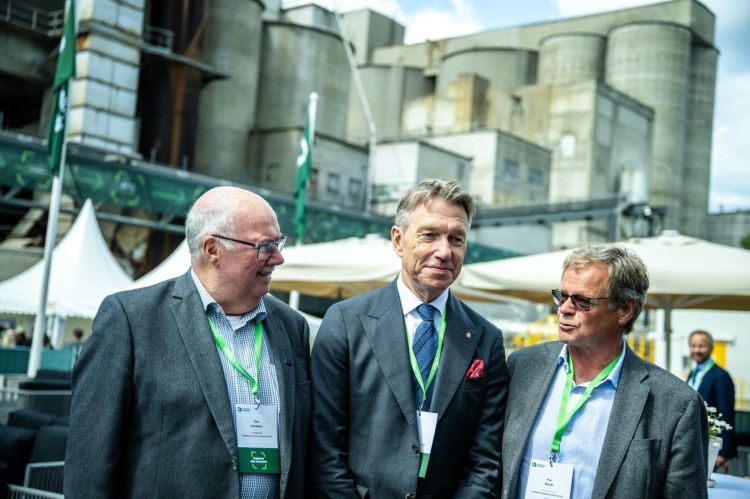
Norwegian model of labour relations: The collaborative model of engagement between trade unions, companies and government was an effective tool to ensure shared priorities and concerns were identified and addressed, and workers were involved – and often at the forefront - of the discussions throughout the project, as Jacobsen shared: “The Norwegian model of three-party cooperation has worked well. We have participated in meetings from day one and been heard in all contexts.”