
A record-breaking rise in trade union membership
This rise reflects the amazing organising work done by unions and reps across the country. It’s particularly impressive as it happened last year, before much of the anti-union Trade Union Act 2016 was repealed by the current government.
Here are six more takeaways from the latest data:
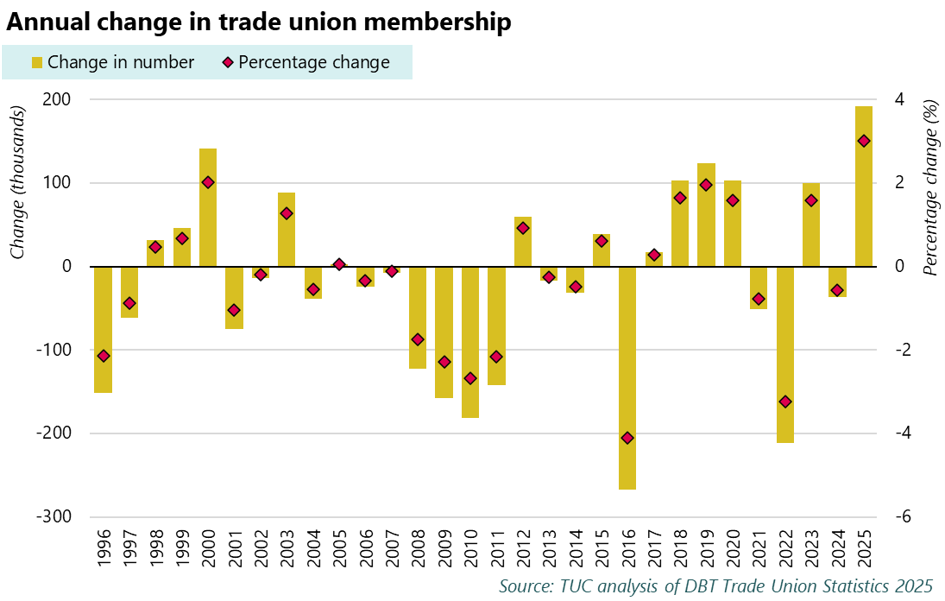
1. This is the largest annual rise since current records began
While data on trade union membership has been collected since the late 19th century (more on that later), the current records began in 1995.
Last year’s rise in membership was the biggest, in terms of both numbers and percentage, since these current records began.
2. The annual rise was driven by men, but majority of union members are women
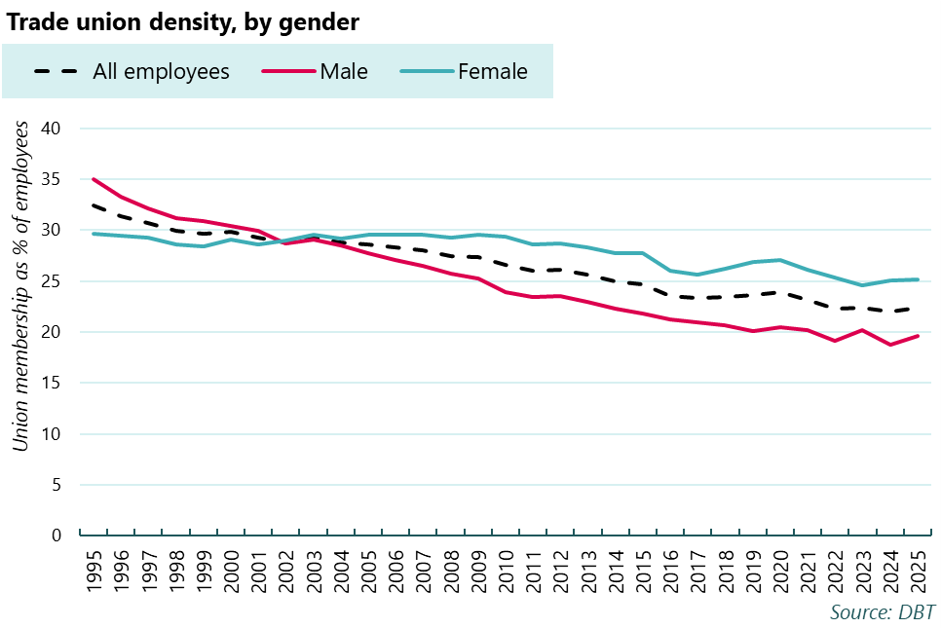
The annual rise in membership numbers has been driven by men. Between 2024 and 2025, male membership rose by 153,000, up to 2.85 million. This means that the rise in male membership accounts for 80 per cent of the overall rise. Trade union density (the percentage of employees that are union members) among male employees has also risen, up from 2024’s record low of 18.8 per cent to 19.6 per cent.
This contrasts to 2024, when a fall in membership was driven by a fall in male members.
Trade union membership among women has also risen, but to a lesser extent. Membership is up by 39,000 to 3.72 million. Density among women increased to 25.2 per cent, up slightly from 25.1 per cent the year before.
Overall though, women are more likely to be trade union members than men. This has been the case since 2002, when trade union density among women overtook density among men.
3. Numbers have risen in both the public and private sector
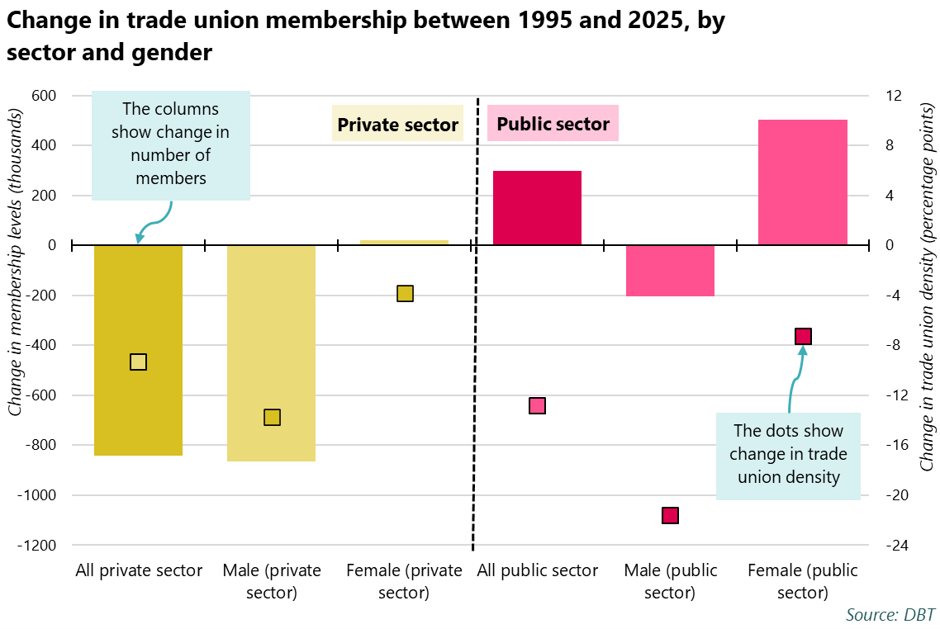
The number of members has risen in both the public and private sector.
Public sector membership has risen by 116,000 to 4.02 million. This is the highest it’s been since 2010. As with the rise in overall membership, the annual rise in public sector membership has been driven by men.
The number of trade union members in the private sector rose to 2.55 million, up by 77,000 compared to 2024. Trade union density is also up, from a record low of 11.7 per cent in 2024 to 12.1 per cent in 2025.
The long-term picture, however, shows there’s still work to be done. Trade union density has fallen in both the public and private sectors since 1995 (when current records began), but the fall has been over twice as fast in the private sector.
Density in the private sector has almost halved, going from 21.4 per cent in 1995 to 12.1 per cent in 2025. Public sector trade union density has dropped by about one-fifth across the same period, falling from 61.3 per cent to 48.5 per cent.
4. The age distribution of members skews older than it used to
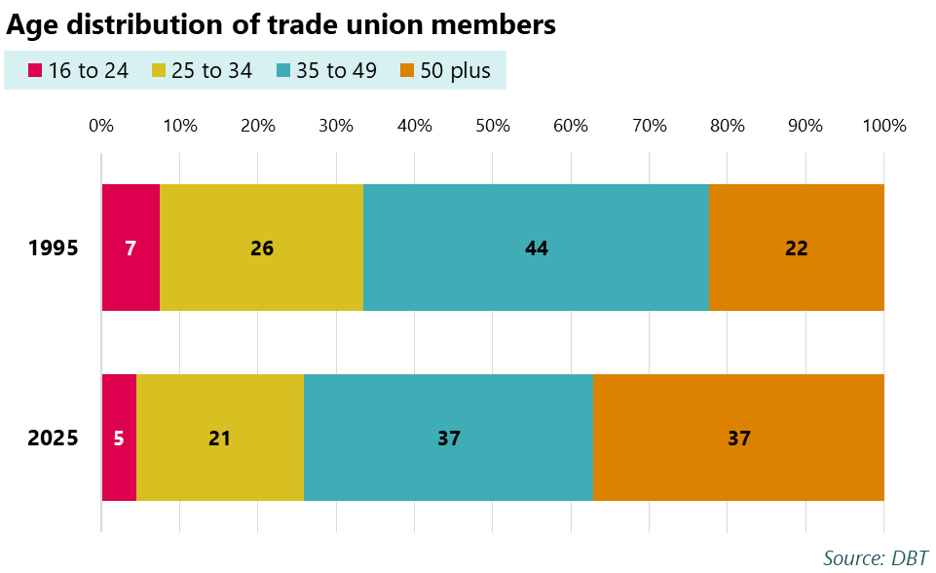
The age distribution of trade union membership has shifted significantly older since 1995. In 1995, 22 per cent of trade union members were 50 or older. In 2025, it’s 37 per cent. The proportion of trade union members under 35 has dropped from a third (33 per cent) to a quarter (26 per cent).
This is something that the union movement is conscious of and working to address. As young GMB activist Rosie McKenna recently wrote in a TUC blogpost on her experience at the TUC North East, Yorkshire and Humber Regional Conference: if young people do not involve themselves, then what will be the future of union work? It was a continuous theme … and whilst one may establish worry with this thought, it was actually portrayed as an opportunity filled with hope and a subtle determination to prepare the next generation.
5. The union pay premium has risen again
The trade union wage premium (the percentage difference between the average gross hourly earnings of employees who are union members and non-members) has increased from 4.9 per cent in 2024 to 5.3 per cent in 2025.
This is the third consecutive year of growth and the highest it’s been since 2019 (10.3 per cent).
6. The long-term picture
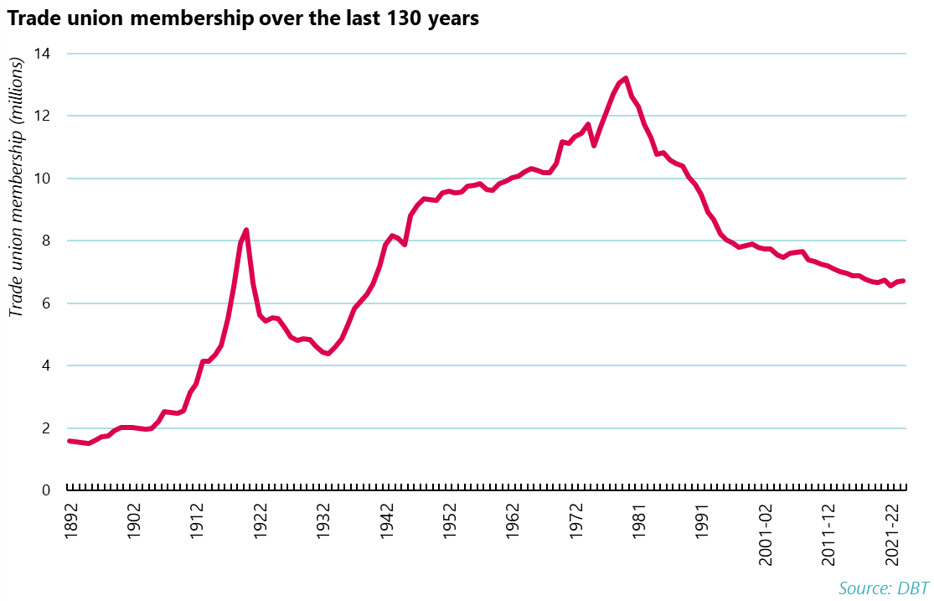
As mentioned above, trade union membership data has been collected in some form since 1892. This long-run data shows a clear peak of trade union membership in the early 1980s and a decline since then.
This decline explains why despite this recent rise in trade union membership, unions will not be complacent. As our general secretary Paul Nowak said in response to the latest statistics:
“It’s now time to step up our efforts – especially with the repeal of restrictive anti-trade union legislation and new rights for unions to access workplaces. Unions have to grow, to represent more workers and get more workplaces covered by collective bargaining. That’s how we raise wages, improve conditions and cut inequality.
“We won’t rest until every worker has the security, dignity and respect at work they deserve.”
Stay Updated
Want to hear about our latest news and blogs?
Sign up now to get it straight to your inbox
