TUC Aid 1988 - 2025
TUC Aid has delivered 37 years of practical solidarity in action. Throughout, it’s been a brilliant example of unions delivering change by working in partnership. Together, we’ve really put internationalism into practice, supporting workers across the world.
And our solidarity with others has been matched by solidarity from overseas in the face of our own struggles, with dozens of union organisations from around the world rallying to our aid when the previous Conservative government launched their attack on the right to strike.
For our part, we’ve supported sister unions around the world, helping them represent members more effectively. We’ve promoted equality and anti-discrimination at every turn. And we’ve empowered women workers, and women leaders, in countries as diverse as Nigeria, Guatemala and Bangladesh.
During conflicts and disasters, TUC Aid has also assisted workers and unions whose needs have been most acute. We were there during the famine in Somalia in 1992, in the aftermath of the genocide in Rwanda in 1994 and in the wake of the devastating conflict in Bosnia in 1995.
TUC Aid raised over £300,000 to help unions in Myanmar, Indonesia, Sri Lanka and Thailand rebuild after the Boxing Day tsunami in 2004. And more recently, we have responded to the earthquake in southern Turkey, the war in Ukraine and the humanitarian catastrophe in Gaza.
When I travelled to the West Bank earlier this year, I saw for myself the difference TUC Aid makes. I visited Jericho, where the TUC has been supporting the General Union of Workers in Agriculture and Food Industries to provide training to women workers often employed on illegal settlements. The occupation denies Palestinians their right to decent work.
But our project is giving those workers hope, helping them fight for their rights and organise against the unsafe and exploitative working conditions they face. This project demonstrates the TUC's practical solidarity with workers in Palestine and is part of our work to end the illegal occupation and promote respect for Palestinian rights.
TUC Aid has a solid track record of achievement. It can claim a stake in ending the cycle of anti-trade union murders in Guatemala, advancing the fight against HIV in Africa and empowering women textiles workers in Bangladesh. We’ve also boosted the capacity of trade unions to prevent trade agreements undermining decent jobs and workers’ rights in Africa.
None of this would have been possible without the many generous donors, partners and Trustees whose support made the work of TUC Aid possible. Sincere thanks to all those who supported TUC Aid’s work.
Some of TUC Aid’s fundraising has drawn star-studded support, most notably the 2010 Concert for Haiti at Congress House. Held after a massive earthquake devastated the country, the event saw performances from Billy Bragg, Alan Rickman and Benjamin Zephaniah, while Tony Benn and Ken Loach addressed the audience.
Although TUC Aid is now winding down its operations, the TUC will continue to work with trade unions globally to defend fundamental workers’ rights and campaign for decent jobs. And, in an increasingly uncertain world, we will be guided by the same principles that have shaped TUC Aid since the late 1980s: worker-led development, a collective voice for working people and stronger unions.
By supporting trade unions and workers most in need, and by putting practical solidarity at the heart of everything we do, we will ensure the legacy of TUC Aid lives on.
Paul Nowak, General Secretary, TUC
Introduction
TUC Aid was founded in 1988. In 2025, TUC Aid Trustees took the decision to close the charity and start a new chapter in the TUC's work to support workers and their unions around the world. This report celebrates the legacy of TUC Aid and sets out how we will build on that legacy in the years ahead.
The objectives of TUC Aid, as set out at its foundation in 1988, was to pursue:
- ‘the relief of poverty in developing countries through the provision of long-term development assistance, and through the provision of emergency relief in the time of need;
- the advancement of education in developing countries through the provision of education; and
- such other objects as the Trustees shall think fit and which shall be charitable in accordance with the laws of England for the time being.’
Throughout TUC Aid’s history it worked in close collaboration with trade unionists in partner countries to develop projects which increased the power of workers and the capacity of unions to bargain for improved conditions and pay, support their members and be politically influential.
Although disaster relief accounted for the majority of TUC Aid expenditure in the early years, the heart of TUC Aid’s work was always about building trade union institutions and increasingly focussed on empowering women in trade unions and tackling structural discrimination.
TUC Aid was initially funded by donations from TUC affiliates, union members, trade union lawyers, MPs and MEPs. It then received funding from the UK government’s Department for International Development (DFID) under the previous Labour government. In its latter years, TUC Aid was largely sustained by legacy funding from DFID, supplemented by ongoing or one-off payments from generous individuals. Affiliated unions continued to contribute to emergency appeals made via TUC Aid in response to disasters and other crises, such as the earthquake in southern Turkey (2023), the war in Ukraine (2022) and the devastation of Gaza (2024) while they also made contributions to specific projects.
As this report shows, some of the successes of TUC Aid include helping support unions to end a cycle of anti-trade union murders in Guatemala, fighting HIV in Uganda, empowering women textiles workers in Bangladesh and preventing trade agreements undermining decent jobs and workers’ rights in African countries.
Why we are closing TUC Aid, and how the TUC is preserving its legacy
As funding models for development work have changed, the costs of running a charity have placed an increasing burden on TUC Aid’s ability to use donations to fund meaningful work. In the year 2024, for example, the cost of administration absorbed 100 per cent of the charity’s unrestricted income.
The TUC has shifted to a relationship where we work more closely with sister centres and we will continue to work in partnership, in line with our international strategy.
In the future, as now, trade unions will always answer the call for solidarity from workers around the world and promote fundraising efforts in disasters and emergencies.
While the work of TUC Aid is now drawing to a close, the TUC will continue to work with trade unions globally to defend fundamental workers’ rights and campaign for decent jobs, promoting the values TUC Aid realised through practical solidarity.
Disaster relief
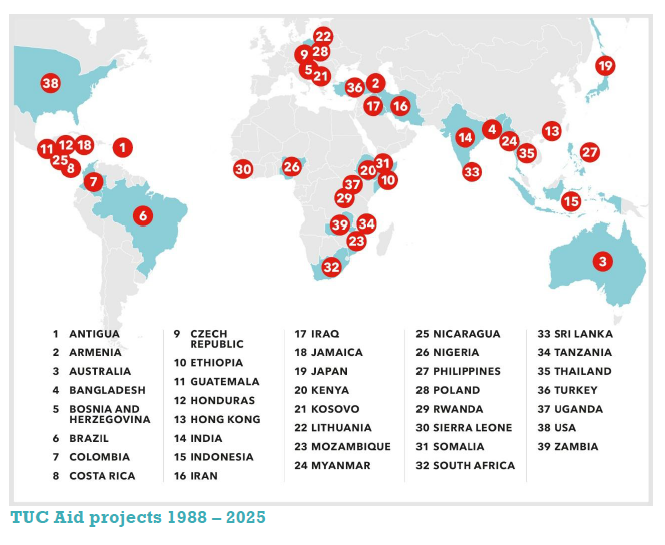
In its early days, TUC Aid made a range of contributions either directly to trade unions or to disaster victims through existing funds to help with crises in Ethiopia (1990), Iran (1991), Bangladesh (1991), famine in Somalia (1992) and Armenia (1993-94).
Funds were made available through national trade union centres to organisations engaged in providing emergency aid and rehabilitative care for disaster victims in Rwanda (1994), the Vaal Reefs mine disaster in South Africa (1995), the Kobe earthquake in Japan (1995), Bosnia (1995), hurricane Luis in Antigua (1995), Poland (1997), Czech Republic (1997), the Dhaka and Chittagong floods in Bangladesh (1998), Australia (1998), Kosovo (1999), hurricane Mitch in Central America, especially Honduras (1999), Turkey (1999), Mozambique (1999) and the Gujarat earthquake (2001).
Money was also raised to support the families of workers killed on 9/11 in the US.
TUC Aid’s biggest ever donation went to those affected by the Boxing Day tsunami of 2004, with more than £300,000 raised to support unions in Indonesia, Myanmar, Sri Lanka and Thailand.
Union development
With a focus on education, and drawing where possible on the expertise of the TUC Education Service, TUC Aid funded projects helped unions grow their membership, increase their bargaining skills or enhance their representativeness in Brazil, the Philippines (1991), South Africa (1995), Antigua (1997), Indonesia (1996), Hong Kong (1997), Jamaica (1997), Guatemala (1997), Bosnia (1998), Costa Rica (1998), Zambia (1998), Colombia (1998 - 1999), Sierra Leone (1999) and Lithuania (1999).
A key feature of later TUC Aid projects focussed on empowering women in trade unions. Projects such as those in Nigeria (2005), Guatemala (2013), Nicaragua (2015) and Bangladesh (2018) focussed on supporting women to take leadership roles in unions and overcoming structural discrimination women faced in their unions and workplaces.
TUC Aid supported union development in other ways such as providing law books for Zambian trade union lawyers, helping Rwandan trade union pharmacies procure affordable medicines, training trade union education staff in South Africa and developing the capacity of the National Union of Metalworkers in the same country - under the title of TUC Computer Aid - as well as supporting the Jamaican CTU’s work to trace the history of the country’s trade unions.
Notable projects
Promoting Women's Participation in Unions in Nigeria
2005-2007
TUC Aid worked with the Nigerian Labour Congress, in partnership with the UK government’s Department for International Development (DFID), the Canadian Labour Congress (CLC), local NGOs and government ministries in this project to train 700 union officials in gender equality. The project also transformed the constitutions of local unions to support leadership roles for women. During the project period, the chairs of several unions’ women’s committees were made ex-officio senior leaders and there was a notable increase in women’s participation in national conferences.
Sierra Leone – Rebuilding the capacity of the trade union movement in the post-civil war era
2007-2010
TUC Aid supported the Sierra Leonean trade union movement to rebuild its union capacity in its post-civil war era in this project.
By 2007, trade union membership had dropped to 42,000 from a peak of 150,000 in the pre-war period. The Sierra Leone Labour Congress (SLLC) and its affiliated unions had an uphill task in defending workers' rights and rebuilding the movement due to the lack of expertise and resources. The Rebuilding Trade Union Capacity in Sierra Leone project, launched in 2007 with financial support from DFID, supported the development of trade union institutions, structures, and networks. The project’s achievements were commended by the Sierra Leonean government of the day.
The Sierra Leone Labour Congress said:
“The project, through a programme of education and training, built union capacity to recruit and retain members and strengthened their structures and institutions in collaboration with civil society and the Government of Sierra Leone.”
Workers' AIDS Project (WAP), Uganda
2009-2010
The Workers' AIDS project (WAP) in Uganda was funded by the Bill Morris Testimonial Fund for HIV/AIDS in Africa through TUC Aid. Bill Morris was General Secretary of the Transport and General Workers' Union 1992-2003 and President of the TUC in 2001.
The project worked with Uganda’s National Organisation of Trade Unions (NOTU) to build its capacity to deal with the workplace challenges of HIV/AIDS and protect the rights and entitlements of workers living with HIV/AIDS through collective bargaining. This involved awareness raising at every level of the union, from members to leaders, both to improve support for those with HIV/AIDS and to contribute to preventing the further spread of the disease.
Organising workers in banana plantations in Guatemala
2013-2014
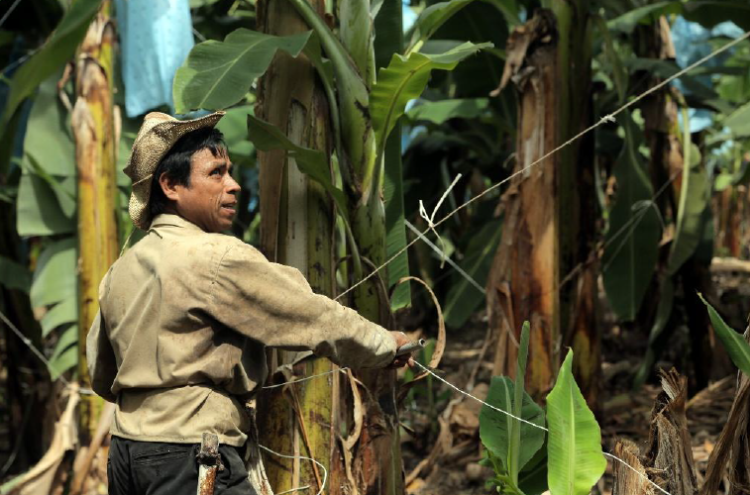
In this project, TUC Aid worked with SITRABI, Guatemala’s oldest private sector union which organises in the banana industry and the NGO Banana Link.
From 1999 until 2012 SITRABI faced severe persecution, with its entire executive exiled by paramilitaries and their replacements murdered or harassed. Five members of the union were killed in a 10 month period between April 2011 and February 2012 - when the General Secretary’s own brother, Miguel Ángel González Ramírez, was assassinated.
This project built union strength through increased cooperation with other local unions, recruitment of more women members, training programmes to increase union representatives’ skills in collective bargaining and development of unions’ capacity to lobby the Guatemalan labour ministry to involve unions in tripartite negotiating structures to help hold violent employers to account. Through the project, SITRABI successfully recruited many new women members, negotiated a favourable new collective bargaining agreement and, crucially, no more members of the union were killed in the next ten years. SITRABI went on to run another project with TUC Aid to bring the benefit of their experience to workers in the south of the country by setting up the region’s first sustainable banana union – finally achieved in 2024. Banana Link also continued to work with TUC Aid in a project supporting agricultural workers in Peru.
Human and trade union rights in Somalia
2016 - 2017
TUC Aid worked with the Somali trade union centre FESTU in this project to produce a comprehensive report on human and trade union rights in Somalia for 2016, documenting cases of attacks on trade unions, violations of freedom of association and freedom of peaceful assembly as well as laws and policies curtailing trade union rights. FESTU and TUC Aid assessed that the Somali government would be sensitive to the report because it cared about its image with the international community which provided significant support to the government. The project produced 1,000 copies of the report which were used to lobby domestic politicians, international and foreign agency staff and were shared with the global trade union movement to present incontrovertible evidence of the human and trade union abuses taking place in Somalia.
Supporting the empowerment of women trade union leaders in the Bangladesh garment industry
2016 - 2019
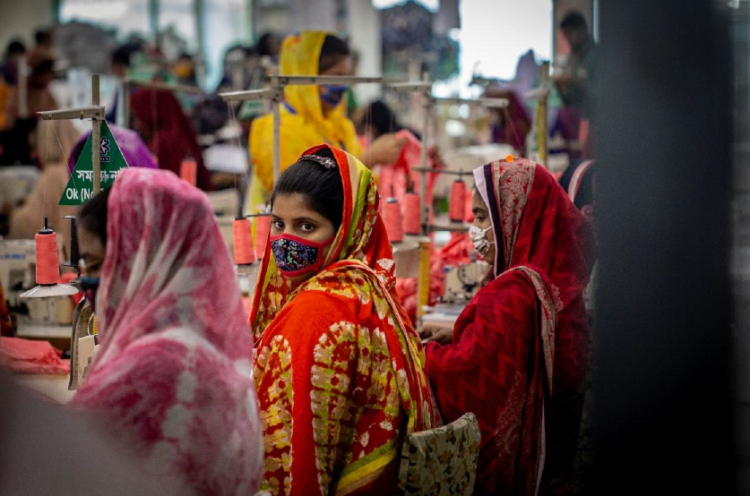
In this project, TUC Aid partnered with the National Garment Workers Federation (NGWF) and the Danish union 3F to support the training of women union leaders in Bangladesh. The project aimed to build their knowledge of labour law, grievance resolution, and collective bargaining, while strengthening their skills and confidence as negotiators.
NGWF is one of the largest garment worker federations in Bangladesh with 68,000 members, 60% of whom are women. They faced challenges due to the underrepresentation of women in leadership which limited the union’s ability to address issues like harassment, health and safety and gender discrimination.
An independent evaluation of this project showed significant progress among participants. Participants reporting increased confidence in dealing with management, with at least two launching organising programmes in their factories. The model fostered strong peer networks and was later adopted by other unions in Bangladesh.
Empowering women and promoting gender equality in the workplace in Iraq
2020-2022
TUC Aid worked with the General Federation of Iraqi Trade Unions (GFITU) and the International Trade Union Confederation (ITUC) to deliver this to empower women workers, and promote their rights in workplaces, communities and homes. The project focused on training and education, organising workers, campaigning against the structural causes of gender discrimination and tackling the serious problem of violence and harassment against women in the workplace.
The project developed training materials on women’s rights and eliminating violence and harassment against women, organised more than 150 women into unions, led to more women being elected into leadership positions in their unions and mobilised unions in Baghdad to campaign against violence against women.
Empowering East African trade unions to advocate for trade deals that deliver decent work and the UN Sustainable Development Goals
2019 - 2022
Renewing a long-standing partnership with the TUUT Charitable Trust, in this project TUC Aid supported the East African TUC (EATUC) to increase the capacity of unions in East African Community countries Burundi, Kenya, Rwanda, Tanzania and Uganda to influence negotiations on trade deals. In particular, the project focussed on advocacy around trade negotiations involving the UK, EU and US, as well as the African Continental Free Trade Agreement (AfCFTA), to protect good jobs, promote gender equality, increase access to social protection and support the attainment of the United Nations Sustainable Development Goals (SDGs).
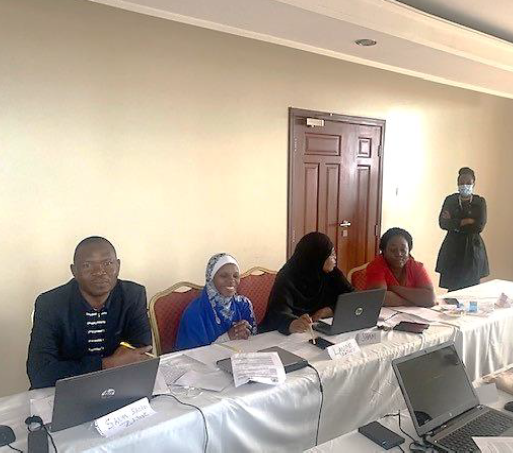
The project developed materials and delivered training for union representatives from the East African countries involved, helped build alliances with international trade union organisations and sister centres globally, as well as with NGOs through the Africa Trade Network.
Impacts of the project included the government of Kenya delaying the implementation of the UK-Kenya trade agreement 1 due to trade union lobbying with their allies and the Rwandan union centre CESTRAR being invited to join the country’s negotiating team for the AfCFTA.
The project also supported joint lobbying between UK and East African trade unions against unfair trade deals being pursued by the UK government with countries in the East African Community.
Increasing workers' influence over the African Continental Free Trade Agreement
2024 - 2025
In this project, TUC Aid partnered with ITUC Africa and sister trade union centres in Cameroon, with support from the TUUT Charitable Trust and UK teachers’ union NASUWT.
The project supported trade unions in Cameroon to run training for trade unionists on ways to effectively influence the implementation of the African Continental Free Trade Agreement (AfCFTA) so that it could promote decent work and ensure respect for workers’ rights. The project particularly prioritised women and young trade unionists to take part in the training.
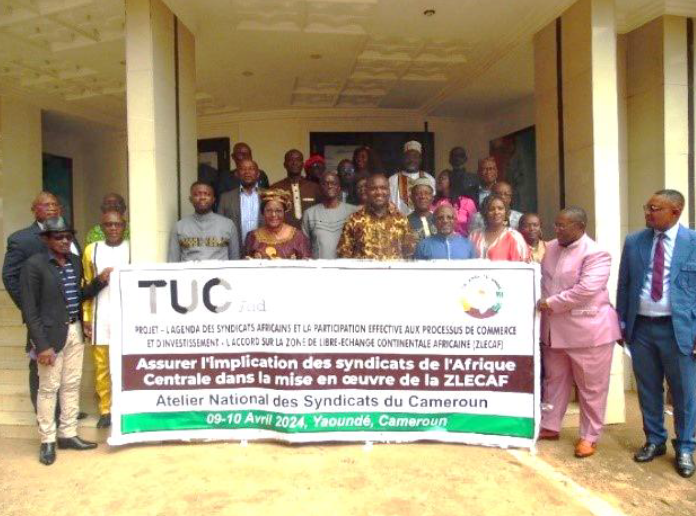
The project was delivered by ITUC-Africa with its four affiliates in Cameroon: Confédération des Syndicats Autonomes du Cameroun (CSAC), Confédération Syndicale des Travailleurs du Cameroun (CSTC),
It was part of a wider ITUC Africa project involving nine other African countries, which was funded by the Finnish trade union centre SASK. 2
The project increased Cameroon unions’ influence over its government’s implementation of the AfCFTA, both by increasing union capacity and supporting alliances to be forged between trade unions in Cameroon and unions in African countries where they had more influence over their government’s trade agenda, such as Ghana.
The project strengthened joint lobbying between UK and Cameroon unions to advocate for global trade rules which promote workers’ rights and decrease historic inequalities between the Global North and South.
Stay Updated
Want to hear about our latest news and blogs?
Sign up now to get it straight to your inbox

