
Young Workers Academy: political education for a new generation of trade unionists.
At TUC Cymru, we wanted to give workers to confidence to organise in response to these changes. Our solution was the pilot TUC Cymru Young Workers Academy.
We developed the Academy as a new political education programme for workers across Wales.
We were aiming to:
- Give young workers organising skills
- Support them to become more active within their workplaces and unions
- Show them how to take their ideas and organising techniques into the wider trade union movement.
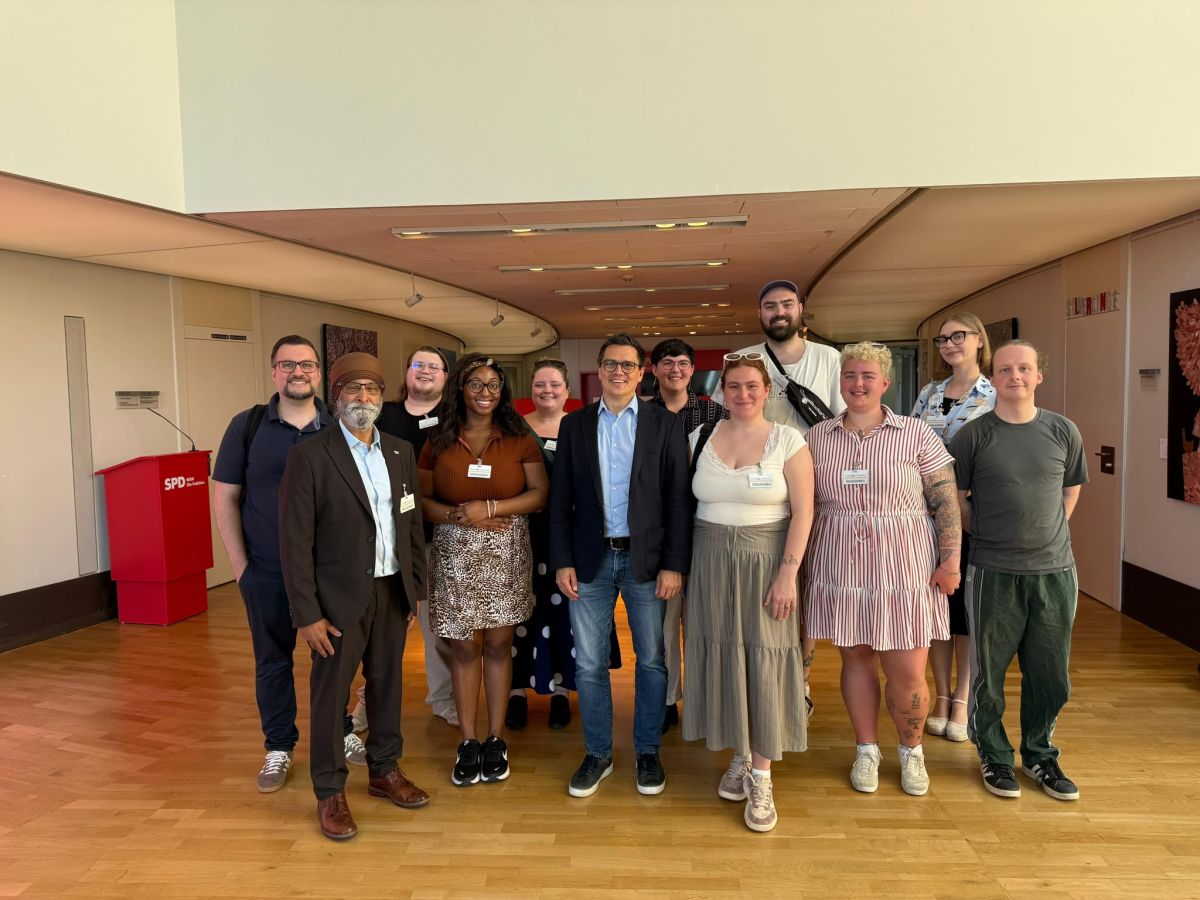
Our first group of twelve young workers came from a range of trade unions. The unions had committed to the Academy, recognising the benefits of the programme to both the individuals and trade unions.
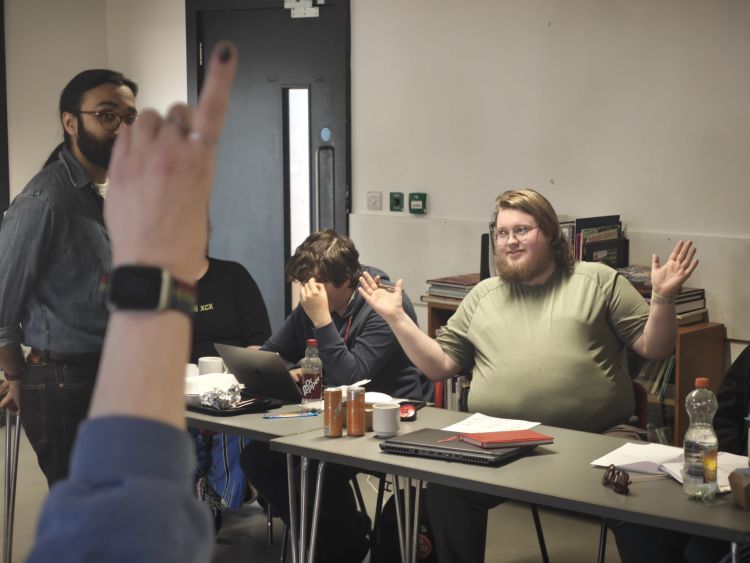
The Academy took place over six in-person sessions. There was formal learning about trade union structures and organising techniques. But we also made sure there was space for the young workers to build relationships, socialise, exchange experiences and develop ideas and campaigns.
Bringing new perspectives into our movement
We wanted participants to leave the Academy not simply knowing more, but questioning more too.
So, we designed and delivered the programme in partnership with Jarrow Insights and Trademark Belfast. Both organisations work alongside our movement, but are also prepared to challenge it. This opened up many honest conversations about participants' experiences in the movement. And it introduced the young workers to different models of organising than those they'd come across before in areas such as community cohesion and digital organising.
Political education: understanding the world we are organising in
Political education was central to the Academy. Because understanding why things are happening gives us a stronger foundation for deciding how we organise to change them.
The programme explored political economy, the 2008 financial crisis, the history and development of capitalism and the impact of neoliberalism on our workplaces, public services and communities.
These discussions weren't just academic. They helped participants connect the pressures workers experience every day with the wider economic and political structures shaping working life.
We discussed how our economy operates, why workers can be exploited within it and how that exploitation has changed in recent times.
But political education shouldn't end with understanding what is wrong. It should also give people the confidence to imagine something better.
Moving beyond a service model of trade unionism
One of the most important questions raised during the Academy was how young workers understand the role of a trade union.
We discussed the danger of trade union membership being viewed primarily as a service or an insurance policy. Often a union is seen as something that is there when a worker has a problem. But we know it's a collective organisation that workers themselves have the power to shape.
That distinction becomes particularly important when young workers are under financial pressure. If they think membership is just a service received in exchange for a subscription, it can be easier to remove it from their stretched monthly budget.
Political education: telling a bigger story about what trade unionism is
By developing class consciousness and a sense of class solidarity, we can help build a movement based on collaboration and collective action. We can create spaces where young workers recognise that they have a voice, that their experiences are shared by others. We must help young workers to see that they have the agency to change the places where they work and live.
That changes the question from "What can my union do for me?" to "What can we achieve together?"
Offering an alternative future
For the TUC Cymru Young Worker Academy, political education also meant talking about alternatives.
We created opportunities to think about what a different future could look like. We discussed worker cooperatives and community wealth building. We imagined a green industrial transition that works for workers and their communities.
We talked about the power of trade unions to not just respond to crises, but to actively build something better. This will only happen if we organise.
Organising in a digital world
We talked about how young workers' experience of work, politics and community increasingly crosses between physical and digital spaces. So our participants explored digital method of organising, communication and campaigning.
This doesn't just mean understanding new technology. It means understanding how to use technology to connect with people while collective power at the heart of trade unionism.
Challenging the rise of the far right
Another important strand of the Academy examined the rise of the far right in Wales today. We discussed how divisive politics can gain ground in our workplaces and communities.
For trade unionists, this cannot be separated from organising.
In the Academy, we looked at how workers are experiencing insecurity, inequality and declining trust. We looked at historical instances of when the far right has been on the rise. And we considered what this could teach us about how to challenge narratives that seek to turn working people against one another. We agreed that part of the solution is to celebrate solidarity and collective power. And to acknowledging that working people have more in common with one another than those who seek to divide would have us believe.
Building an international movement
The challenges facing young workers do not stop at national borders, and neither should our political education.
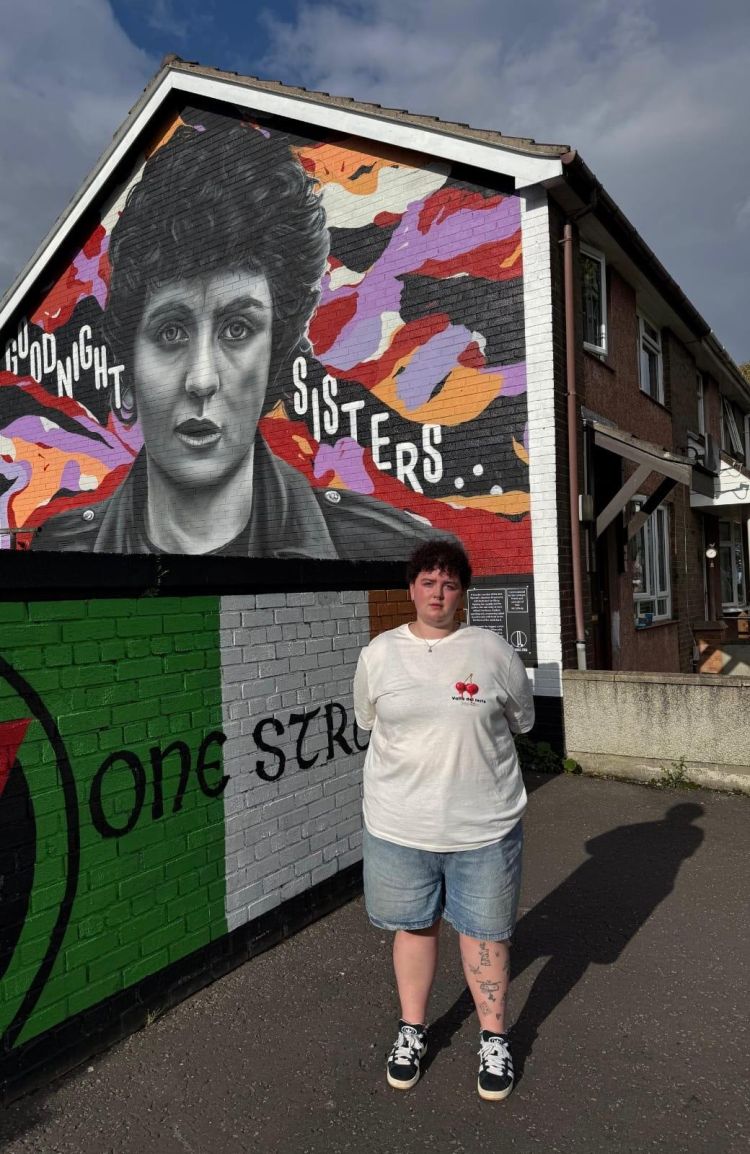
As part of the Academy, participants had the opportunity to take part in visits to Germany and Ireland, funded by the Welsh Government Taith fund. These two visits were opportunities to learn directly from trade unionists and grassroots organisations in two different settings.
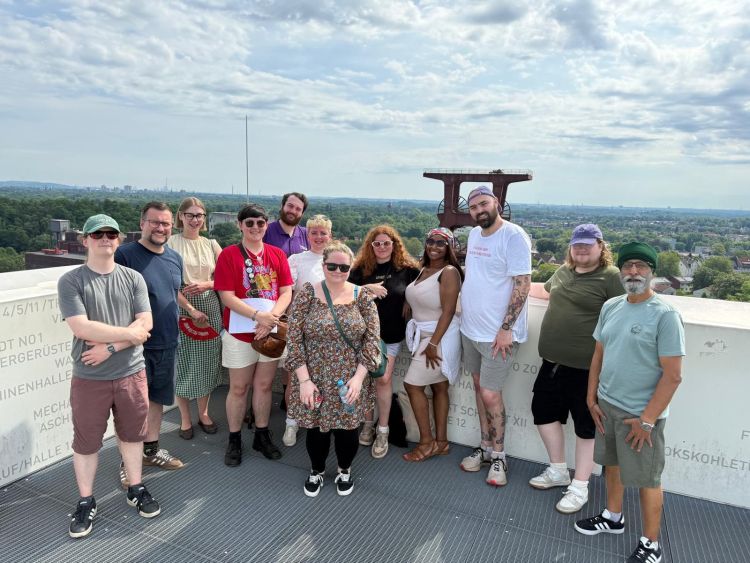
In Germany, we explored youth organising, and responses to the rise of the far right. We learnt about the role workers and trade unions can play in delivering a just transition from coal to greener forms of energy. Participants felt this trip showed the value of embedding political history and political education into trade union youth structures.
In Ireland, we met with organisations work on grassroots and community organising, in addition to trade unions. We explored the role community organisations can play in strengthening social cohesion and the importance of language and culture. We saw how collaboration between workers, unions and communities can help create stronger and safer societies, particularly at times of heightened tension and division. We met with CATU, the housing union of Ireland, and learnt how the issues of workplaces and housing go hand-in-hand.
Across both experiences, there was a common lesson: our movement is international.
Workers might organise in different political systems and different cultures, but we face many of the same challenges. Creating opportunities for young trade unionists to learn across borders enables us to exchange ideas, challenge our own assumptions and build the relationships that international solidarity depends upon
Learning in new ways
Through the Young Workers Academy we wanted to test how we could make learning more participatory, imaginative and rooted in the kinds of challenges workers may actually face.
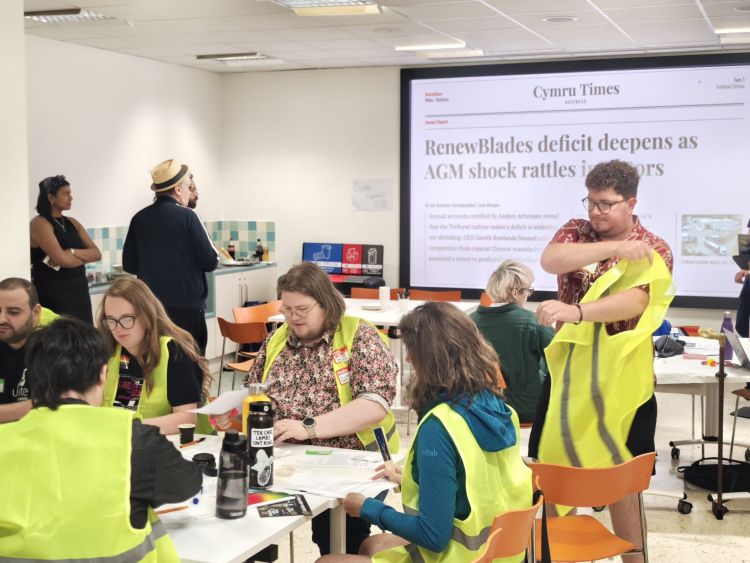
For the final weekend of the Academy, we worked with Class Wargames to run a live-action role-play exercise. The exercise was a chance to explore organising, collective decision-making and creative solutions.
The exercise involved 20 young activists who were each given information about their character. The scenario placed participants inside a wind turbine factory in Wales. The company's CEO was looking to sell the factory so that the site could be converted into a data centre. There were potentially serious consequences for the workers and the surrounding community.
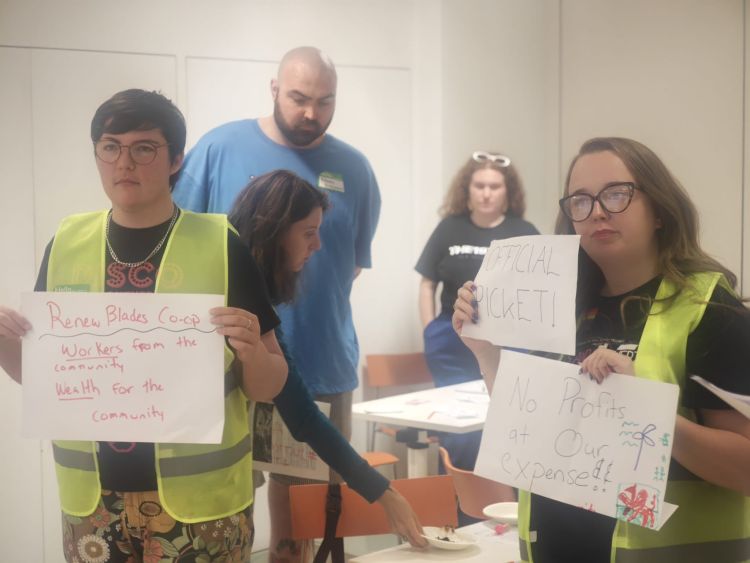
We spent the day as workers, union reps and decision-makers. We were creating, proposing, negotiating and organising. We even manufactured miniature wind turbines, were paid in fake money and could head to a makeshift pub.
Behind the fun, however, was a serious organising challenge.
We needed to think strategically about how we would respond to the proposed closure. We were also challenged to think beyond simply opposing the closure. Was there an alternative? Could the workers themselves take ownership of the factory and protect both the jobs and the community that depended upon them?
For many of the young workers involved, this was a chance to confront a new situation. Everyone said they found the experience useful because they were able to experiment, make mistakes and see the consequences of different organising decisions.
It brought together many of the themes we had explored throughout the Academy: worker power, trade union cooperation, ownership, industrial change, community wealth and the need to think differently about what workers can organise for, rather than only what we organise against.
Most importantly, it made political education active. And it was fun.
If we want political education to connect with a new generation of trade unionists, we should be prepared to experiment with how we deliver it. Learning can be serious without always being formal. And sometimes putting people inside a problem can teach us something that simply talking about it cannot.
Why political education matters now
Over time, political education has become less prominent within parts of the trade union movement. What I saw on the Young Workers Academy has demonstrated to me why we need to make space for it again.
I saw what can happen when we invest in young workers, create space to debate difficult ideas and trust young trade unionists to develop new ideas.
Young workers today are navigating insecure work, profound technological changes, pressure on living standards, political polarisation and growing tensions within our communities.
Trade unions can offer an alternative: a place for people to come together, understand those experiences collectively and organise to change them.
But organising cannot only be about knowing what to do.
We need to understand why we are doing it, what we are organising against and, most importantly, what we are organising for.
Ultimately, the learning cannot end when the Academy finishes. Its real value will be in what participants take back into their workplaces, branches, unions and communities, and what they build from it.
Get involved in young worker organising
This pilot was the beginning, not the end. And it is not an isolated activity.
TUC Cymru's young workers' forum meets regularly to share learning, discuss issues, and build ideas.
Join the TUC Cymru young worker forum
We're also looking towards the 2027 Young Workers Academy. This will be another opportunity for young trade unionists in Wales to develop their political education, strengthen their organising skills, build relationships across our movement and learn from trade unionists beyond Wales.
Want to take part? Contact cymru@tuc.org.uk
And for trade unions, there is an equally important message.
Investing in young activists isn't simply an investment in an individual. It is an investment in our collective strength, the future of our unions and the future of our movement.