Meet the Young Workers leading the trade union movement in Wales
There’s no denying that the world of work is changing. For many young people starting out at work, trade union membership is no longer a first thought. But if the union movement is to continue fighting for workers' rights, it needs to recruit and retain young members.
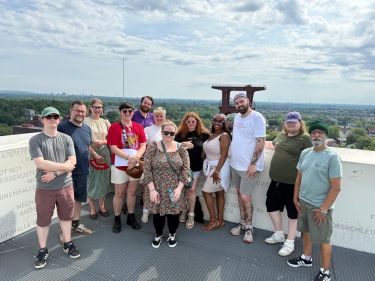
In Wales, we can be proud of our young workers who are building worker power from the ground up and are creating positive change. These young reps, organisers and activists are pushing back against exploitation and unfairness at work and in their communities.
Here are just a few of those trade union leaders across our movement.
Robin Kennedy-Reid, Prospect Union
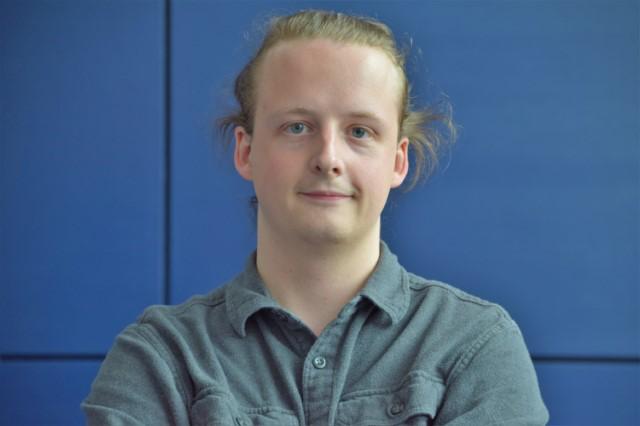
My favourite part of being in a union is being part of a culture of solidarity that bridges arbitrary divisions in workplaces.
- Tell us your role
I'm a Research Software Engineer in STFC, UKR and I'm the chair of Prospect's Daresbury Laboratory Section.
- Why did you want to join a union?
To be honest, joining a union just seems like common sense to me. I have what I would consider a 'healthy scepticism' of any institution or workplace. When I was growing up, both of my parents worked in casualised or otherwise precarious roles. They did well for themselves, but I've seen the stress and anxiety caused by wage insecurity.
I'm lucky to have been able to get jobs in unionised workplaces. Joining a union meant I had support if needed, and made me feel more secure in my role. Just on that basis, it felt like a no-brainer.
- What is your favourite part of being in a union – have you learned anything since being a member?
My favourite part of being in a union is being part of a culture of solidarity that bridges arbitrary divisions in workplaces. For example, it's amazing to see case handlers in our committee being able and confident supporting members much older or more experienced (in work) than them. And those members respect the expertise and advice of their reps, too.
I've also been heartened to see how, as membership has built in our section, many of our members are happy to identify themselves as union members; they acknowledge their representatives in front of colleagues, ask us how campaign work is going, and share information with us. It's great to see, and I think it's the only way to achieve high membership densities in workplaces.
That has been a learning point, too; word of mouth is a key recruiter. Representatives meeting staff is great, but I'm confident recruitment success rates are far higher when staff talk to members they work closely with. Members so often think it's inappropriate to bring up union membership with colleagues, and are surprised when I tell them that the 'official' position of their employer is to encourage membership of recognised unions. I've realised the value of always reminding members to have these conversations.
- What are the biggest challenges for the world of work in the next three years?
I think the most significant direct challenges will be further casualisation of work, degrading terms and conditions, and wages not keeping up with inflationary pressures.
But I think it is important to focus on the root cause of these issues. Climate change has driven us into a 'new normal' of supply-line shocks, resource conflicts and increasingly unpredictable weather. Financial institutions and fiscal policies are still not responding to this change appropriately; even the IMF's latest World Economic Outlook report barely addresses El Niño, or climate change at large, as a contributor to the global cost of living crisis. This is the true challenge we all face; a global economic consensus that refuses to acknowledge reality. Deteriorating conditions in the world of work are merely symptoms of this sickness.
- What would be your advice for a young worker thinking of joining a union?
Join, then get involved.
It's critically important that new members join the union movement. 'Fresh perspectives' is a tired cliché, but still true. Be prepared for the union movement to not be what you expect or want it to be; by its nature, the movement isn't what anyone wants it to be. People are complicated and they don't become bleeding-heart socialists just because they joined a union.
For anyone looking to actually engage in the movement, I would advise that they research anything they want to put their effort into. On any given issue, whether it relates to the workplace, national and global politics, or economics, ask yourself "who/what has the power to change this?", "what influences them?" and "what can I do?". There's too much to do so, if you want to be an activist, don't waste your effort on ineffective strategy. Activism without strategy is just vanity.
Finally, take a holistic approach in all your work. Our material conditions are entwined with those of the 'Global South'. In my opinion, the Western labour movement has never truly reckoned with this reality. If this doesn't change, we will simply perpetuate and strengthen systems of global oppression.
Morgan Irvine, Community Union
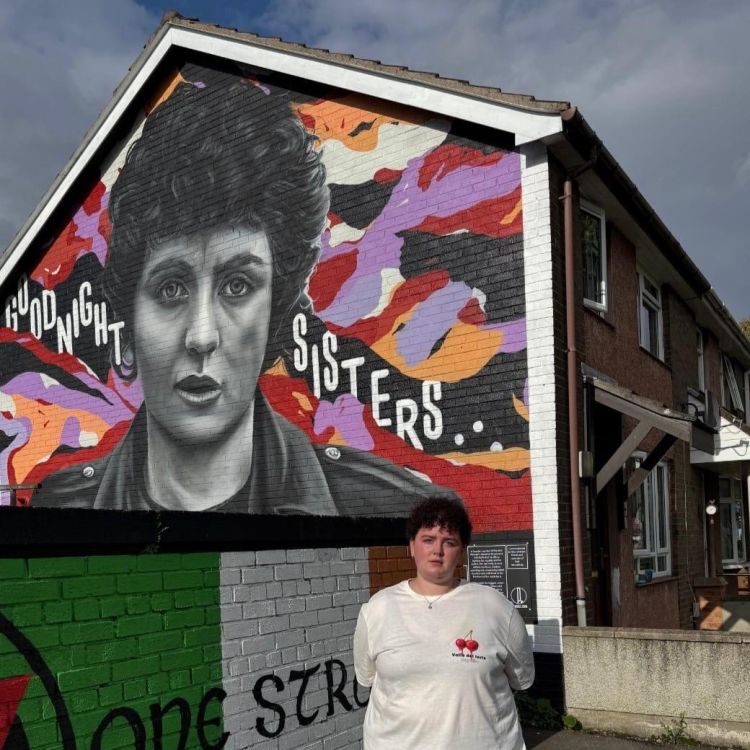
I never in my life imagined I would be on stage at Congress delivering a motion, speaking in front of thousands of people – but I did.
- Tell us your role
I’m a steel worker from North Wales and I am part of Community Union.
- Why did you want to join a union?
I joined the union when I was an apprentice as there were pay talks and I wanted to have a say on my future at the company. My mum was a union rep, and I grew up in a household understanding the importance of being in a unions, so I wanted to play my part in making a difference, especially in sectors such as steel.
- What is your favourite part of being in a union – have you learned anything since being a member?
Definitely meeting new people and making friends, I have explored different parts of the world with the union and it's been amazing to explore different sectors, people from different backgrounds and expand my knowledge of the world. I have learned so much, including how to interact with people with power and how to work with people wo are like you.
I never in my life imagined I would be on stage at Congress delivering a motion, speaking in front of thousands of people – but I did.
- What are the biggest challenges for the world of work in the next three years?
Specifically in my workplace, the biggest challenges the introduction of AI and the automation of tasks leading to job loss. There are fewer humans now doing this work, and its really important that we make sure any changes are done ethically by employers and not just doing it to cut jobs.
- What would be your advice for a young worker thinking of joining a union?
100%, join a union as soon as you can and get involved.
Contact your union on the best way to get stuck in, Young Workers Academies, Development weekends – take every opportunity you can because you can get really far pretty quickly.
Watch Morgan talk about becoming a young, woman rep in a male-dominated workplace
Ramla Seihk, GMB Union

The best part about being a union member is being informed, and knowing your rights. This makes you so much more confident when things may go awry, and in how you approach workplace issues. It is much easier to raise an issue at the workplace, knowing that you have a union to behind you, and other workers who have campaigned for that particular issue.
- Tell us your role
I work part time as a licensing officer alongside my university studies within the resources sector. I am part of the GMB union.
- Why did you want to join a union?
I joined the union to learn more about my rights at the workplace, how activism leads workplace change, and the world of work beyond the office.
- What is your favourite part of being in a union – have you learned anything since being a member?
My favourite part about being in a union is that I get to meet so many amazing people, which makes me realise that this is a much wider network of people at work advocating for so many different right in education, pay, equal and fair treatment, and representation.
Since being a member, I have learnt plenty about campaigns, and banding with other workers and your trade union to raise standards.
- What are the biggest challenges for the world of work in the next three years?
In the next three years, we will see a lot on the emergence of Artificial Intelligence (AI) at the workplace, and the numbers of young people trying to get into work. Aside from the ecological impact AI has on communities, it will pose as great challenge as AI is not a reliable work tool for those working with sensitive data, and will have workers lose autonomy over their work. Workers should not be working alongside AI but apart from it, as our reliance on it is not required.
Whilst trade union membership increases, the number of young people out of work has increased. Young people are now being introduced into a market that has given them no support schemes to enter the places of work. With such challenges in the world of work, I hope to see a pivot in campaigns to gear towards such issues.
- What would be your advice for a young worker thinking of joining a union?
The best part about being a union member is being informed, and knowing your rights. This makes you so much more confident when things may go awry, and in how you approach workplace issues. It is much easier to raise an issue at the workplace, knowing that you have a union to behind you, and other workers who have campaigned for that particular issue.
To any young worker who wishes to join a trade union, my advice would be to think about what issues at the workplace, or in the world of work, you feel most passionate about and join a trade union that you can contribute to for that cause. Trade unions do more than just look out for your interest at your workplace. They can help lead impactful change for workers across the nation, which you can be a part of.
Cas Metcalf, Unison Cymru
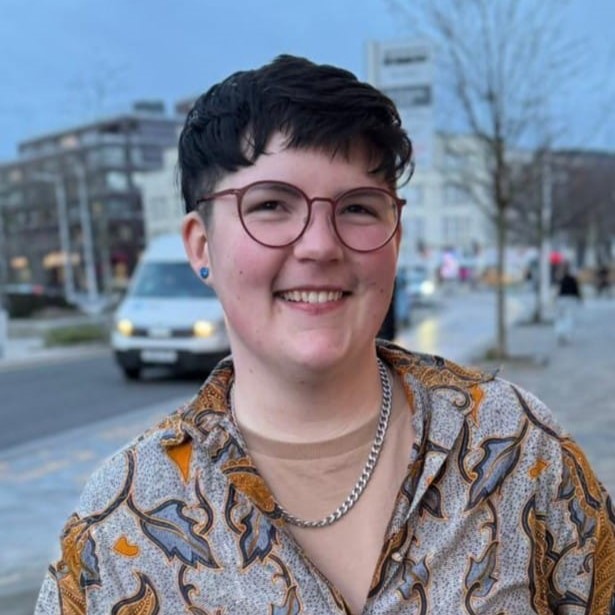
Being in a union is more than representation on an individual level - it’s about knowing that, as employees, we're in this together. When you join, it’s not just about being protected what you have something come up at work. Unions are always fighting to improve wages and conditions and it's important to be part of that.
- Tell us your role
I'm a social worker, working in local government and my union is Unison.
- Why did you want to join a union?
I wanted to join a union after watching the film Pride when I was a teenager. I was really inspired by seeing the solidarity between the labour movement and LGBT plus rights, particularly the solidarity between the miners' strike and Lesbians and Gays Support the Miners campaign.
I then had an awful time on a placement as a student social worker, where the issues I faced were related to my work conditions and lack of training. Back then, I thought that if I was an employee, I would have had trade union representation to support me. I didn't know at the time that I could have been in a union even as a student. It was after that experience that I realised that I needed to be part of a union to protect myself.
- What is your favourite part of being in a union – have you learned anything since being a member?
A mixture of things, from going to conferences or attending training, it's about connecting with people in different sectors or working in different areas, but we're all facing the same thing.
I really enjoy being involved with TUC Cymru and the opportunities that come from that from education and political awareness. As a union rep for my workplace I’ve learned so much about employments rights, especially the new Employment Rights Laws.
- What are the biggest challenges for the world of work in the next three years?
For me, the biggest challenges in the next few years I think is AI and climate change. With AI, workers are being displaced already in jobs, where companies are continuing to profit, and yet there's no money towards retraining people and so people are just losing jobs. For young people, it feels as though the jobs aren't there, and there's more entry level jobs that are being affected by this.
For climate change, we're seeing an increase in extreme temperatures. This year we have seen droughts, fires and extreme heat and UK infrastructure is not built for that. In my role, I’ve seen people overheating in over 30 degrees whilst at work in the care sector. I don’t feel like extreme heat at work is being taken as seriously that winter temperatures are by employers and the government.
- What would be your advice for a young worker thinking of joining a union?
Join before there's an issue. Most unions have a four-week rule and everybody always thinks about unions and representations once they have an issue coming up, not realising that you need to be a member.
There will be issues at work, especially for young people in more precarious work. Even those who have got permanent contracts, there will be bad employers, managers who don't understand, sickness policies, bullying etc.
Being in a union is more than representation on an individual level - it’s about knowing that as employees, we're in this together. When you join, it’s not just about being protected what you have something come up at work. Unions are always fighting to improve wages and conditions and it's important to be part of that.
Poppy, Community Union
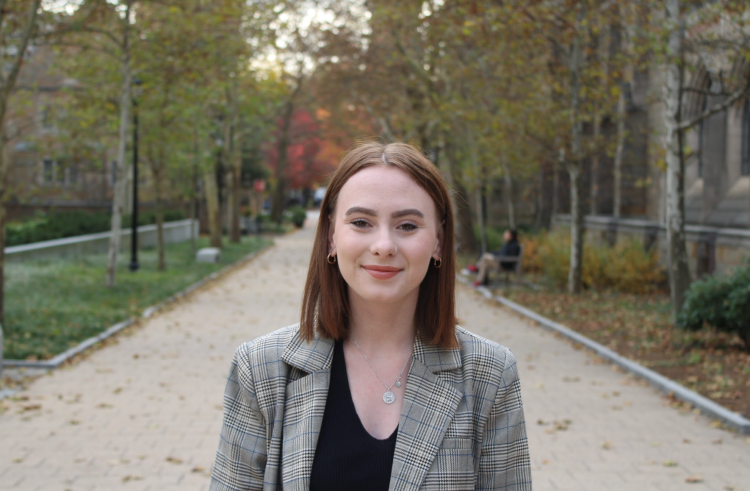
Trade unions have an incredible history, but they’re not just part of our past; they’re essential to building the future we want to see.
- Tell us your role
I’m an Organiser for Wales at the trade union Community Union.
- Why did you want to join a union?
I grew up hearing stories about the incredible history of trade unions in Wales. From my family’s involvement in the miners’ strikes to my parents' involvement in their union, I saw first-hand how deeply the trade union movement was rooted in my community. The passion for workers’ rights I witnessed every day at home taught me from a young age that unions can make a hugely positive difference to people’s lives.
I understood that trade unions had been a voice for my family, and worked to empower people, stand up for fairness, and campaign for a better future. While it was this history that first inspired me to join a union, it’s seeing the work unions continue to do every day that keeps me inspired.
For me, trade unions represent hope, and I’m incredibly proud to be a union member.
- What is your favourite part of being in a union – have you learned anything since being a member?
The community. I find it incredibly inspiring to be surrounded by people who are passionate about empowering others, making their voices heard and working together to create change. There’s something unique and powerful about that sense of solidarity. It reminds us of what’s possible when we come together.
- What are the biggest challenges for the world of work in the next three years?
The world of work is changing at an incredible pace, and for many people, that can feel daunting and unpredictable. Workers are facing a volatile job market, the rise of AI, the impacts of climate change and the ongoing transformation of the traditional workplace.
But what concerns me most is the risk of workers becoming increasingly isolated. As these challenges grow, too many people still don’t know what a trade union is or how one can support them. That lack of connection and collective power leaves workers more vulnerable at a time when they need support the most.
I believe collective action and collective bargaining are among the strongest tools we have to meet the challenges ahead. That’s why joining a union like Community is more important than ever: together, we can make sure workers have a voice in shaping the future of work.
- What would be your advice for a young worker thinking of joining a union?
Do it as soon as you can! Trade unions have an incredible history, but they’re not just part of our past; they’re essential to building the future we want to see.
Unions are already working hard every day to protect workers’ rights and make workplaces fairer for everyone.
Young people deserve the same support, protection and collective voice that our parents’ and grandparents’ generations fought for. By joining a union, you’re not just standing up for yourself; you’re becoming part of a community working to make things better for everyone.