
Twf - The Welsh Language at Work Charter
Wales is a bilingual country with both Welsh and English used routinely in our daily lives and workplaces. The Welsh language has official status in Wales - it's an important part of what we share as citizens, it belongs to us all and is part of our identity.

A Wales with a thriving Welsh language and vibrant culture is one of the well-being goals in the Well-being of Future Generations (Wales) Act 2015.
The Welsh language brings benefits to our society and economy. This includes benefits for citizens, workers, their families, service users, employers, and for the Welsh speaking communities they serve.
Cymraeg 2050 places an emphasis on the workplace as a location and environment where people can use Welsh, whether as a formal part of an individual's role or as part of a community of people who spend a significant proportion of their daily life together in the same setting. That is to say, we talk to each other every day at work, and speaking Welsh together in the workplace is an important way of consolidating and developing skills and establishing practices in terms of using Welsh.
Using Welsh at work can safeguard jobs and protects Welsh speaking communities. This contributes to a positive future for the Welsh language as a living language in workplaces and communities across Wales.
What difference will the Twf Charter make?
The Twf Charter was developed by TUC Cymru as a tool to assist workers, their trade union branches and employers to work together to support the provision of inclusive bilingual workplaces and growth in the use of Welsh at work.
The Twf Charter is an enabling framework which consists of four core principles to support the provision of inclusive bilingual workplaces which are fair, just and equitable:
- Growth and Welsh language rights
- Inclusion and linguistic justice
- Leadership and accountability
- Continuous learning and confidence building
These core principles support linguistic justice at work and equitable outcomes for workers to use and learn Welsh at work.
For workers, including Welsh speaking workers, inclusive bilingual workplaces provide more opportunities to use and develop their Welsh language skills at work and enables them to work in Welsh on a day-to-day basis.
Inclusive bilingual workplaces can be described as ones which:
- Promote awareness and understanding of the freedom to use Welsh and the right to speak and use Welsh with others in Wales without prevention, interference nor suffering any disadvantage – including in every workplace and every sector
- Act to ensure that workers know what their specific rights are in organisations whose duties come under the Welsh Language Standards
- Deliver on linguistic justice at work because they grow, promote and enable more opportunities for all workers to use, learn, and develop their Welsh language skills
- Have fair and equitable access, conditions, opportunities, support and outcomes for workers to use and learn Welsh at work where they feel welcomed, represented and valued
A bilingual workplace operates in both Welsh and English, ensuring that both languages are used and valued in day-to-day activities. A Welsh workplace operates primarily or exclusively in Welsh.
Depending on the working language(s), the terms inclusive bilingual workplace and inclusive Welsh workplace may be used interchangeably. For consistency, this Charter uses the term inclusive bilingual workplace to refer to both types of settings.
Workers, trade union branches and employers can use the Twf Charter to:
- Support the provision of inclusive bilingual workplaces as a matter of equity, fairness and linguistic justice
- Grow, facilitate, promote, support, and strengthen the use of Welsh at work
The Twf Charter Principles and Commitment
By signing the Twf Charter, the trade union branches and employer are jointly endorsing its four core principles as a framework for action.
They recognise that unions, their branches and the employer are on a journey together to achieve the Twf Charter principles.
They commit to using the Twf Charter to work in partnership in the provision of an inclusive bilingual workplace and to promote and enable growth in the use of Welsh at work.
By signing the Twf Charter the trade union branches and employer are committing to collaborate based on these four core principles.
- 1. Growth and Welsh language rights
We are committed to growing the use of Welsh in the workplace by promoting and enabling more opportunities for all workers to use, learn, and develop their Welsh language skills.
This includes ensuring that all workers are aware and understand their specific rights to use Welsh at work - in organisations whose duties come under the Welsh Language Standards - and have access to clear information about those rights.
This also includes understanding their freedom to use Welsh and the right to speak and use Welsh with others in Wales without obstruction, interference, nor suffering any disadvantage - including in every workplace and every sector (Welsh Language (Wales) Measure 2011.
This is vital, as barriers to speaking Welsh - such as lack of opportunity, negative attitudes, or erosion of daily use - can undermine speakers’ confidence and limit both their use of the language and the development of their skills.
- 2. Inclusion and linguistic justice
We are committed to being an inclusive bilingual workplace. We recognise, value and respect the Welsh language. We are committed to the provision of fair and equitable access, conditions, opportunities, support and outcomes for all workers to use and learn Welsh at work.
For Welsh speaking workers this also means having more opportunities to use and develop their Welsh language skills at work - both formally and informally. This enables them to work in Welsh on a day-to-day basis and normalises the use of Welsh at work.
This includes being treated with dignity and respect, having their voices listened to, heard and acted upon, and working in environments that are safe and supportive for using Welsh. These must be free from prejudice, intimidation, bias, or judgement towards the Welsh language and its speakers.
- 3. Leadership and accountability
We recognise that strong leadership and clear accountability are essential in building the capacity and capability of organisations to operate in Welsh and to grow its use in the workplace.
This includes fair and transparent assessment of Welsh language skills in recruitment, effective bilingual workforce planning, and a shared understanding that responsibility for the Welsh language is organisation wide.
A visible and inclusive Welsh or bilingual ethos and culture is embedded throughout the organisation where the Welsh language thrives. This normalises the use of Welsh at work and supports the wellbeing of current and future generations of Welsh speaking workers and users.
- 4. Continuous learning and confidence building
We are committed to continuous improvement in the provision of Welsh language learning opportunities, in line with workers’ rights. This includes encouraging and supporting the participation of all workers in learning, upskilling, and development.
This also includes the provision of a safe and supportive environment where workers feel confident using and practising their Welsh. Confidence grows when workers feel comfortable hearing, speaking, learning, and using Welsh at work every day.
Read about how Rhianydd has changed her relationship with Welsh through workplace learning and why Amarjite is relearning Welsh in his sixties.
Why we need the Twf Charter
As a trade union movement, the protection of workers’ freedom and rights to use Welsh at work are part of our beliefs in fair work, equality, equity and linguistic justice. We believe in inclusive bilingual workplaces which provide equitable access, safe conditions and support to grow the use of Welsh at work. This can be achieved by increasing opportunities for workers to use, learn, and develop their Welsh language skills.
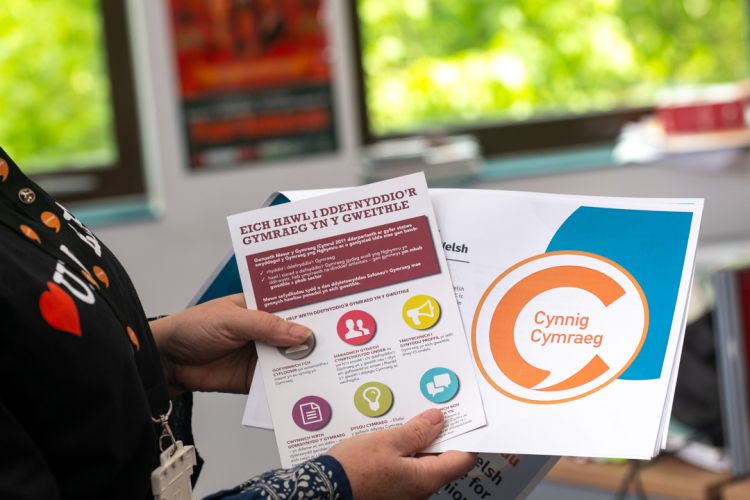
Trade unions have a critical role in safeguarding and promoting workers’ Welsh language rights and ensuring that workplaces are safe and free from prejudice and judgement.
We want to see an increase in the use of Welsh within workplaces across all sectors and Welsh being normalised in those workplaces. In short, we want to see ‘twf’ in the use of Cymraeg at work to achieve linguistic justice for workers, including Welsh speaking workers.
Watch midwives in Bronglais hospital explain why speaking Welsh is important to their identity, and how it makes their work with Welsh speaking service users easier:
Read more about how TMC supports midwives to use and learn Welsh
TUC Cymru developed the Twf Charter because it is vitally important that the trade union movement represents every section of the workforce and the community. Inclusivity and equitable access to the Welsh language are integral to workforces because they are representative of the diversity of society.
Our campaign for equality for the Welsh language at work sits within the fair work agenda.
Read more about your right to use Welsh at work
Find out how TUC Cymru can support your union on its Welsh language journey
- Why is the world of work important for workers’ use of Welsh?
“The workplace is central to our day-to-day lives and provides an important context for an individual’s linguistic development. Whether a fluent speaker, a speaker lacking in confidence who wishes to improve their skills, or a new speaker, the workplace provides opportunities to use, practise and learn Welsh”. (Cymraeg 2050: A million Welsh speakers, Welsh Government, 2017, p.49).
Workplaces are strategic locations for promoting and facilitating growth in the use of Welsh.
Workplaces provide speakers at all levels with the opportunity to use and practice Welsh. Workplaces can move along the language continuum too and increase their use of Welsh at work overtime. In turn, this strengthens its use outside of work; in families, communities and socially.
Employers have a strategic role in planning and implementing growth in the use of Welsh at work. They enable workers to increasingly live their working life in Welsh.
Bilingualism and the ability to speak, read, write, and understand Welsh is a valuable communication skill. It improves task-switching, problem-solving and creativity. Bilingual skills bring advantages to workers and employers and are needed in the provision of good quality Welsh language services.
For workers, being able to use Welsh at work opens doors to new opportunities, and helps with employability, wider career choices, progression, and salary. Bilingual workers add value to an organisation or business.
Our Welsh language belongs to us all. It is part of our identity and the communities in which we live. The Welsh language shapes us as people, workers, and citizens of Wales. Being bilingual contributes to our sense of personal fulfilment and well-being leading to increased commitment and morale at work. Equally, learning Welsh can contribute positively to self-esteem and personal growth.
"As human beings we rely on our language – the language we live in and in which we feel at home – to fully express ourselves. .... The dissolution of a language diminishes each speaker’s ability to be oneself." (Steve Zeitlin, Folklife, 2019)
Watch how UCU Bangor found that increasing their use of Welsh strengthened their branch:
Read more about how increasing the use of Welsh strengthened UCU Bangor.
Adopting the Twf Charter
Adopting the Twf Charter demonstrates that a shared commitment has been made to:
- Its four core principles as a framework for working together
- Deliver an inclusive bilingual workplace and growth in the use of Welsh at work
- Take the first step to positive action to deliver on inclusive, fair, just and equitable access and conditions which enable growth in the use of Welsh at work
- Follow on action, for example, in meetings with the employer in joint trade union branch meetings
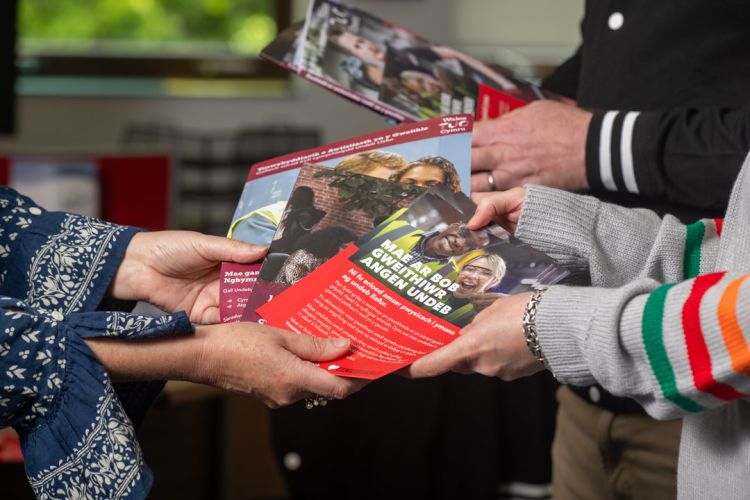
More widely, it demonstrates collaborative action by supporting the Cymraeg 2050 goal to increase the use of Welsh within the workplace across all sectors.
We welcome discussion with any trade union or employer in Wales who is interested in adopting the charter – contact cymru@tuc.org.uk
- Twf Charter Approval
The Twf Charter has been approved by:
• TUC Cymru General Council
• TUC Equality Committee
• TUC Cymru Welsh Language Forum
• Cymdeithas yr Iaith (Welsh Language Society)The Welsh Language Commissioner has also declared support for the Twf Charter and its four core principles.
- Which workplaces are suitable for the Twf Charter?
The Twf Charter can be adopted by all workplaces and sectors, inlcuding:
- Organisations who have duties which require them to comply with the Welsh Language Standards. These include local authorities, health boards and further and higher education institutions. For a list of these organisations see compliance notices
- Organisations that have a Welsh Language Scheme
- Private and charitable sector organisations committed to improving and developing their Welsh language services by gaining the Cynnig Cymraeg (Welsh Offer) recognition.
We welcome discussion with any trade union or employer in Wales who is interested in adopting the charter – contact cymru@tuc.org.uk
How to adopt the Twf Charter - a step-by-step guide for trade union branches
Ready to start negotiating with your employer to adopt the Twf Charter? Click on the words below for a step-by-step guide.
- Step 1: Nominate a joint trade union branch lead
This could be your branch chair or a rep with an interest in the Welsh language.
- Step 2: Invite TUC Cymru to a joint trade union branch meeting
The nominated joint trade union branch lead should contact TUC Cymru on cymru@tuc.org.uk to organise a meeting. At this meeting we can provide the context for the Twf Charter and support with further guidance on implementation. The meeting could be face to face or online.
- Step 3: Joint trade union branch and employer meeting
Following the branch meeting with TUC Cymru, organise a meeting to discuss the Twf Charter with the employer. Make a note of the internal process and timetable for Charter approval.
Contact TUC Cymru if you need further support following this meeting or when you are ready to discuss the arrangements for signing the Charter.
- Step 4: Joint Signing of the Twf Charter
The Twf Charter will be signed jointly by the trade union branches, the employer and TUC Cymru. Appropriate representatives could be the employer’s Chief Executive; chairs of the trade union branches, and a TUC Cymru representative.
The signing event would usually take place at the place of work and involve your communications team to plan press releases and social media content to promote the Charter externally.
- Step 5: Visible Twf Charter in the workplace
TUC Cymru will provide publicity materials for the Twf Charter which can be displayed around the organisation including:
- An A1 signed board to display in your reception area
- Posters noting that the Twf Charter has been adopted to display on notice boards etc
- A template news article which can be included on the intranet
The Twf Negotiator’s Guide will also help you with follow on positive action.
TUC Cymru and the Welsh Language
TUC Cymru has been on its own Welsh language journey. We gained our Cynnig Cymraeg recognition in 2022 because of our strong Welsh language policy and development plan.
We also support unions to increase their Welsh language provision and gain their own Cynnig Cymraeg.